
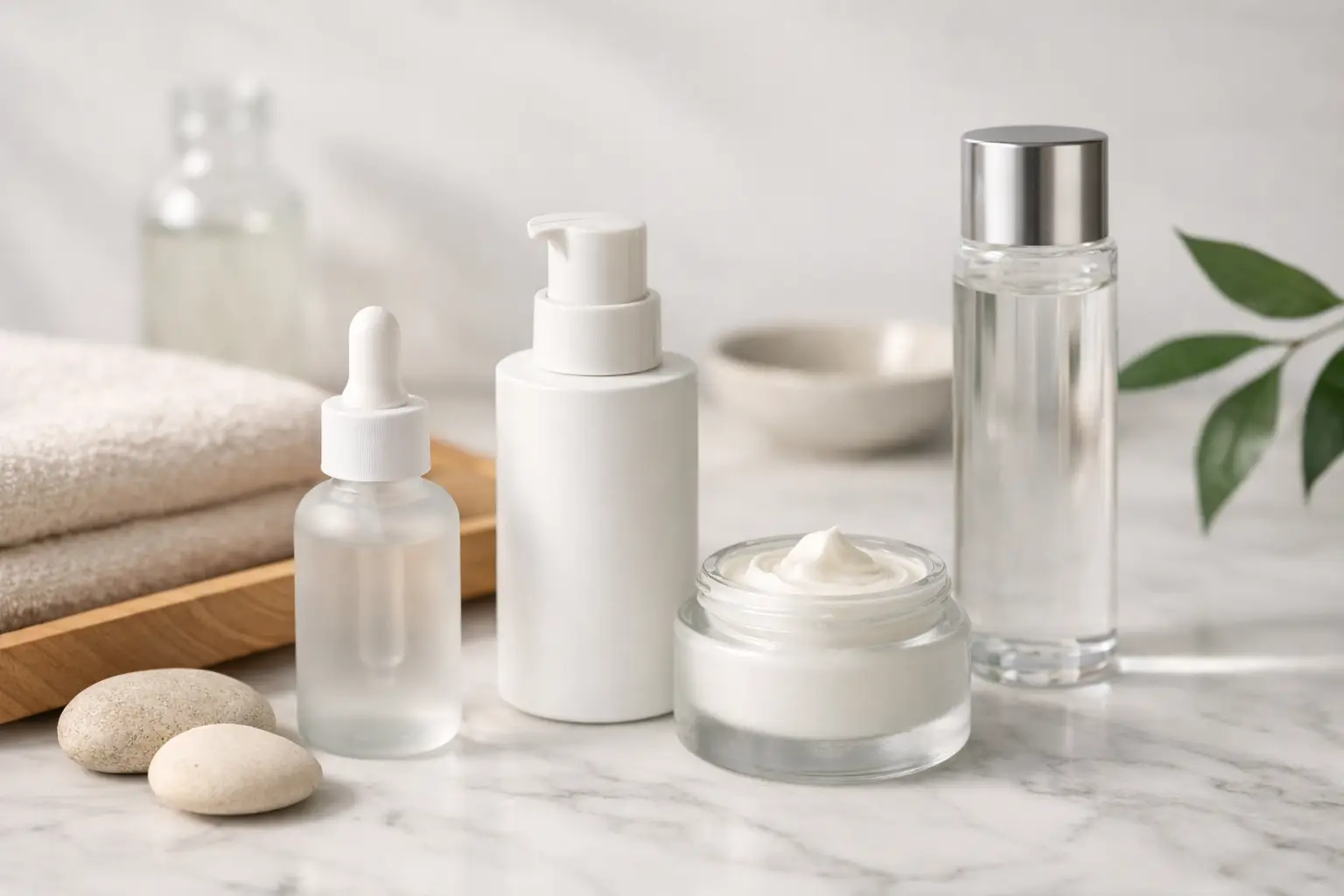
If your shelf is full but your skin still feels reactive, tight, congested, or unpredictable, the problem may not be a lack of effort. More often, it is too many variables. Learning how to build a minimalist skincare routine starts with a simpler question: what does your skin actually need every day, and what is just noise?
A minimalist routine is not a stripped-down aesthetic exercise. It is a functional system. The goal is to support skin consistently, reduce decision fatigue, and remove products that add irritation, confusion, or overlap. For sensitive, eczema-prone, acne-prone, oily, dry, or menopausal skin, that discipline matters even more. When skin is already under stress, excess is rarely neutral.
What a minimalist skincare routine really means
Minimalist skincare does not mean using the fewest products possible at all costs. It means using the fewest products necessary to do the job well. That distinction matters.
A good routine covers the basics: cleanse when needed, maintain the skin barrier, protect from daily environmental stress, and address one or two specific concerns if they are genuinely persistent. Everything else is optional.
This is where many routines lose focus. A person may use three exfoliants, two serums with similar functions, a harsh cleanser, and a rich moisturizer that is trying to compensate for the irritation caused by the rest of the routine. The shelf looks comprehensive. The system is not.
Minimal, without compromise, is a better standard. Fewer steps. Clear purpose. No exaggerated claims.
How to build a minimalist skincare routine from the ground up
Start by separating essentials from additions. For most people, the essential structure is only three to four steps.
Step 1: Use a cleanser based on need, not habit
Cleansing should remove sweat, sunscreen, excess oil, and daily buildup without leaving skin stripped. That sounds obvious, but it is often where routines become harsher than necessary.
If you have dry, sensitive, or eczema-prone skin, you may not need a strong cleanser in the morning. A rinse with water or a very gentle cleanse can be enough. At night, a low-irritation cleanser usually makes more sense, especially if you wear sunscreen or live in a humid environment.
If you have oily or acne-prone skin, cleansing matters, but over-cleansing can backfire. Tight, squeaky skin is not the goal. When the barrier is disrupted, skin can become both oilier and more reactive.
Choose one cleanser that you can use consistently. If it leaves your skin feeling clean but not stressed, it is doing its job.
Step 2: Moisturize for barrier support
A moisturizer is not only for dry skin. It is basic maintenance for almost everyone.
The right moisturizer reduces water loss, supports barrier function, and helps skin tolerate the rest of your routine. For dry or mature skin, this may mean a cream with more occlusive support. For oily or acne-prone skin, it may mean a lighter gel-cream or lotion. Either way, the formula should feel compatible enough that you will use it daily.
This is one area where minimalist thinking helps. Instead of layering essence, serum, ampoule, and cream in search of hydration, use one moisturizer with clear barrier-supportive function. If your skin still feels dehydrated, that can point to a mismatch in formula or overuse of active ingredients, not a need for five more steps.
Step 3: Protect skin during the day
If there is one step that often earns its place, it is sunscreen. Daily UV exposure affects pigmentation, sensitivity, collagen breakdown, and post-acne marks. This is true whether your focus is graceful aging, acne, redness, or general skin stability.
The practical challenge is compliance. A sunscreen that feels heavy, greasy, chalky, or irritating will not stay in your routine. Minimalism is not only about ingredient count. It is also about repeatability. The best daily product is often the one you will actually use in the climate you live in and the rhythm of your day.
In hotter, more humid conditions, lighter textures usually make adherence easier. In drier indoor environments, a more emollient finish may feel more comfortable. The right choice is the one that supports consistency.
Step 4: Add one treatment only if you need it
This is where discipline matters most. If your skin concern is active acne, persistent dullness, rough texture, fine lines, or uneven tone, a treatment step may be useful. But one targeted treatment is usually enough to start.
That might be a gentle retinoid, a niacinamide serum, azelaic acid, or a carefully chosen exfoliant. The exact ingredient depends on your concern and your tolerance. What matters is avoiding the common pattern of adding multiple actives at once, then trying to guess which one is helping and which one is causing irritation.
A minimalist routine is easier to troubleshoot because every product has a clear role.
Build around your skin condition, not your ideal routine
Many people build routines based on who they want their skin to be rather than what it is right now. That usually leads to overcorrection.
If your skin is sensitive or eczema-prone, your first priority is usually barrier stability, not aggressive resurfacing. If your skin is oily, you may still need hydration and barrier support, not only oil-control products. If your skin is going through menopausal changes, dryness and increased sensitivity may shift what used to work.
This is also why trend-heavy routines are not always useful across markets like Malaysia, Singapore, or Japan. Climate, indoor cooling, humidity, pollution, and lifestyle all affect what feels sustainable. A minimalist routine works best when it reflects your environment as well as your skin type.
Signs your routine is not minimalist in the right way
A short routine can still be poorly designed. Minimalism is not automatically better if it leaves key needs unmet.
Your routine may need adjustment if your skin feels persistently tight after cleansing, stings when you apply basic products, becomes more congested after adding too many treatment steps, or seems dependent on constant product rotation. Another sign is confusion. If you cannot explain why each product is there, the system is probably too crowded.
On the other hand, if your skin is dry, breaking out, or inflamed and you have reduced your routine to almost nothing, you may have simplified too far. Minimal should still be functional.
How long should you keep a routine before changing it?
Long enough to see a pattern, but not so long that you ignore obvious irritation.
Basic products such as cleansers and moisturizers can usually be evaluated within one to two weeks based on comfort, reactivity, and daily usability. Treatment products often need longer. Four to eight weeks is a more realistic window for many concerns, especially acne marks, texture, and fine lines.
What you want to avoid is constant switching. If a product is not causing a problem, give the routine enough time to become legible. Skin does not benefit from being managed like a trend cycle.
A practical minimalist routine for most people
For morning, many people do well with a gentle cleanse or rinse, moisturizer if needed, and sunscreen. For evening, a gentle cleanse, a moisturizer, and one treatment only if there is a specific reason.
That is enough for a large number of skin types.
If you need more support during a flare, you can temporarily shift the balance. Sensitive or eczema-prone skin may need to pause treatments and focus on cleansing and barrier repair. Acne-prone skin may need one consistent active rather than multiple spot solutions. The principle stays the same: keep the routine coherent.
Brands like Calmora Natural are built around that idea. Fewer, better products with a clear function tend to outperform crowded routines assembled from mixed promises.
The real benefit of doing less
The value of minimalist skincare is not only fewer products on a shelf. It is less irritation, less guesswork, less waste, and a better chance of understanding your own skin.
When each product has a reason to be there, your routine becomes easier to follow and easier to trust. That matters more than novelty.
Start with what is necessary. Keep what is compatible. Remove what is performative. Good skin support is usually quieter than the beauty industry suggests.
Leave a Reply