A counter can look clean and still feel wrong. The light catches a haze. Your hand slides across a table and meets a tacky film. On glass, the streaks only show up after everything dries. If you are looking for a natural home cleaner no residue result, that distinction matters. Clean is not only about fragrance or shine. It is also about what is left behind.
For many households, residue is the reason a cleaner gets used once and then pushed to the back of a cabinet. It can collect dust faster, dull reflective surfaces, and make floors feel slightly sticky under bare feet. In homes where skin sensitivity is already a concern, leftover surfactants, heavy fragrance, or oily plant extracts can also become part of the problem. A better cleaner should do its job, then get out of the way.
What a natural home cleaner no residue result really means
A residue-free finish is simple in theory. The product lifts soil, evaporates or rinses cleanly, and does not leave behind visible film, tackiness, or scent that lingers longer than necessary. In practice, that depends on both formulation and use.
Natural cleaning products often rely on a shorter list of familiar ingredients, but natural does not automatically mean residue-free. Soap-based formulas can leave mineral soap scum, especially in hard water. Essential oils may smell pleasant at first, yet some can leave a faint oily trace on glass, stainless steel, or glossy finishes. Thickening agents, waxes, and conditioning additives can also create buildup over time.
That is why a natural cleaner should be judged by function, not by the label alone. The cleaner that leaves the least behind is often the one with the most disciplined formula.
Why residue happens in the first place
Most residue comes from one of three sources. The first is ingredient overload. A product may contain surfactants, fragrance, oils, colorants, or plant extracts that are not fully necessary for surface cleaning. Each extra component increases the chance that something remains after wiping.
The second is mismatch. Some ingredients clean well on one surface and perform poorly on another. Soap can work for greasy messes, but on mirrors or sealed stone it may leave a visible film. Vinegar can cut mineral spots on glass, but it is not suitable for every material. Even a well-made cleaner can disappoint if it is used in the wrong place.
The third is simple overuse. Too much product, too little water, or a dirty cloth will leave marks no matter how good the formula is. Many residue complaints are partly a product issue and partly a method issue.
The ingredients that usually work best
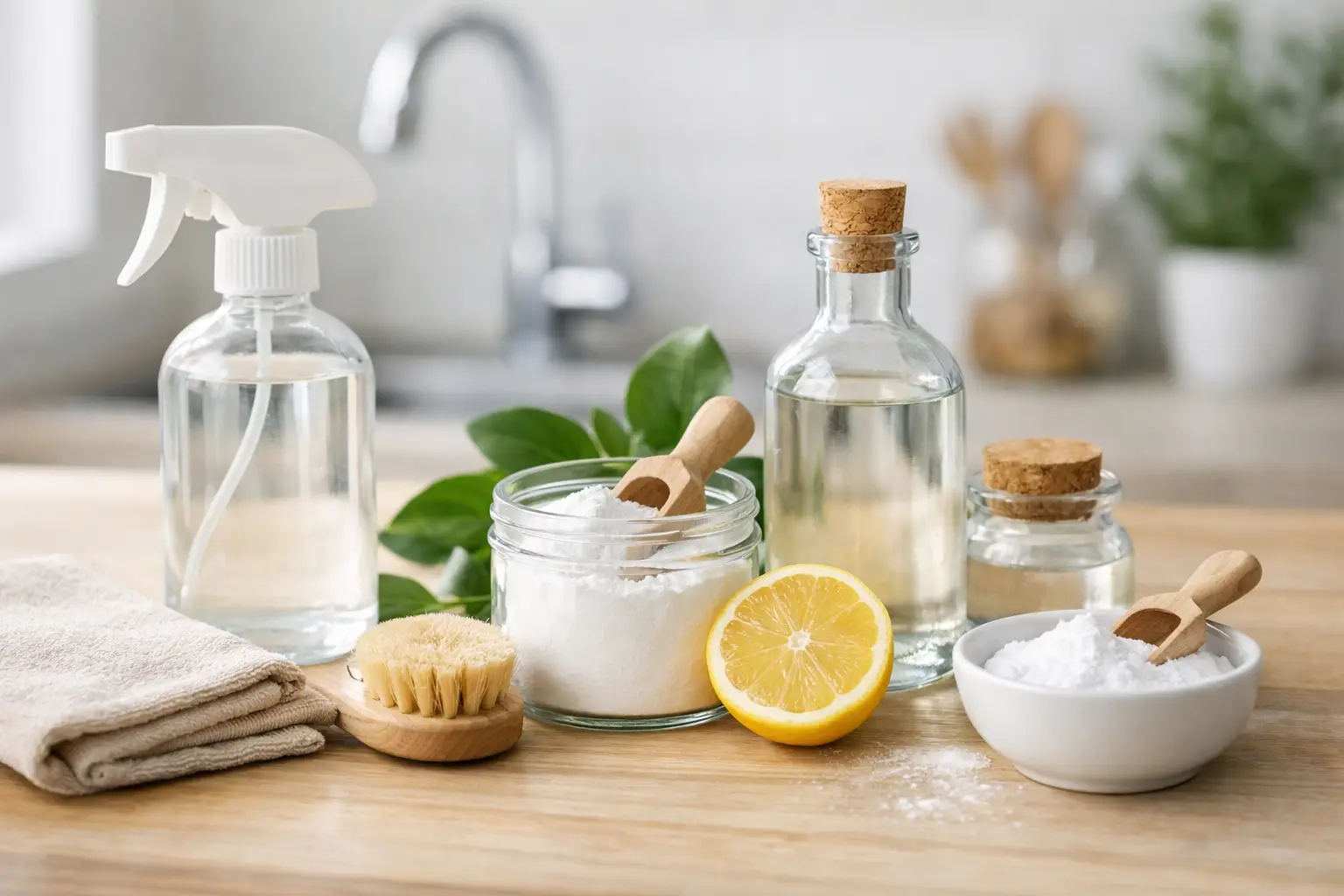
If the goal is a natural home cleaner no residue finish, lighter formulas tend to perform better. A small amount of plant-derived surfactant can help loosen dirt without leaving a heavy film. Alcohol, when used appropriately, can support quick evaporation on glass and high-touch hard surfaces. Citric acid can help with hard water spotting and soap residue in kitchens and bathrooms.
Water still does most of the work in many surface cleaners. That may sound unremarkable, but it is often a good sign. A cleaner does not need to feel rich or dense to be effective. For routine maintenance, a restrained formula usually leaves a cleaner finish than one packed with extras.
There are trade-offs. Alcohol-forward formulas may dry quickly but can be less forgiving on certain delicate finishes. Citrus components can help with grease, but too much can increase the risk of streaking. Essential oils may support scent, yet they are rarely essential for cleaning performance. If your priority is no residue, less decoration is usually better.
Surfaces where no-residue cleaning matters most
Glass is the obvious one. Any leftover material shows immediately once the surface dries. Mirrors, windows, shower screens, and glass tabletops benefit from low-residue sprays and a clean, tightly woven cloth.
Floors are close behind, especially tile, laminate, and sealed wood. A floor can look fine from a distance while still feeling tacky. That usually means too much detergent, poor rinsing, or a formula that leaves conditioning agents behind.
Kitchen counters also reveal formulation quality quickly. On stone, laminate, stainless steel, and appliance fronts, residue can attract fingerprints and cooking dust. If you clean often, a product that leaves nothing behind reduces that cycle.
For families managing eczema or generally reactive skin, high-touch surfaces matter in another way. What stays on dining tables, chair arms, switches, and handles can end up on hands repeatedly throughout the day. A low-residue approach is often the more comfortable one.
How to choose a natural home cleaner no residue product
Start with the formula logic. A shorter ingredient list is not always superior, but unnecessary complexity should raise questions. Look for products designed for a specific task rather than broad claims that promise to clean every surface in every condition.
Avoid assuming that stronger scent means stronger cleaning. Fragrance can mask whether a surface has actually rinsed clean. The same goes for glossy after-effects. Shine is not proof of cleanliness if it comes from a layer left behind.
It also helps to be realistic about labels. Terms like green, plant-based, and non-toxic can be useful signals, but they are not performance standards. The more useful question is whether the cleaner dries cleanly, works with your water conditions, and suits your actual surfaces.
Brands with a more disciplined formulation philosophy tend to do better here. Calmora Natural, for example, builds around fewer, better products rather than crowded claims. That same restraint matters in homecare. When a formula has a clear purpose, it is more likely to clean effectively without turning every surface into a chemistry experiment.
Technique matters more than most people think
Even the right cleaner can leave residue if the method is off. One common mistake is spraying too much product directly onto the surface. A light mist is usually enough for routine cleaning. Saturating the area makes it harder to wipe evenly and increases the chance of streaks.
Cloth choice matters too. A clean microfiber cloth usually performs better than paper towels for hard surfaces because it lifts dirt instead of pushing dissolved product around. If the cloth is already loaded with detergent or fabric softener from the wash, it can create its own film.
Work in smaller sections. Wipe once to lift soil, then turn the cloth and buff dry. On floors, use less solution than you think you need. If the floor takes a long time to dry, there is a good chance too much product was applied.
Water quality can also change the result. In areas with hard water, minerals interact with soap and some surfactants, increasing haze and spotting. If residue keeps showing up despite careful use, the issue may not be the cleaner alone.
Common natural cleaning ingredients and their trade-offs
Vinegar is useful, but not universal. It can help dissolve mineral buildup and leave glass looking clearer, yet it may damage certain stone surfaces and is not ideal for every finish. Its smell also lingers more than many people want.
Castile soap is popular for good reason. It is simple and versatile. But it is still soap, which means it can leave film on shiny surfaces or in hard water conditions. It often works better for spot cleaning and hand-washable items than for streak-free glass or polished fixtures.
Baking soda is effective for scrubbing, deodorizing, and lifting grime, but it is not a leave-on cleaner. If not fully removed, it can leave a dusty or chalky look.
Essential oils are often added for scent and branding appeal. Used sparingly, they may be fine in some formulas. Used heavily, they can leave an oily trace and make a supposedly clean surface feel coated.
When a little residue is unavoidable
Some messes need a stronger approach. Heavy grease around a stovetop, soap scum in a shower, or sticky food spills may require a cleaner with more active surfactants or a two-step process. In those cases, the best path is often to clean first, then follow with a damp wipe to remove any remaining product.
This is where honesty matters. No single cleaner is perfect for every job. If you want a truly no-residue finish, routine maintenance is easier than rescue cleaning. The less buildup you allow to accumulate, the milder and cleaner-finishing your products can be.
A practical homecare routine does not need ten bottles. It needs products chosen with intent and used with restraint. The best natural cleaner is not the one that announces itself the loudest. It is the one that solves the problem, leaves the surface clear, and asks for nothing extra from your space.
Leave a Reply