Eczema rarely flares at a convenient time. It shows up when skin is already under pressure – after a hot shower, a stressful week, a new detergent, or one product too many. If you are trying to figure out what helps eczema flare ups, the most useful answer is usually not more treatment. It is less friction, less exposure, and more support for a barrier that is struggling to do its job.
That sounds simple because it is simple. But simple does not mean vague. When eczema becomes reactive, skin needs a shorter list of inputs and a clearer plan. The goal is not to chase every possible cause at once. The goal is to calm the cycle of irritation, itching, and barrier breakdown.
What helps eczema flare ups most?
At the center of most eczema flares is a damaged skin barrier. When that barrier is weak, skin loses water more easily and becomes more vulnerable to irritants. That is why flare-prone skin often feels dry, tight, rough, or hot before it looks visibly inflamed.
What helps most is anything that lowers irritation while restoring moisture and barrier function. In practice, that usually means gentle cleansing, frequent moisturizing, avoiding known triggers, and using prescribed anti-inflammatory treatment when a flare is active. It is not a glamorous routine. It is a disciplined one.
There is also an important trade-off here. People with eczema often want to find the one ingredient or one product that will fix everything. But flare management is usually cumulative. Small reductions in irritation matter. A milder cleanser, shorter showers, softer fabrics, fewer fragranced products, and more consistent moisturizing can make a visible difference over time.
Start with the barrier, not the trend
When skin is inflamed, novelty is rarely helpful. This is the point where a barrier-first approach matters most.
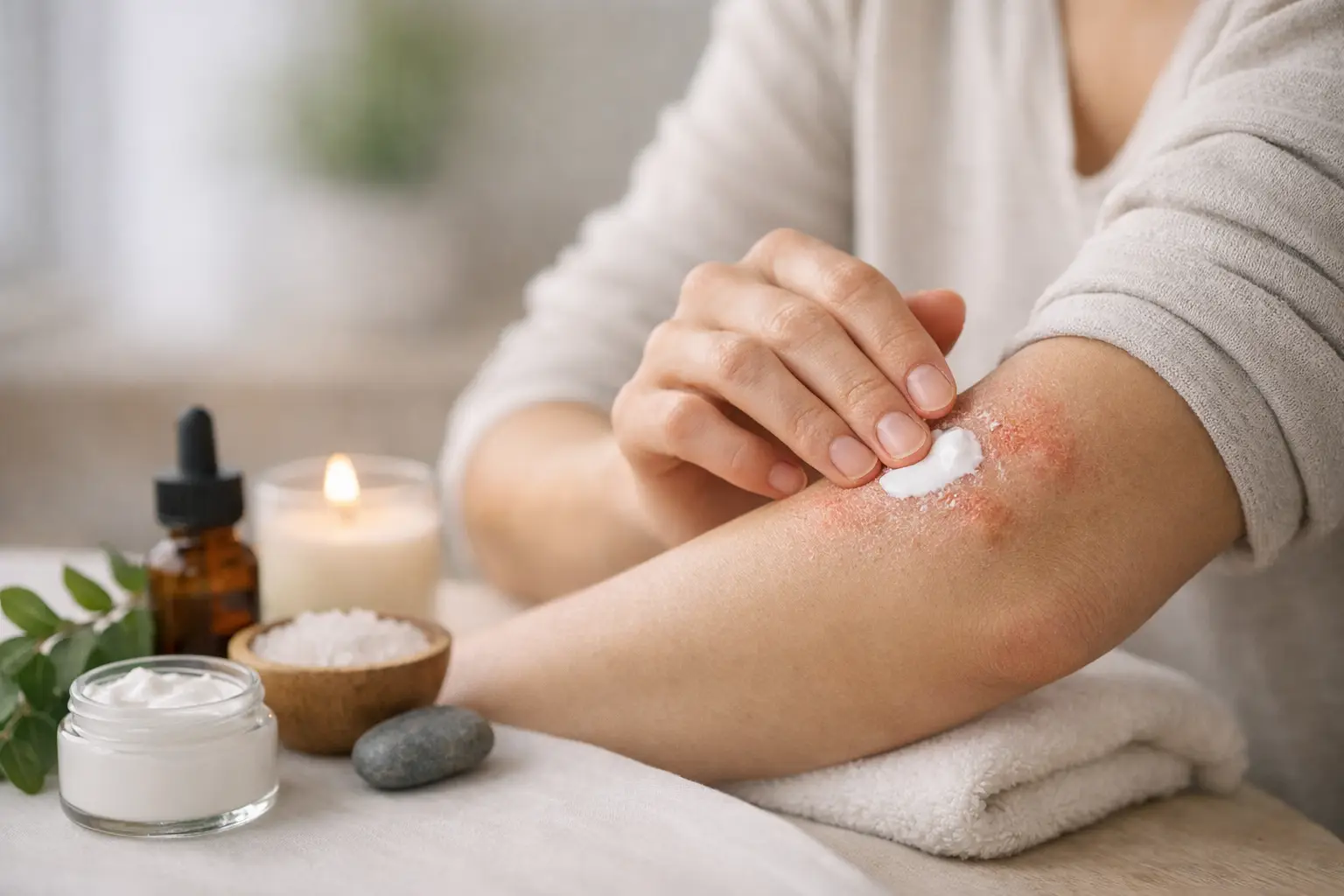
A good moisturizer helps by reducing water loss and giving skin a more stable environment to recover. Creams and ointments often perform better than lightweight lotions during a flare because they are better at sealing in moisture. The best choice depends on your skin, climate, and tolerance. In humid places such as Malaysia and Singapore, some people prefer a rich cream over a heavier ointment during the day because it feels more wearable. In drier indoor environments, especially with air conditioning or winter travel to Japan, an ointment may offer better protection overnight.
The timing matters almost as much as the formula. Moisturizer works best when applied soon after washing, while skin is still slightly damp. That helps trap water where skin needs it. If you wait until skin feels dry, you are already trying to catch up.
This is also where restraint matters. During a flare, avoid rotating through multiple serums, exfoliants, acids, or essential-oil-heavy products. Even ingredients that seem beneficial in theory can become another source of irritation when the barrier is compromised.
Cleansing should remove dirt, not resilience
Many eczema routines fail at the cleansing step. Skin is washed too often, with water that is too hot, or with formulas that leave it tight and stripped.
A gentle cleanser should clean without leaving that squeaky feeling. For eczema-prone skin, that squeak is not a sign of freshness. It often means the skin’s protective lipids have been removed faster than they can be replaced.
Short, lukewarm showers are usually better than long hot ones. Hot water can feel soothing in the moment, especially when itch is intense, but it often increases dryness and irritation afterward. If a full-body cleanse twice a day is leaving skin worse, it may be worth limiting cleanser to the areas that truly need it and rinsing the rest with water when appropriate.
Hands are a special case. Frequent handwashing can trigger hand eczema even in people whose body skin is relatively stable. If that sounds familiar, use a mild hand wash and moisturize after washing whenever possible. Repetition matters.
Itch control is part of treatment
Scratching is not just a response to eczema. It can become one of the reasons a flare lasts longer. The itch-scratch cycle damages the barrier further, increases inflammation, and can raise the risk of infection.
What helps here is cooling the skin without overwhelming it. A cool compress can reduce the urge to scratch. Keeping nails short helps limit damage. At night, some people benefit from applying moisturizer more generously before bed and using soft sleepwear to reduce friction.
If itch is severe, persistent, or keeping you awake, that is usually the point to speak with a clinician. Over-the-counter measures may not be enough, and untreated inflammation tends to prolong the problem.
Triggers are real, but they are not always obvious
People often ask whether eczema is caused by food, weather, stress, or products. The honest answer is that it depends. Triggers vary widely, and not every flare has a single clean explanation.
Common triggers include fragranced skincare, harsh soaps, detergents, rough fabrics, heat, sweat, dust, stress, and seasonal dryness. For some people, certain foods are relevant. For others, food is a distraction from more immediate triggers like irritant exposure or inconsistent skin care.
This is why tracking patterns can be more useful than making broad assumptions. If flares keep happening, look for what changed in the previous 24 to 72 hours. A new body wash. A longer gym session with sweat sitting on skin. A hotel laundry detergent. A stress-heavy week with poor sleep. The goal is not to become obsessive. It is to notice repeatable patterns.
What helps eczema flare ups when they are already active?
Once a flare is established, supportive skin care helps, but it may not be enough on its own. Many people need anti-inflammatory treatment prescribed or recommended by a clinician, such as topical corticosteroids or non-steroid prescription options. Used appropriately, these treatments can reduce inflammation and help skin recover faster.
This is one area where fear often causes delays. Some people avoid treatment because they are worried about using medicated creams at all. Others overuse them without guidance. Neither approach is ideal. The right treatment, used correctly for the right duration, is usually more effective than trying to push through a moderate flare with moisturizer alone.
If eczema is weeping, crusting, suddenly painful, or looks infected, it needs medical attention. The same is true if flares are frequent, widespread, or affecting sleep and daily function.
Less product can be more helpful
A long routine often creates more variables than benefit. Eczema-prone skin usually responds better to a smaller system with clear roles: a gentle cleanser, a reliable moisturizer, and treatment when needed.
That does not mean every natural ingredient is automatically helpful, and it does not mean every synthetic ingredient is problematic. What matters is compatibility, concentration, and formulation purpose. Skin in a flare state does not care about trends. It responds to what reduces irritation and preserves function.
This is where a minimalist approach has practical value. Fewer products make it easier to identify what is helping, what is unnecessary, and what may be making things worse. Calmora Natural builds around that principle – fewer, better products with a clear job to do.
Environment matters more than people think
Skin does not exist in isolation from climate or daily routine. Air conditioning, heat, humidity shifts, sweat, and fabric friction all shape how eczema behaves.
In humid weather, sweat can sting and trigger itching, especially in skin folds. Rinsing off sweat and changing out of damp clothing quickly can help. In heavily air-conditioned spaces, skin may lose moisture faster than expected, even when outdoor humidity is high. That often means increasing moisturizer frequency rather than switching to a completely different routine.
Laundry habits matter too. Fragrance-free detergent is often a safer default for flare-prone skin. Extra rinse cycles can help if clothing seems to irritate after washing. Soft, breathable fabrics are usually easier on inflamed skin than wool or rough synthetic blends.
When the basics are working, consistency matters most
The frustrating part of eczema is that improvement can be uneven. Skin may look calmer for a few days, then react again. That does not always mean the routine is failing. It may mean the barrier is still rebuilding and needs more time.
What helps eczema flare ups over the long term is consistency with the basics. Moisturize before skin feels desperate. Keep cleansing gentle. Reduce known irritants. Use treatment early when a flare starts instead of waiting for it to become severe. And if flares keep returning, treat that as useful information, not personal failure.
Skin with eczema usually does better with steadiness than with experimentation. A quieter routine often gives clearer results. When the skin barrier is asking for less, listening is usually the most effective thing you can do.
The most helpful approach is not aggressive. It is precise, patient, and boring enough to work.
Leave a Reply