
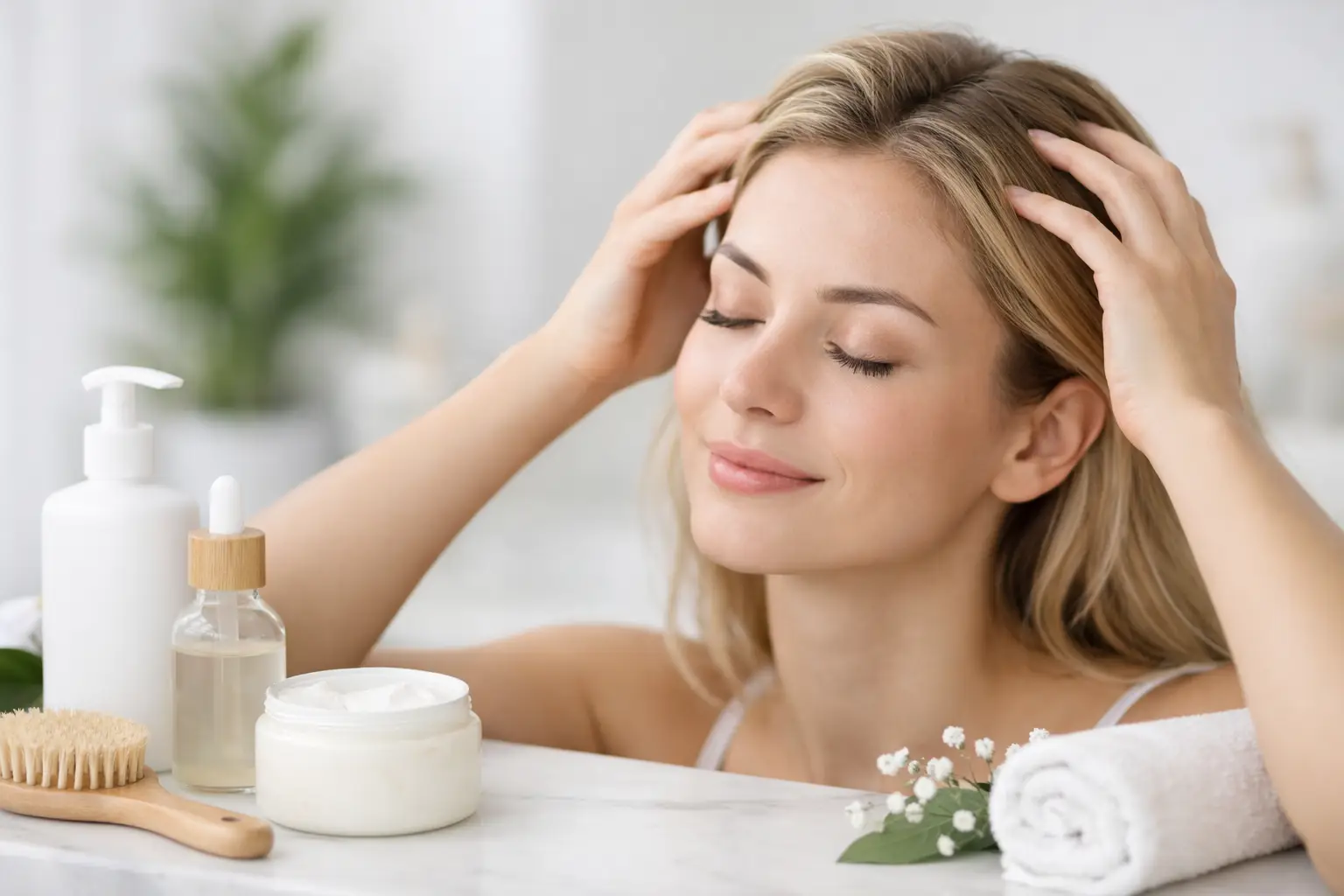
A sensitive scalp care routine should not feel like a second full-time job. If your scalp stings after washing, feels tight by midday, flakes without warning, or reacts to every new product, adding more treatments is rarely the answer. The useful approach is quieter: reduce avoidable irritation, maintain a consistent cleansing pattern, and introduce change one step at a time.
The scalp is skin, but it lives under hair, sweat, styling residue, sun exposure, and friction. That makes it easy to misread. Flaking can look like dryness but may be linked to oil buildup or dandruff. Itch can come from product residue, a compromised skin barrier, or a dermatologic condition. A routine should support the scalp without pretending every concern has one cause.
Start With a Minimal Sensitive Scalp Care Routine
For most people, the foundation is simple: use a gentle shampoo suited to your wash frequency, rinse thoroughly, and avoid treating the scalp as though it needs to be stripped clean. The goal is a comfortable scalp between washes, not an aggressively squeaky feeling immediately afterward.
Wash frequency depends on your scalp, hair type, climate, activity level, and use of styling products. Someone with an oily scalp in humid weather may need to wash daily or every other day. Someone with dry, textured, or chemically processed hair may be more comfortable washing less often. Neither schedule is inherently better. The useful question is whether your scalp feels calm, clean, and free of persistent buildup.
Use lukewarm water rather than very hot water. Heat can make an already reactive scalp feel more inflamed and may worsen dryness. Apply shampoo mainly to the scalp, using the pads of your fingertips rather than your nails. Hair lengths usually receive enough cleansing as the foam rinses through.
Rinsing deserves more attention than it gets. Shampoo, conditioner, masks, dry shampoo, and styling products left close to the scalp can cause itch or leave a coating that resembles flaking. Take the extra minute to rinse at the hairline, behind the ears, and at the nape of the neck.
Choose Formulas for Compatibility, Not Marketing Claims
“Natural” is not a guarantee that a product will suit sensitive skin. Botanical extracts, essential oils, and fragrance can be enjoyable for some people and problematic for others. Conversely, a carefully formulated conventional ingredient can be entirely appropriate for a reactive scalp. Compatibility and function matter more than a broad label.
When your scalp is unsettled, favor a short ingredient approach with a clear purpose. A gentle shampoo without heavy fragrance is often a sensible starting point. If you use conditioner, keep it focused on the mid-lengths and ends unless the formula is specifically designed for scalp use. Rich oils and butters can be useful for dry hair, but applying them directly to a scalp prone to dandruff, acne, or buildup may not be the right trade-off.
Be cautious with products that promise a dramatic cooling or tingling sensation. Menthol, strong fragrance blends, high levels of alcohol, and essential oils can feel fresh while still being irritating. Sensation is not proof of effectiveness.
Make One Change at a Time
A common reason scalp routines become confusing is that several products are changed at once. A new shampoo, scalp serum, hair mask, and styling cream may all enter the routine during the same week. If irritation follows, there is no clear way to identify the trigger.
Introduce one new product, then use it consistently for at least one to two weeks before adding another. Stop sooner if you develop burning, swelling, rash, or worsening itch. If you have a history of eczema, allergies, or strong reactions, a small patch test can be useful, although a patch test cannot predict every scalp reaction.
Treat Flakes According to Their Pattern
Not all flakes need the same response. Fine, dry-looking flakes with tightness may point toward irritation, over-cleansing, or a dry skin barrier. Greasier, yellowish, or recurring flakes with itch may be more consistent with dandruff or seborrheic dermatitis. In that case, simply adding more scalp oil may make matters worse.
An anti-dandruff shampoo can be appropriate when flakes are persistent, itchy, or associated with an oily scalp. The active ingredient matters less than whether your scalp tolerates the formula and whether you use it correctly. Many treatment shampoos need a few minutes of contact time before rinsing. Follow the package instructions rather than assuming more frequent use will work faster.
There can be a balance to find. A medicated shampoo may help control dandruff but feel drying when used every wash. Some people do best alternating it with a gentle everyday shampoo. Others need a different active ingredient or a clinician’s guidance. Recurrent scalp concerns are not a personal failure or a sign that you have not found enough products.
Reduce the Everyday Sources of Irritation
A calm scalp routine also includes what happens outside the shower. Small habits can prolong sensitivity even when the shampoo itself is suitable.
- Avoid scratching with nails, which can create tiny breaks in the skin and increase inflammation.
- Clean brushes, combs, pillowcases, hats, and helmet liners regularly to reduce oil and product transfer.
- Limit tight hairstyles when the scalp feels sore or tender, especially around the hairline and crown.
- Use heat styling thoughtfully. High heat close to the scalp can increase dryness and discomfort.
- Rinse sweat from the scalp after intense exercise when possible, particularly if sweat and styling products sit for hours.
Dry shampoo deserves measured use. It can be practical between washes, but it does not replace cleansing. Frequent layering may leave residue, trap oil at the scalp, and make itch or flakes harder to interpret. Use a light amount, brush it through, and plan a proper wash rather than continually adding more.
Keep Styling Products Away From the Root When Possible
Scalp sensitivity and hair styling needs can coexist. You do not have to abandon every styling product. Instead, consider placement. Creams, oils, pomades, and leave-in products generally belong on the hair lengths unless they are designed for the scalp. Apply sparingly, especially if you are prone to folliculitis, scalp acne, or buildup along the hairline.
If you color, bleach, relax, or perm your hair, acknowledge the added stress on scalp skin. Do not schedule multiple chemical services close together when the scalp is already irritated. Tell your stylist about eczema, prior reactions, active flaking, or broken skin. A service that is acceptable on a healthy scalp may be unsuitable during a flare.
Know When a Routine Is Not Enough
Home care can support mild sensitivity, but persistent symptoms deserve proper assessment. See a dermatologist or qualified clinician if you have painful sores, oozing, crusting, bleeding, spreading rash, patchy hair loss, pustules, or severe burning. Seek advice as well when flaking or itch does not improve after several weeks of consistent, appropriate care.
This is particularly relevant if you have eczema, psoriasis, known allergies, or immune-related conditions. Scalp psoriasis, contact dermatitis, fungal infection, and seborrheic dermatitis can overlap in appearance, yet require different treatment plans. Guessing based on a social media recommendation can delay relief.
A clinician can also help distinguish shedding from breakage and identify whether medications, hormonal changes, stress, nutritional issues, or a scalp condition may be contributing. A good routine supports treatment, but it should not substitute for diagnosis when symptoms are significant.
A Routine You Can Actually Maintain
The most effective sensitive scalp care routine is usually the one you can repeat without constantly adjusting it. Begin with a gentle cleanser, a realistic wash schedule, thorough rinsing, and fewer fragranced or heavily layered products. Add a targeted dandruff treatment only when the pattern supports it. Give each adjustment enough time to show whether it helps.
Calmora Natural approaches personal care with the same principle: fewer, better products selected for a clear function. For a sensitive scalp, restraint is not doing less for the sake of it. It is removing noise so you can notice what your skin is asking for.
Your scalp does not need to feel stimulated to be cared for. It needs a routine that leaves it comfortable, predictable, and given enough time to recover.
Leave a Reply