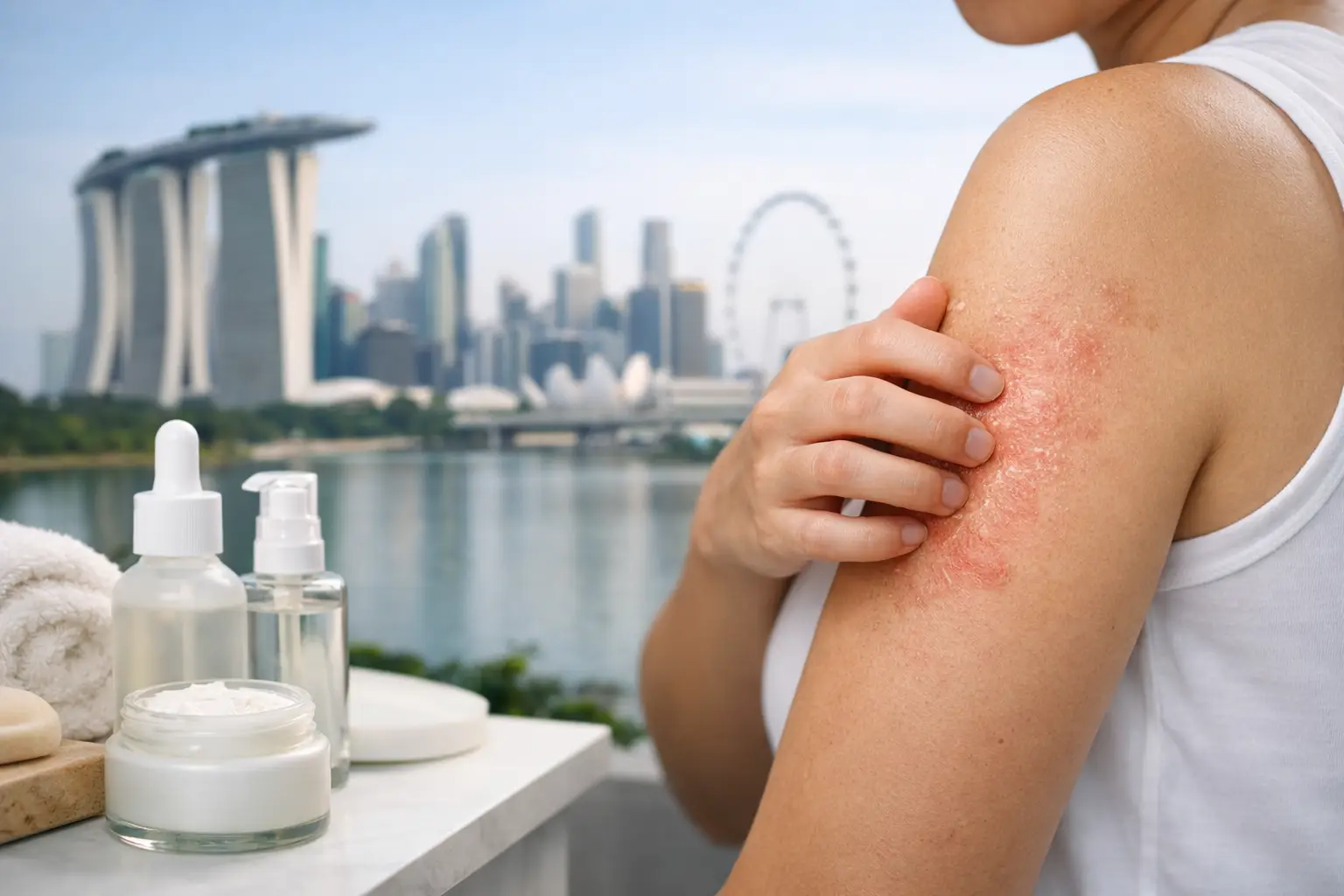
Heat, humidity, hard water, indoor air-conditioning, sweat, friction – if you live in Singapore, eczema rarely deals with just one trigger at a time. That is why eczema skincare Singapore routines often fail when they are built around too many products, too many actives, or the hope of a quick fix. Skin with a weakened barrier does not usually need more stimulation. It needs fewer variables, better support, and enough consistency to recover.
Why eczema skincare in Singapore needs a different approach
Eczema is not only about dryness. It is a barrier problem, an inflammation problem, and often a trigger-management problem. In Singapore, that picture becomes more complicated because skin may be exposed to humidity outdoors and aggressive cooling indoors within the same day. Sweat can sting. Air-conditioning can dehydrate. Fragrance and foaming cleansers can quietly worsen irritation even when a product feels pleasant at first use.
This is where a disciplined routine matters. A long routine can make it harder to identify what is helping and what is making things worse. For eczema-prone skin, clarity is useful. It reduces decision fatigue and lowers the chance of cumulative irritation.
That does not mean every case should be handled the same way. Some people deal with mild, seasonal flare-ups. Others have chronic eczema that needs medical treatment alongside skincare. A good routine supports the skin barrier, but it does not replace clinical care when inflammation is persistent, infected, or severe.
The core principle: protect the barrier first
The most reliable eczema skincare Singapore strategy is usually the least exciting one. Cleanse gently. Moisturize consistently. Avoid known irritants. Repeat long enough for the skin to stabilize.
Barrier-first care sounds basic, but basic is often exactly what eczema-prone skin responds to best. Many products marketed for sensitive skin still contain essential oils, heavy fragrance, harsh surfactants, exfoliating acids, or too many botanical extracts. Natural does not automatically mean compatible. What matters is whether the formula supports compromised skin without adding unnecessary stress.
When the barrier is impaired, even ingredients that are well tolerated by normal skin can start to burn or itch. That is why chasing brightening, resurfacing, or anti-aging results during an active flare can backfire. Skin usually becomes more cooperative when irritation is reduced first.
What a barrier-supportive routine usually includes
A practical routine often starts with a mild cleanser that removes sweat, sunscreen, and daily buildup without stripping the skin. After cleansing, a moisturizer should be applied while the skin is still slightly damp. That helps reduce water loss and improves comfort.
The moisturizer itself should focus on function. Humectants help attract water. Emollients soften rough texture. Occlusive ingredients help slow moisture loss. The exact texture depends on the person. In humid weather, some people prefer a lighter cream during the day and a richer balm at night. Others with very dry or cracked skin may need a heavier texture throughout the day, even in Singapore.
This is one of those areas where it depends. A product that feels too heavy may increase discomfort in sweat-prone areas like the neck, inner elbows, or behind the knees. A product that is too light may not protect enough. The right choice is usually the one that the person can use consistently without irritation.
Common mistakes in eczema skincare Singapore routines
A frequent mistake is over-cleansing. Washing too often, using hot water, or relying on strong body washes can worsen dryness and itching. In a hot climate, the instinct is often to cleanse more because skin feels sticky. But feeling clean is not the same as preserving the barrier.
Another issue is product stacking. A soothing serum, a hydrating toner, a recovery cream, a facial oil, a sleeping mask – each may sound reasonable on its own. Together, they increase the chance of irritation, especially when fragrance, preservatives, or active ingredients overlap.
There is also the problem of reacting to flares by changing everything at once. That usually creates more uncertainty. If skin is suddenly inflamed, a simpler move is often better: pause nonessential products, return to a very plain routine, and give the skin a few days of consistency before making more changes.
Fragrance, botanicals, and “gentle” marketing
Many eczema-prone consumers already know to avoid obvious fragrance. Less obvious is the way fragrance can appear through essential oils or fragrant plant extracts. Labels that emphasize clean, natural, or botanical positioning are not always better suited to reactive skin.
This does not mean all plant-derived ingredients are problematic. It means compatibility matters more than marketing category. A well-considered formula with a restrained ingredient list often serves eczema-prone skin better than a product trying to do five things at once.
How to build a routine without overcomplicating it
For most adults, a streamlined eczema-supportive routine can stay very small. In the morning, that may mean rinsing or cleansing lightly if needed, applying a moisturizer, and using sunscreen if the skin tolerates it. At night, cleanse gently, moisturize again, and use an occlusive layer on dry patches if necessary.
The key is not novelty. It is repeatability. Skin barrier repair usually responds to habits more than hero products.
If you want to test a new product, do it with restraint. Introduce one item at a time. Patch test first. Avoid trying a new cleanser, moisturizer, and treatment all in the same week. If irritation develops, you need to know what changed.
For people managing both eczema and acne, the balancing act is harder. Acne products often rely on exfoliating or oil-reducing ingredients that can aggravate compromised skin. In that case, it helps to stabilize the barrier first and treat breakouts cautiously rather than attacking both problems aggressively at once.
Climate, clothing, and daily friction matter
Skincare is only part of eczema management. Fabric choice, sweat, detergents, and shower habits can influence the skin as much as a cream does. In Singapore, trapped heat and friction from fitted clothing can trigger itching fast, especially in body folds or under waistbands.
Soft, breathable fabrics usually help. So does changing out of damp clothes promptly after sweating. Laundry products are worth reviewing too. Strong fragrance in detergents and fabric softeners can keep irritating the skin long after a shower.
Water temperature matters more than many people realize. Very hot showers can feel relieving in the moment but often leave the skin worse afterward. Lukewarm water is less satisfying, but better aligned with barrier support.
When sunscreen becomes a problem
Daily sunscreen is often recommended, but eczema-prone skin may not tolerate every format. Some sting around the eyes or on inflamed areas. Some feel too occlusive in humid weather. This is where practicality matters more than perfection.
A sunscreen you can wear consistently is better than an idealized one that sits unused. Mineral and chemical filters can both work, but texture and formula design often determine tolerance more than category alone. If sunscreen repeatedly irritates active eczema patches, it may help to avoid applying directly on broken skin and seek medical guidance for ongoing inflammation.
When skincare is not enough
Eczema can move beyond routine management. If the skin is weeping, crusting, painful, sleep-disrupting, or not improving despite a careful routine, it is time for medical support. Persistent inflammation may need prescription treatment. Secondary infection can look similar to a bad flare but requires a different response.
This is also true if itching is becoming a cycle that affects sleep, work, or concentration. Good skincare supports quality of life, but it should not become a substitute for proper care when symptoms escalate.
A brand like Calmora Natural fits best into the support category – disciplined formulas, fewer steps, no exaggerated claims. That mindset is useful for eczema-prone skin because it favors long-term compatibility over constant experimentation.
What to look for in eczema skincare Singapore products
Start with purpose. A cleanser should cleanse without stripping. A moisturizer should reduce dryness and discomfort without adding unnecessary irritants. Anything beyond that should justify its place.
Look for short, coherent formulas rather than dramatic promises. Be careful with products positioned as fast repair, intensive renewal, or overnight transformation. Eczema-prone skin usually responds better to steadiness than to intensity.
It also helps to judge products by how your skin behaves after one week, not just one application. Some formulas feel good immediately because of slip or cooling effects, then lead to delayed irritation. Others feel plain but steadily reduce tightness, flaking, and reactivity over time.
That is often the right measure for eczema care – not whether a product feels impressive, but whether your skin becomes easier to live in.
If your routine is already crowded, the most helpful next step may not be adding another calming product. It may be removing two unnecessary ones and letting your skin tell you what it has been trying to say.
Leave a Reply