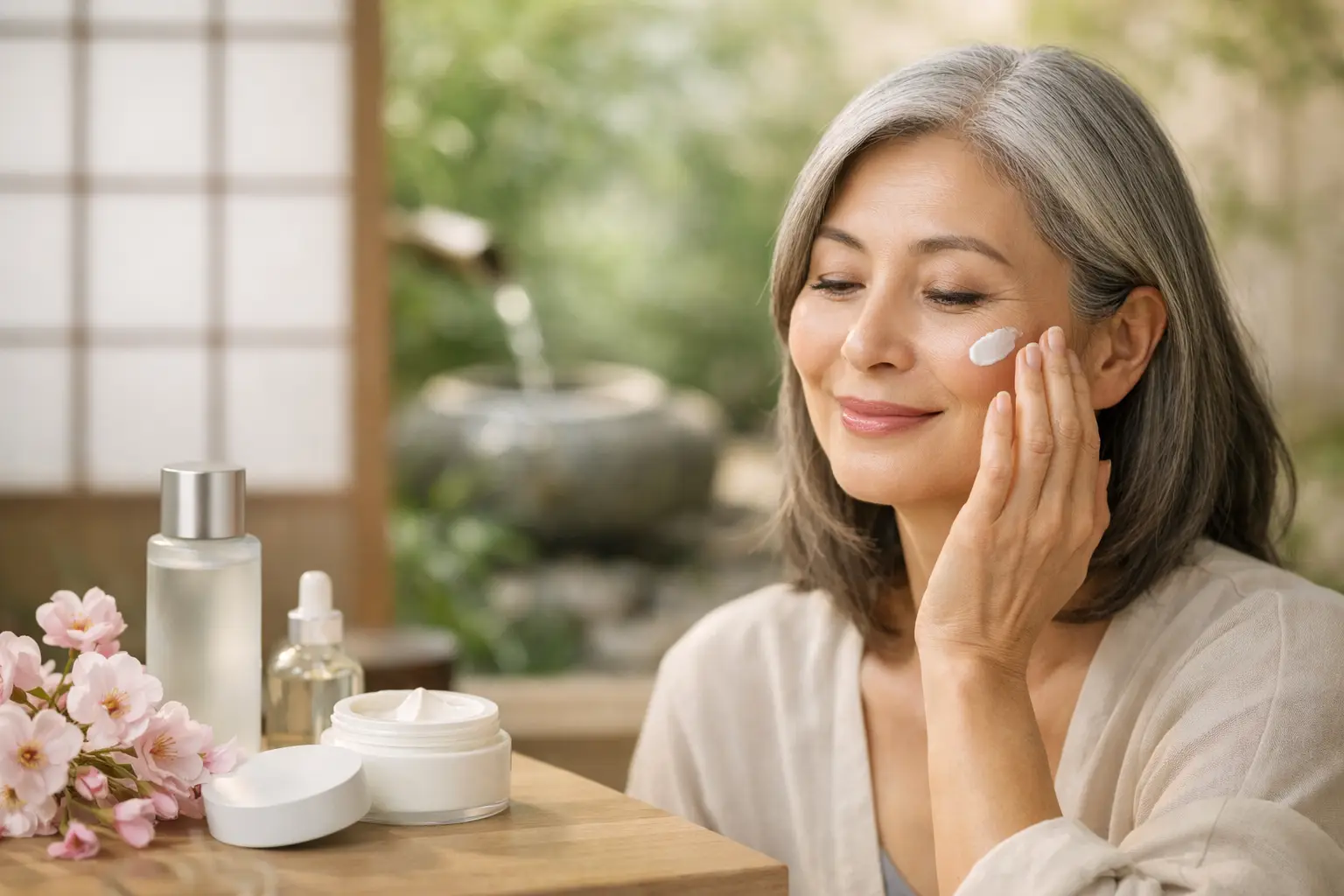
A face wash that suddenly stings. Foundation that settles into lines it did not emphasize last year. Skin that feels dry at the surface but still breaks out around the chin. These are familiar shifts during perimenopause and menopause, and they call for less experimentation, not more. Menopausal skincare Japan often reflects an approach worth considering: consistent hydration, gentle cleansing, and formulas selected for comfort rather than novelty.
Hormonal skin changes are not a failure of your routine. Estrogen supports collagen, skin thickness, hydration, and barrier function. As levels fluctuate and decline, the skin may produce less oil, lose water more easily, and become more reactive. A product that worked well for years can become too drying, too active, or simply too much.
The answer is rarely a 10-step routine. It is a smaller system with clear jobs.
What Menopausal Skin Actually Needs
Menopause does not create one skin type. Some people experience pronounced dryness and itching. Others have flushing, sensitivity, adult acne, or a combination of oiliness and dehydration. Climate, medications, sleep, sun exposure, and existing conditions such as eczema or rosacea all affect the picture.
Still, several changes are common. Skin can feel tighter after cleansing, look less even, and recover more slowly after irritation. Fine lines may become more visible because dehydration makes them appear sharper. The goal is not to promise a reversal of these changes. It is to support skin that is now operating with less reserve.
A well-designed routine should focus on three practical outcomes: reducing unnecessary irritation, helping the skin hold water, and protecting it from further environmental stress. These priorities are more useful than chasing every sign of aging at once.
Menopausal Skincare Japan: A Barrier-First Perspective
Japanese skincare is not a single philosophy, and product quality varies as much as it does anywhere else. But many Japanese routines place useful emphasis on gentle daily care, lightweight layers of moisture, and reliable sun protection. For menopausal skin, that restraint can be more valuable than aggressive correction.
The useful principle is not that every product must come from Japan. It is that a routine can be built around repeatable support. A mild cleanser does not need to leave skin squeaky clean. A moisturizer does not need an elaborate ingredient story to be effective. Sunscreen does not need to feel heavy to become a daily habit.
This approach also suits people who are tired of rotating through acids, masks, exfoliants, and trend-driven actives. Skin in transition often responds better when the routine is stable long enough to show what is helping and what is not.
Start with cleansing that respects discomfort
If your face feels tight within minutes of washing, begin there. Use lukewarm water and a low-foam or cream cleanser that removes sunscreen and daily buildup without leaving a stripped feeling. Cleansing once in the evening may be sufficient for many dry or sensitive skin types. In the morning, a water rinse can be enough if it feels right for your skin.
This is not a universal rule. Those with oily skin, heavy night products, or active breakouts may prefer a gentle morning cleanse. The test is simple: after cleansing, skin should feel clean and comfortable, not tense, hot, or unusually dry.
Add water, then keep it in
Menopausal skin often benefits from humectants, ingredients that attract water to the upper layers of skin. Glycerin, hyaluronic acid, panthenol, and beta-glucan are common examples. Apply these on slightly damp skin, then follow with a moisturizer that helps slow water loss.
The moisturizer matters as much as the hydrating layer. Look for a formula with emollients and barrier-supporting lipids, such as ceramides, squalane, or fatty acids, if your skin tolerates them. A richer cream may be helpful at night, while a lighter lotion can be more comfortable in humid weather or under sunscreen.
Natural ingredients can be useful, but natural is not automatically gentler. Essential oils, fragrant plant extracts, and some botanical blends can be difficult for reactive skin. Choose ingredients for compatibility and function, not because they carry a reassuring label.
Treat active ingredients as tools, not obligations
Retinoids, exfoliating acids, vitamin C, and pigment-targeting ingredients may have a place in a menopausal routine. They can also cause irritation when introduced too quickly or layered without care. The trade-off is clear: more activity can bring visible improvement for some concerns, but it can also compromise a barrier that is already under pressure.
If you want to use a retinoid, begin with a low strength and limited frequency. Use it on dry skin, apply moisturizer before or after if needed, and avoid adding several new actives at the same time. If stinging, persistent redness, scaling, or eczema-like patches develop, step back. Consistency with a tolerable formula is more productive than forcing a stronger one.
Acids deserve the same discipline. Exfoliation can help with rough texture and dullness, but daily exfoliation is rarely necessary for dry or sensitive skin. Once weekly may be plenty. Some people may do better without it altogether.
A Minimal Routine for Changing Skin
A practical menopausal routine can remain very short:
- In the morning, rinse or cleanse gently, apply a hydrating product if needed, moisturize, and use broad-spectrum sunscreen.
- In the evening, remove sunscreen with a gentle cleanser, apply one targeted treatment only if your skin is tolerating it, then moisturize.
- For dry areas around the eyes, mouth, neck, or body, use a richer cream or balm as needed.
- Keep a single soothing option available for reactive periods, rather than adding multiple rescue products at once.
This is intentionally uncomplicated. A routine is easier to maintain when every product has a defined role. It also makes it easier to identify a trigger when skin becomes uncomfortable.
Sun Protection Is Daily Support, Not an Anti-Aging Slogan
Hormonal changes can make uneven tone and dark spots more noticeable, while reduced collagen makes sun-related damage harder to ignore. Daily broad-spectrum sunscreen is one of the most practical ways to reduce additional stress on the skin.
Choose a texture you will wear consistently. In Japan, lightweight sunscreens are widely available and often designed for humid conditions, but comfort is individual. Dry skin may prefer a moisturizing cream formula. Sensitive skin may prefer fragrance-free options or mineral filters, though mineral sunscreen can feel drying or leave a cast on some complexions. There is no perfect format, only one that fits your skin, environment, and routine.
Reapply when you are outdoors for extended periods, sweating, or near windows with significant sun exposure. Hats and shade are useful additions, particularly when treating discoloration or managing flushing.
When Skincare Is Not Enough
Persistent itching, facial redness, burning, sudden acne, or rash-like patches should not be managed indefinitely through product trial and error. Menopause can overlap with rosacea, seborrheic dermatitis, contact dermatitis, and other conditions that benefit from medical guidance. A dermatologist can also discuss prescription options for acne, pigment changes, or more significant signs of photoaging.
If hot flashes cause flushing, notice patterns before assuming a skincare product is at fault. Alcohol, spicy food, warm rooms, stress, and certain actives can all contribute. Keeping the routine calm while observing these triggers is often more useful than replacing every product.
Choose Fewer Products, Give Them Time
Menopausal skin does not need to be managed as a problem to solve overnight. It needs products that recognize its changing tolerance and support its daily function. At Calmora Natural, that means fewer, better products with a clear purpose, not a crowded shelf of overlapping promises.
Give a simplified routine several weeks before judging it, unless you experience irritation. Comfort after cleansing, less tightness through the day, and fewer reactive episodes are meaningful signs of progress. Aging skin is still living skin. Treat it with patience, protection, and enough simplicity to let it settle.
Leave a Reply