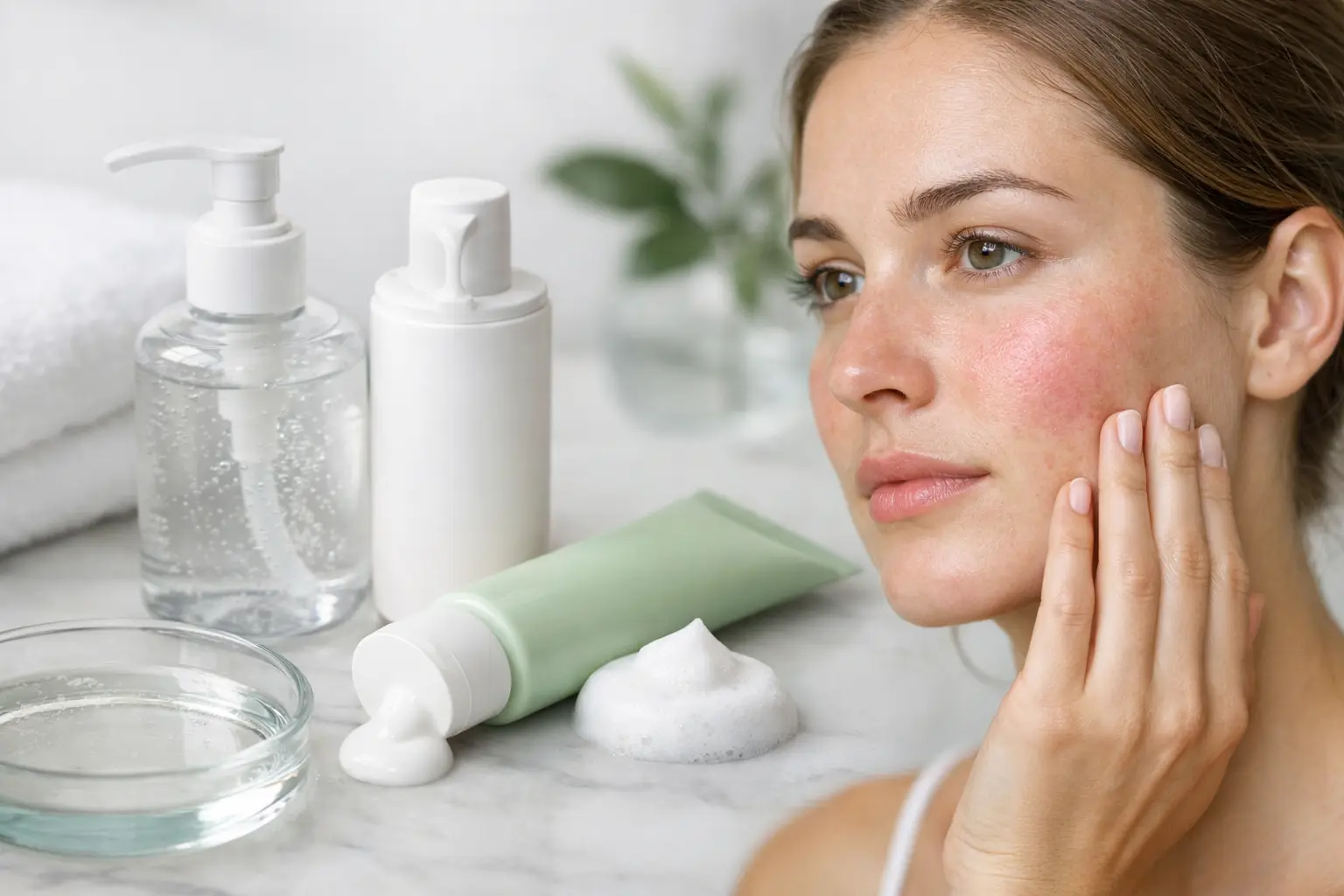
A cleanser can be the step that keeps a reactive routine stable or the one that quietly keeps it unsettled. If your skin stings after washing, feels tight before moisturizer, or cycles between redness, flakes, and breakouts, the best cleanser for reactive skin is rarely the one that promises the deepest clean. It is the one your skin can tolerate twice a day without adding to its workload.
Reactive skin does not need more activity. It needs less friction, less residue, and a formula with a clear purpose.
Why cleansing can trigger a reaction
Cleansing is necessary, but it is not neutral. Every wash removes some combination of sunscreen, makeup, sweat, oil, pollution, and surface debris. It can also remove parts of the skin’s protective lipid layer. That trade-off is normal. The issue begins when a cleanser removes too much, too often, or leaves behind ingredients your skin does not tolerate well.
A compromised skin barrier is less effective at holding water in and keeping potential irritants out. This can make familiar products suddenly feel uncomfortable. It can also make skin appear contradictory: oily around the nose or forehead, yet dry and tight elsewhere; prone to clogged pores, yet easily irritated by acne treatments.
Reactive skin is not always one fixed skin type. It can be influenced by eczema tendency, over-exfoliation, weather changes, stress, hormonal shifts, prescription treatments, and repeated use of strong cleansing products. The goal is not to find a cleanser that treats every possible cause. The goal is to remove what needs removing while preserving as much comfort as possible.
What the best cleanser for reactive skin should do
A well-chosen cleanser has a modest job description. It should rinse away daily buildup, leave skin comfortable rather than squeaky, and fit the rest of your routine without creating a cycle of irritation and repair.
Clean without the tight feeling
The clean, tight sensation after washing is often mistaken for effectiveness. For reactive skin, it is usually a warning sign. Skin should feel calm and flexible after cleansing, not stretched, hot, or desperate for moisturizer.
Look for gentle cleansing systems rather than formulas built around an aggressive degreasing effect. Mild surfactants can still cleanse thoroughly, especially when used consistently. You do not need to strip the skin to remove a normal day of sunscreen and city grime.
If you wear water-resistant sunscreen or long-wear makeup, a single very mild cleanser may not always be enough. In that case, use a simple first cleanse designed to break down makeup, followed by a gentle water-based cleanser. The second step should remain restrained. Double cleansing is useful when there is something substantial to remove, not as a ritual to perform every night regardless of need.
Keep the ingredient list purposeful
A short ingredient list is not automatically gentler, and a long one is not automatically a problem. What matters is formulation logic. For reactive skin, fewer potential triggers can make it easier to identify what works and what does not.
Fragrance is a common consideration. Natural essential oils, botanical extracts, and synthetic fragrance can all add sensory appeal, but they may also be difficult for highly reactive skin. “Natural” does not mean universally compatible. The same applies to aromatic plant oils that are often marketed as calming or purifying.
Strong exfoliating acids, scrubs, and high levels of active ingredients are usually unnecessary in an everyday cleanser for a disrupted barrier. Because cleansers are rinsed off, their benefit is limited by contact time, while their irritation potential can still be real. If you need exfoliation or targeted acne support, it is often easier to control with a separate leave-on product used at an appropriate frequency.
Respect pH, but do not treat it as a shortcut
Skin has a naturally acidic surface environment. Cleansers formulated around a skin-friendly pH may be more comfortable for many people, particularly those who are dry, eczema-prone, or easily irritated. Still, pH alone does not determine whether a cleanser is right for you.
A low-pH cleanser can contain fragrance or other ingredients that do not agree with your skin. A pH claim is useful context, not a complete answer. Consider the full formula, how your skin feels after rinsing, and whether it remains stable over several weeks.
Choose the texture based on your skin and your day
Texture can help guide the decision, though it should not replace ingredient awareness.
Cream and lotion cleansers are often a sensible place to start for dry, sensitive, or barrier-impaired skin. They tend to prioritize comfort and can be particularly useful during cold weather, periods of eczema-related dryness, or when using treatments that leave skin feeling fragile. Some may not remove heavy makeup or water-resistant sunscreen completely on their own.
Gentle gel cleansers can suit combination, oily, and acne-prone reactive skin when they cleanse without leaving a stripped finish. The label “gel” tells you very little by itself. Some gels are mild; others are designed to cut through oil aggressively. The after-feel matters more than the texture category.
Micellar water can be convenient for light cleansing or mornings when skin feels especially sensitive. However, some people do better when it is rinsed off rather than left on the skin. If you use it, pay attention to whether repeated cotton-pad friction causes redness.
Oil or balm cleansers can be useful as a first step for makeup and sunscreen removal. They should emulsify and rinse cleanly. For acne-prone skin, the question is not whether oil is inherently bad, but whether the specific formula leaves a film your skin finds congesting or uncomfortable.
A simple way to test a new cleanser
Do not introduce a new cleanser alongside a new serum, moisturizer, sunscreen, and treatment. When skin reacts, too many changes make the cause impossible to identify.
Start by using the cleanser once daily, ideally at night, for several days. Use lukewarm water and your fingertips. Hot water, washcloth friction, cleansing brushes, and extended massage can all make a gentle formula feel less gentle.
Watch for immediate stinging, lingering warmth, new dryness, tightness, or an increase in diffuse redness. Also watch for delayed changes. Small bumps, flaky patches, or a sudden need to apply more moisturizer may show up after several days rather than after the first use.
If your skin remains comfortable, move to twice-daily cleansing only if you need it. Many people with dry or reactive skin do well with a water rinse in the morning and a proper cleanse at night. Oily skin, humid climates, exercise, and regular sunscreen use may call for a morning cleanse too. There is no virtue in cleansing more often than your skin requires.
Avoid the common overcorrections
When skin is reactive, it is tempting to wash less thoroughly, scrub away flakes, or switch products constantly. None of these approaches reliably solves the underlying issue.
Skipping nighttime cleansing can leave sunscreen, makeup, sweat, and environmental residue on the skin. Scrubbing flaky areas can worsen the barrier disruption that caused the flakes. Product hopping makes it difficult to recognize patterns. A better approach is controlled consistency: one gentle cleanser, one compatible moisturizer, daily sunscreen, and targeted treatments only when the skin is settled enough to tolerate them.
Be careful with labels such as “for all skin types,” “detox,” “deep clean,” and “oil control.” They are not automatically disqualifying, but they do not tell you how a formula will behave on reactive skin. Claims should never replace observation.
When a cleanser is not the whole problem
If almost every product burns, if redness persists despite a simple routine, or if you have cracking, swelling, oozing, or a rash that keeps returning, a cleanser change may not be sufficient. These signs can point to an underlying skin condition, contact allergy, or treatment need that deserves professional assessment.
The same is true if acne treatments, retinoids, or exfoliants are part of your routine. A gentle cleanser can support tolerance, but it cannot fully offset a leave-on product that is being used too often or is too strong for your skin at that time.
Calmora Natural’s approach is straightforward: fewer, better products, each chosen for a specific role. For reactive skin, cleansing should be the quietest step in the routine. Choose the formula that removes the day, leaves your skin comfortable, and gives your barrier the space to recover.
Leave a Reply