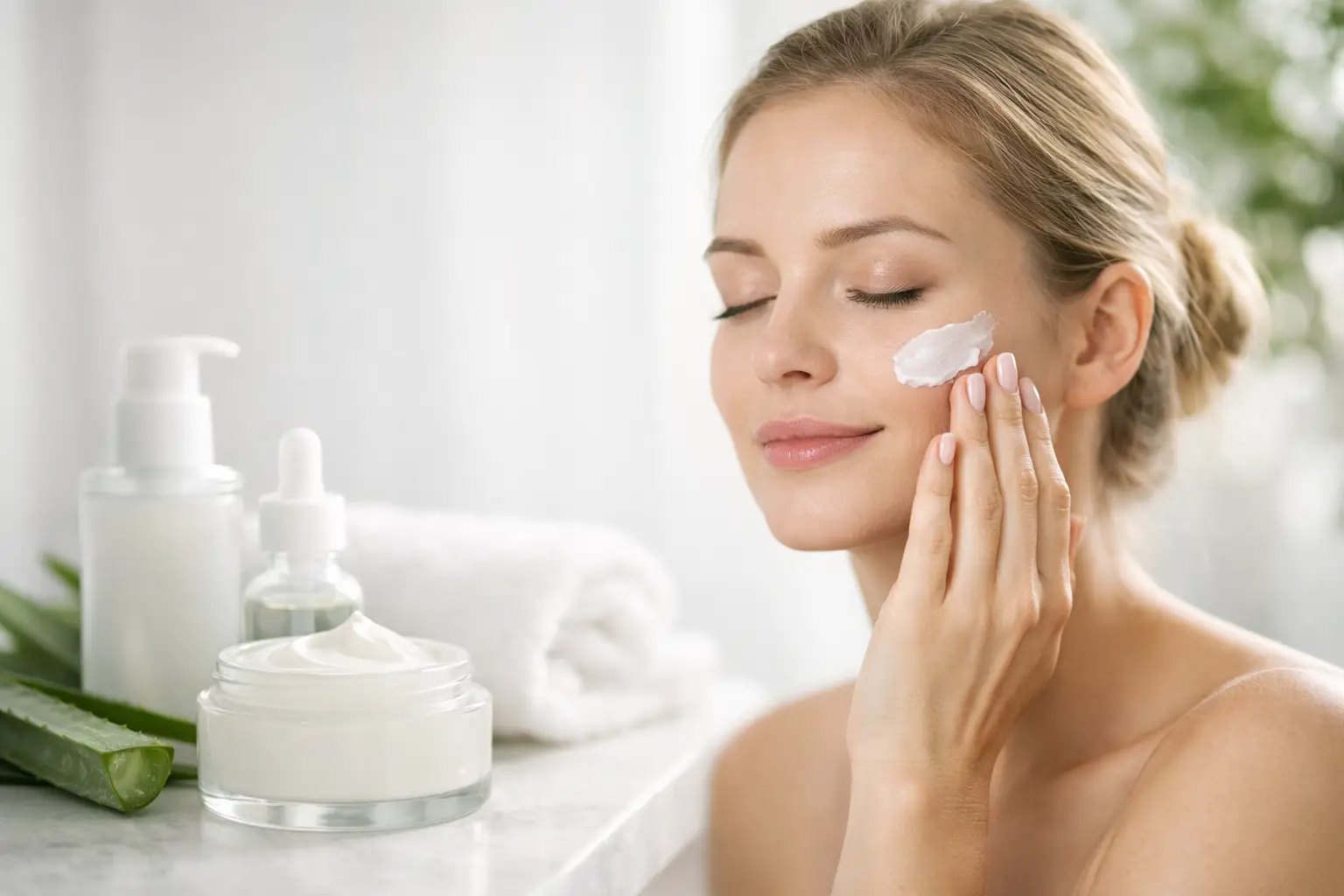
A moisturizer should make your skin feel quieter within minutes. If it stings, leaves heat behind, or seems to trigger a new round of dryness by afternoon, something is off. For people searching for a sensitive skin moisturizer, the real goal is not a richer texture or a longer ingredient list. It is a formula that helps the skin barrier do its job with as little friction as possible.
Sensitive skin is often treated like a vague skin type. In practice, it is usually a pattern. Skin reacts too easily to fragrance, strong acids, essential oils, harsh cleansing, climate shifts, or simply too many products layered at once. Sometimes the skin is naturally reactive. Sometimes it has been pushed there by overuse.
That is why a good moisturizer for sensitive skin should be judged less by marketing language and more by formulation logic. What supports the barrier? What reduces water loss? What is left out because it adds little functional value?
What a sensitive skin moisturizer should actually do
At a basic level, moisturizer helps reduce transepidermal water loss and improves comfort. For sensitive skin, that baseline job matters more because compromised skin loses water faster and tolerates less. The right formula helps restore balance, not just cover symptoms for a few hours.
A well-designed sensitive skin moisturizer usually focuses on three things. First, humectants such as glycerin draw water into the upper layers of the skin. Second, emollients soften roughness and improve flexibility. Third, occlusive ingredients help slow moisture loss. You do not always need a heavy cream to get these benefits. The best texture depends on how dry, oily, acne-prone, or climate-exposed your skin is.
Barrier-supporting ingredients can also make a meaningful difference. Ceramides, squalane, panthenol, colloidal oatmeal, and carefully used fatty acids are often helpful because they support comfort and skin function without forcing rapid change. That last point matters. Sensitive skin usually responds better to consistency than intensity.
Why some moisturizers irritate sensitive skin
The most common problem is not that a formula is “bad.” It is that it asks too much of reactive skin. Fragrance is a frequent issue, even when it smells clean or subtle. Essential oils can be another. Plant extracts sound gentle in theory, but more ingredients do not always mean more compatibility.
This is one reason ingredient awareness matters. Natural ingredients are not automatically safer, and synthetic ingredients are not automatically harsher. Function matters more than identity. If an ingredient improves stability, lowers irritation risk, or supports the barrier, it may be the better choice. A disciplined formula often outperforms a more romantic one.
Preservatives also get misunderstood. Sensitive skin does not benefit from contaminated skincare. A properly preserved product is part of skin safety. The better question is whether the overall formula is balanced and whether known triggers have been minimized.
There is also the issue of over-treatment. Many people use exfoliants, retinoids, acne treatments, brightening serums, and spot products at the same time, then expect moisturizer to repair the damage overnight. It usually cannot. Even a very good moisturizer works best when the rest of the routine is not constantly disrupting the barrier.
How to read a formula without overcomplicating it
You do not need to memorize every ingredient. A more useful approach is to look for signals.
If a product leads with fragrance or multiple essential oils, it may not be the best starting point for reactive skin. If it includes familiar barrier-supporting ingredients and keeps the formula relatively focused, that is often a better sign. If the claims promise dramatic correction, resurfacing, glow, pore refinement, and anti-aging in one jar, caution is reasonable. Sensitive skin usually does better with products that have a narrow purpose and execute it well.
Texture can also tell you something. Gel creams may suit oily or humid-climate skin, but some are too light for persistent dryness or eczema-prone areas. Thick balms can be very helpful for severe dryness, but they may feel excessive on acne-prone skin or in hot weather. There is no ideal texture in the abstract. There is only a better match for your skin condition, routine, and environment.
Choosing a sensitive skin moisturizer by skin concern
Dry and tight skin generally needs a cream with stronger barrier support and better water-loss control. In this case, a lightweight lotion may feel pleasant but not last long enough. You may need a richer cream at night and a lighter layer during the day.
Sensitive and acne-prone skin is a more nuanced case. Many people avoid moisturizer because they fear breakouts, then end up with a weaker barrier and more irritation from acne treatments. Here, a lighter moisturizer with humectants, balanced emollients, and non-heavy occlusives often works better than either extreme. Too little can leave the skin inflamed. Too much can feel congestive. It depends on both the formula and the rest of your routine.
For eczema-prone skin, simplicity usually matters even more. Fewer variables make it easier to identify triggers. Fragrance-free, barrier-focused creams tend to be the most practical place to start. During flares, comfort and protection take priority over cosmetic elegance.
Menopausal skin often needs more than a standard lightweight lotion. Skin can become thinner, drier, and more reactive, even if it was previously resilient. In that case, a moisturizer that combines hydration with lipid support can help reduce that persistent feeling of fragility.
Climate plays a role too. In places with high heat and humidity such as Malaysia or Singapore, many people prefer lighter textures, but humidity does not always solve barrier impairment. Air conditioning, frequent cleansing, and active use can still leave skin dehydrated and reactive. A breathable but barrier-supportive formula is often the better fit than simply choosing the lightest option available.
How to introduce a new moisturizer without creating noise
Even a well-formulated product can be hard to assess if you change five things at once. Start with clean skin and use the moisturizer as one of the only variables in the routine for several days if possible. That gives your skin a fair chance to respond.
Apply it on slightly damp skin, especially if dehydration is part of the problem. This can improve how well humectants perform. Use enough product to create comfort, but not so much that it sits heavily and makes you want to wash it off. Twice daily is typical, though some skin does fine with a lighter morning application and a more generous evening layer.
Patch testing is sensible, especially if your skin has a history of reacting unpredictably. Test on a small area for a few days before using it more broadly. This is not a guarantee, but it reduces unnecessary setbacks.
If you are also using retinoids, benzoyl peroxide, exfoliating acids, or prescription treatments, moisturizer can be used strategically to reduce friction. Sometimes applying moisturizer before or after an active improves tolerance. The best sequence depends on the product, the strength of the active, and how reactive your skin is.
Signs your moisturizer is working
The first improvement is often not visual. It is a reduction in discomfort. Less stinging after cleansing. Less tightness during the day. Fewer random red patches. Over time, skin may look more even simply because it is less irritated.
A good sensitive skin moisturizer should make the rest of your routine easier, not more complicated. Makeup may sit better. Cleansing may feel less disruptive. You may feel less pressure to keep adding rescue products.
That said, if a moisturizer pills, burns repeatedly, causes persistent congestion, or seems to trap heat in the skin, it may not be the right fit. Products can be well made and still wrong for your needs. That is not failure. It is information.
Fewer products, better decisions
Sensitive skin often improves when the routine gets smaller. One reliable cleanser, one well-matched moisturizer, daily sunscreen, and carefully chosen treatments only when needed can do more than an overflowing shelf. Calmora Natural is built around that idea for a reason. Skin under stress rarely benefits from excess.
The best sensitive skin moisturizer is rarely the loudest one. It is the one that respects the skin barrier, avoids unnecessary complexity, and performs consistently enough that you stop thinking about it. When your skin feels calm, that is usually the clearest sign you chose well.
If your skin has been sending mixed signals, start by removing noise before adding more. The right moisturizer should feel less like a promise and more like relief.
Leave a Reply