
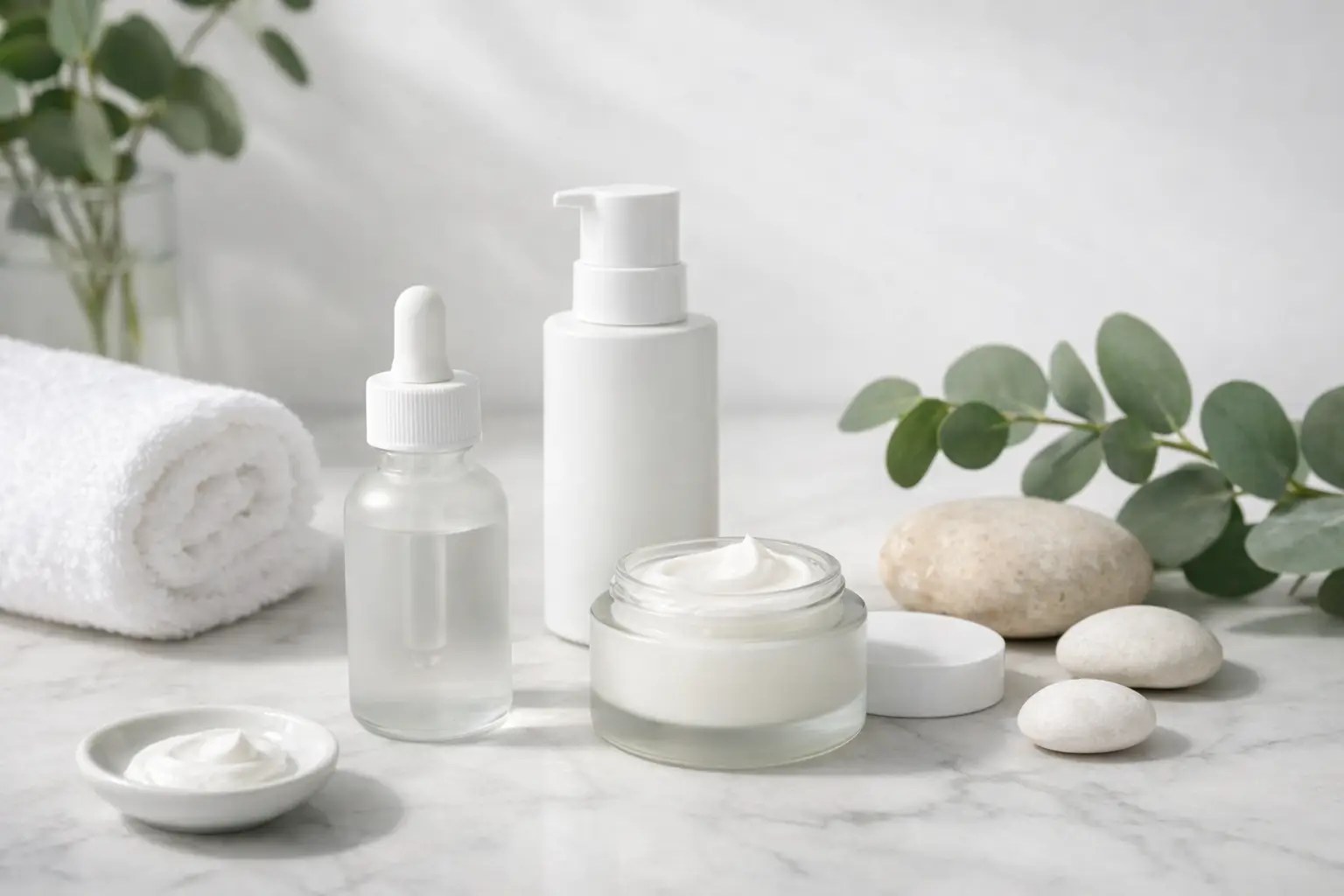
When your skin flares after a new serum, stings after cleansing, or feels tight no matter how much you apply, adding more products rarely helps. Minimalist skincare for sensitive skin works because sensitivity is often aggravated by excess – too many actives, too much fragrance, too many steps, and too little consistency.
A shorter routine is not a compromise. For reactive skin, it is often the more disciplined approach. The goal is not to do the least possible. The goal is to do what is necessary, useful, and tolerable, then repeat it long enough for skin to stabilize.
Why minimalist skincare for sensitive skin works
Sensitive skin is not one fixed condition. For some people, it means visible redness and frequent stinging. For others, it shows up as dryness, itching, breakouts, or patches that seem to react to everything. Eczema-prone skin, acne-prone skin with a damaged barrier, and menopausal skin can all behave this way for different reasons.
That is why a crowded routine can become a problem even when each product seems reasonable on its own. A mild exfoliant, a vitamin C serum, a retinoid, an acne treatment, and a fragranced moisturizer may all be manageable separately. Layered together, they can push already vulnerable skin past its limit.
Minimalism creates control. When you use fewer products, it becomes easier to identify what supports your skin and what disrupts it. It also reduces cumulative irritation, which is often what keeps sensitive skin in a constant cycle of flare and recovery.
What sensitive skin usually needs less of
The usual advice is to focus on what to add. In practice, sensitive skin often improves when you first reduce what is unnecessary.
That may include strong fragrance, essential oils used for scent, high-frequency exfoliation, multiple active serums, harsh cleansers, or the habit of changing products too quickly. Even well-marketed formulas can create noise in a routine if they do not serve a clear purpose.
This does not mean every active ingredient is off-limits. It means tolerance matters more than trend value. If your skin is already reactive, the smartest routine is often the one with the fewest variables.
The core routine: three steps are often enough
For most people, minimalist skincare for sensitive skin can begin with three categories: a gentle cleanser, a moisturizer, and daily sun protection. That foundation covers cleansing, barrier support, and environmental protection without asking skin to process six competing priorities at once.
Cleanser
A cleanser should remove sweat, sunscreen, excess oil, and daily buildup without leaving skin squeaky, tight, or hot. That stripped feeling is not proof of cleanliness. It is often a sign your barrier has been pushed too far.
If your skin is very dry or compromised, you may not need a full cleanser in the morning. Rinsing with lukewarm water can be enough. At night, cleanse thoroughly but gently. One well-formulated cleanser is usually more useful than a rotation of foam, scrub, acid wash, and cleansing balm.
Moisturizer
A moisturizer should reduce water loss and support barrier function. For sensitive skin, this matters more than chasing fast cosmetic results. Skin that is under-moisturized becomes easier to irritate and slower to recover.
Texture depends on your skin type. Dry or eczema-prone skin may prefer a richer cream. Oily or acne-prone sensitive skin may do better with a lighter lotion or gel-cream. The point is not to choose the richest product available. It is to choose one your skin will accept every day.
Sunscreen
Sun exposure can intensify redness, pigmentation, dryness, and overall reactivity. Daily sunscreen is often the most important preventive step in the routine, especially if your skin is already inflamed or if you are using any active treatment.
Sensitive skin does not always tolerate every sunscreen format equally. Some people do better with mineral filters. Others tolerate modern chemical filters well if the base formula is gentle. It depends on your skin, the climate, and whether the product causes stinging around the eyes or on compromised areas. Comfort matters because the best sunscreen is the one you can actually wear consistently.
When to add a treatment, and when not to
A minimalist routine does not forbid treatment products. It simply asks for a reason before adding them.
If your main concern is acne, pigment, rough texture, or visible aging, one targeted treatment may make sense. But one is often enough to start. Add it slowly, use it consistently, and give it time. Sensitive skin usually responds better to measured use than aggressive correction.
This is where many routines become unnecessarily complicated. People add a barrier serum, brightening serum, calming serum, exfoliant, retinoid, and spot treatment at once, then wonder why their skin becomes harder to manage. The problem is not always one bad product. It is often cumulative burden.
A better approach is to ask three questions before adding anything: Does this address a real concern, is my skin stable enough for it, and can I remove something else if I introduce it? If the answer to the last question is no, the routine may already be full.
How to choose products with a minimalist mindset
Minimalism is not about the shortest ingredient list. A product can have many ingredients and still be thoughtfully formulated. What matters is function, compatibility, and whether every component earns its place.
Look for products with a clear role. A cleanser should cleanse gently. A moisturizer should support hydration and barrier integrity. A treatment should target one issue without dragging three more into the routine.
Be cautious with products built around excitement rather than utility. If the appeal rests mainly on novelty, scent, or the promise of doing everything at once, it may not be the best fit for reactive skin. Sensitive skin tends to do better with formulas that are restrained, not performative.
Patch testing remains useful, but it is not a guarantee. A product can pass on the arm and still irritate the face over repeated use. Introduce one new product at a time and observe for at least one to two weeks when possible.
Minimalist skincare for sensitive skin in humid and changing climates
In places like Malaysia and Singapore, humidity can complicate product choice. Skin may be dehydrated but still feel oily. Heavy layering can become uncomfortable quickly, especially in warm weather. That does not mean barrier support is less important. It means texture and tolerance become even more relevant.
A lightweight moisturizer may be enough during the day, while a richer product works better at night. Cleansing may need to be more consistent because of sweat and sunscreen use, but harsh washing can still backfire. In a climate that encourages over-cleansing, restraint is often more effective.
Travel, air conditioning, seasonal shifts, and urban pollution can also change what your skin tolerates. A minimalist routine makes those adjustments easier because you are working from a clear baseline rather than trying to troubleshoot eight products at once.
Signs your routine is still too much
Sometimes a routine looks minimal on the shelf but is still too active in practice. If your skin stays persistently tight, flushed, flaky, itchy, or stingy, the issue may not be that you need another calming product. You may need less overall stimulation.
Frequent breakouts can also be misleading. Some sensitive, acne-prone skin is being over-treated rather than under-treated. When barrier function is compromised, skin can become both inflamed and congested. Adding stronger actives is not always the fix.
If your skin feels unpredictable, pause the extras and return to basics for a few weeks. A calm routine often reveals more than a corrective one.
What minimal, without compromise actually looks like
A useful minimalist routine is not bare for the sake of being bare. It is selective. It protects the barrier, respects skin variability, and avoids the false comfort of doing more simply because more is available.
That approach is especially relevant for people who are tired of rotating through products that promise fast transformation but leave skin less stable than before. Fewer, better products can be a practical standard, not a branding phrase. Calmora Natural is built around that principle because sensitive skin usually responds best to clarity, not clutter.
If your routine has become a negotiation between irritation and hope, simplify until your skin stops arguing with you. Stability is not a small result. For sensitive skin, it is often the result that makes every other improvement possible.
Leave a Reply