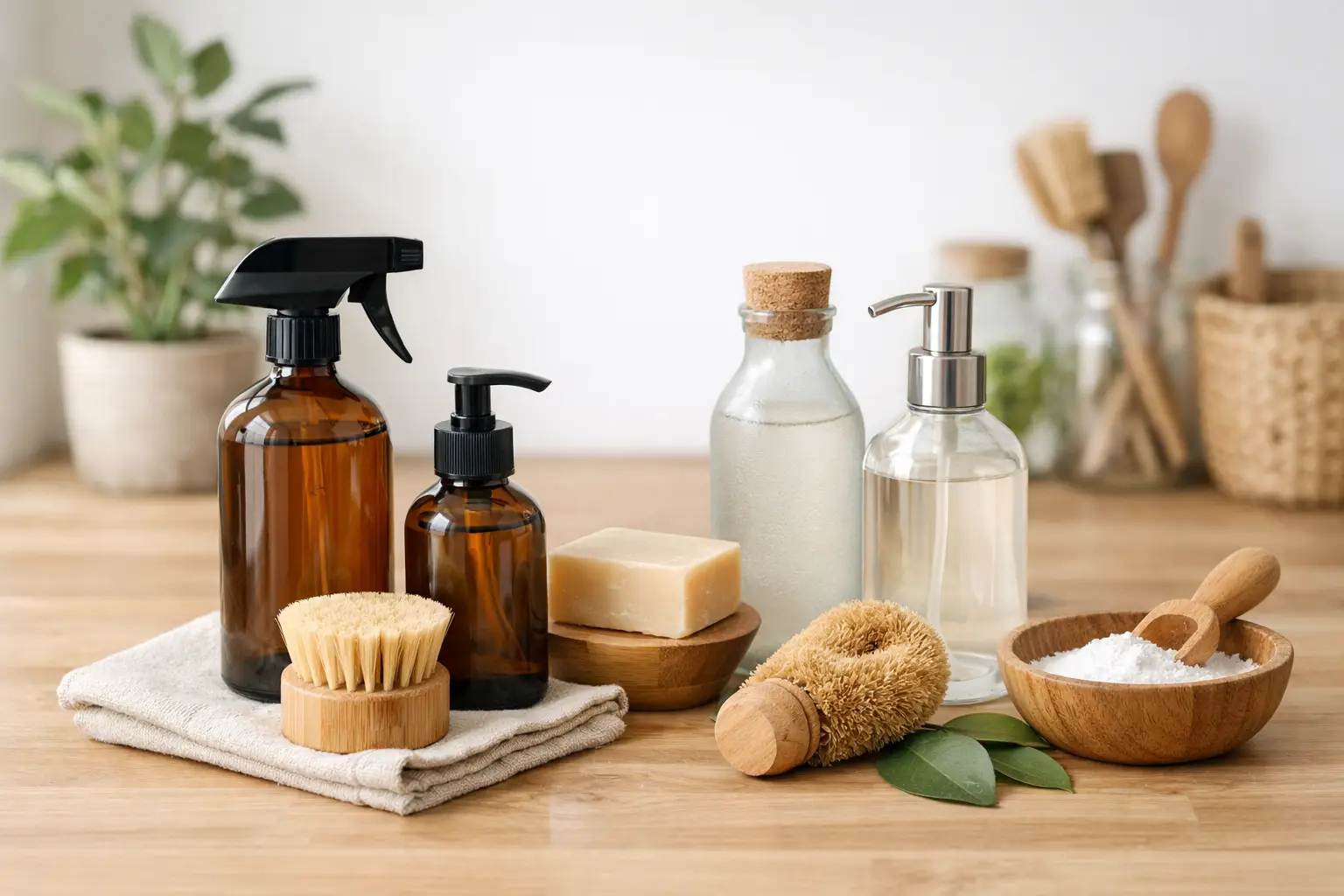
A crowded cabinet is not a sustainable homecare system. Eco friendly homecare products should reduce unnecessary waste without leaving you with weak cleaning performance, confusing directions, or a different bottle for every surface. The better approach is more disciplined: select a small number of products that work well, are used fully, and fit the real needs of your home.
For households with children, pets, sensitive skin, allergies, or recurring irritation, the label matters for more than environmental reasons. Fragrance, surfactants, preservatives, and residues can all affect how a product feels to use. But “natural” is not a guarantee of gentleness, and “eco” is not a substitute for effective cleaning. Purpose, formulation, and use all matter.
What Eco Friendly Homecare Products Should Do
A responsible homecare product has several jobs. It should clean the intended surface effectively, be safe when used as directed, avoid unnecessary material and packaging, and create as little environmental burden as practical across its life cycle. These goals can support each other, but they do not always align perfectly.
For example, a highly concentrated cleaner can reduce water shipped in a bottle and use less packaging per application. It may also require more careful dilution. A refill pouch may use less material than a rigid bottle, yet only makes sense if the original bottle is durable enough to be reused repeatedly. A biodegradable ingredient is useful, but its real-world impact also depends on local wastewater treatment and the conditions needed for it to break down.
This is why a single green symbol or broad claim should not make the decision for you. Look for a clear product purpose and a company willing to explain what the formula is designed to do. Clear information is more useful than a long list of vague environmental promises.
Start With Fewer, Better Categories
Most homes do not need a separate spray for glass, counters, bathrooms, floors, appliances, and every minor task. Specialized products have a place when a surface or hygiene need genuinely calls for one. Yet duplication is common, and it leads to half-used bottles, expired stock, and more plastic under the sink.
A considered system often begins with an all-purpose cleaner suited to sealed hard surfaces, a dishwashing product, a laundry product, and a bathroom cleaner for mineral deposits or soap buildup. Add a targeted disinfectant only when it is needed for a specific hygiene situation and when it has directions appropriate to the surface.
This is not an argument for using one formula everywhere. Natural stone, unfinished wood, painted surfaces, screens, and certain metals require care. It is an argument for not buying complexity by default. Before adding another product, ask whether it solves a distinct problem that your current system cannot handle safely.
Match the Formula to the Job
Cleaning and disinfecting are related but different tasks. A cleaner removes soil, grease, and residue. A disinfectant is designed to reduce certain microorganisms when used according to the stated contact time. Using a disinfectant on an already dirty surface may be less effective, while using one routinely for every small spill can add unnecessary chemical exposure and cost.
For daily maintenance, effective cleaning with a suitable product, water, and mechanical action is often enough. For kitchens, bathrooms, laundry, or high-touch areas, the right choice depends on the situation. Follow dilution instructions, ventilation guidance, and surface compatibility. More product does not necessarily mean a cleaner result. It can mean more residue to rinse away.
Read Beyond “Natural” and “Non-Toxic”
Ingredient awareness is sensible, especially in homes where skin sensitivity is a concern. Still, marketing language can flatten important differences. “Non-toxic” is broad and rarely explains dose, use conditions, or exposure route. “Plant-based” describes an ingredient source, not automatically its performance or irritation potential.
Fragrance is one area worth considering carefully. A scented cleaner can make a room feel freshly cleaned, but fragrance blends may be difficult to evaluate and can be unwelcome for people prone to headaches, eczema flare-ups, or respiratory sensitivity. Fragrance-free options are often the simpler choice for routine cleaning. If you prefer a scent, choose one you tolerate well and use it with restraint.
Essential oils deserve the same practical scrutiny as any other ingredient. They are not inherently harmful, but they are concentrated substances that can trigger irritation or sensitivities in some people. They can also be unsafe for certain pets when diffused or used carelessly. The relevant question is not whether an ingredient sounds natural. It is whether the finished formula is appropriate for its purpose and for the people and animals in your home.
Packaging Is Part of the Product
The most sustainable package is not always the smallest-looking one. A durable bottle that is refilled many times may be a better choice than repeated purchases of disposable bottles. A concentrated product can lower transport weight and storage needs. A package made from recycled material can support demand for recovered plastic, although it should still be recycled correctly where facilities exist.
Focus on the pattern, not perfection. Buy a size you can realistically finish before it degrades or becomes inconvenient to store. Reuse durable dispensing bottles when compatible with the product. Do not mix leftover cleaners together, and do not refill a bottle unless its label and manufacturer instructions allow it. Clear labeling protects both safety and product performance.
In dense urban homes, including many in Malaysia, Singapore, and Japan, storage can be limited. Concentrates and refill systems can be practical as well as lower-waste, provided they are simple to measure and safe to keep away from children and pets. A sustainability claim has more value when it makes everyday use easier, not more complicated.
Build a Lower-Waste Cleaning Routine
The product is only one part of homecare. How it is used has a meaningful effect on waste, indoor air, and how quickly supplies are replaced. Use the stated amount rather than pouring freely. Allow products the required time to work before wiping. A reusable cloth or scrubber can reduce disposable paper use, but it needs regular washing and complete drying to stay hygienic.
Laundry is another area where restraint helps. Overdosing detergent can leave residue on clothes, reduce rinse efficiency, and be especially uncomfortable for sensitive skin. Use the amount appropriate for the load size, water hardness, and soil level. Wash cooler when fabric care instructions allow, but do not treat cold washing as a rule that overrides hygiene needs for heavily soiled items.
For stubborn cleaning tasks, patience often reduces product use. Let a suitable cleaner sit briefly on soap scum or grease, then wipe or scrub gently. Repeated light maintenance usually requires less effort and fewer aggressive products than waiting for buildup to become severe.
Questions Worth Asking Before You Buy
A good product decision does not require a chemistry degree. It requires a few honest questions: What exact task will this perform? Can I use it consistently and finish it? Does it have clear directions and ingredient information? Is the packaging designed for reuse, recycling, or reduced material use? Will it be suitable for the surfaces and sensitivities in my home?
Be cautious with products that promise to clean every material, eliminate every concern, and transform a home instantly. Strong claims can hide weak specificity. A more credible product explains its limits. It may state which surfaces to avoid, whether a patch test is sensible, how to dilute it, and when ventilation is needed. Those details are not obstacles. They are signs of care.
Eco friendly homecare products are most useful when they become ordinary: a reliable dish liquid, a well-formulated surface cleaner, a laundry essential used at the right dose. The goal is not a perfectly green cabinet. It is a calmer one, built around products with a clear purpose, fewer avoidable purchases, and habits that respect both your home and the resources behind every bottle.
Choose the next replacement carefully, use it completely, and let usefulness – not novelty – determine what earns a place in your routine.
Leave a Reply