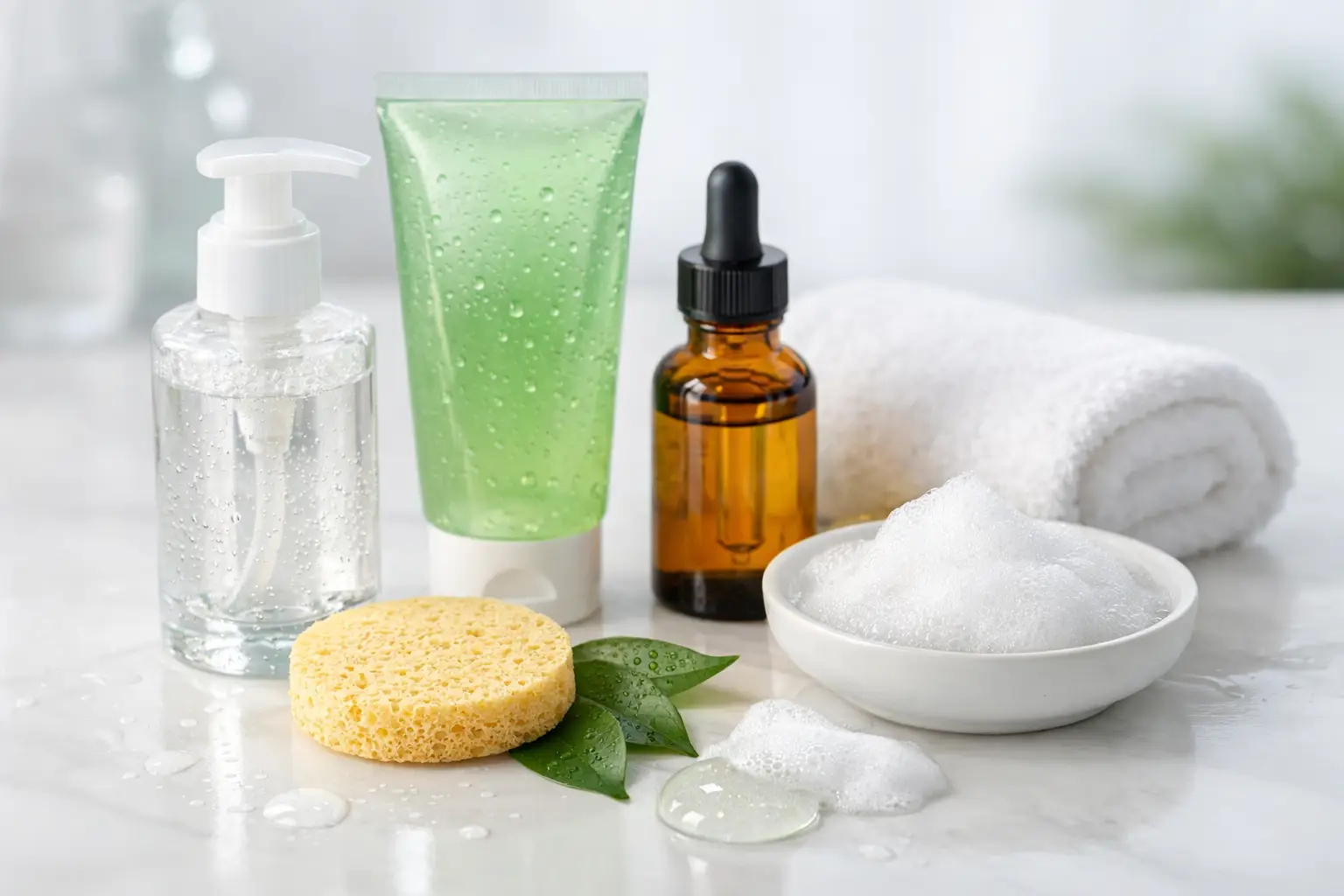
Oil is not the problem. Your skin needs it to support its barrier, reduce water loss, and remain comfortable. The purpose of an oily skin cleanser guide is not to help you remove every trace of shine. It is to help you choose a cleanser that lifts sweat, sunscreen, makeup, and excess surface oil without leaving skin tight, reactive, or caught in a cycle of over-cleansing.
For oily or acne-prone skin, more cleansing is not automatically better cleansing. A routine that feels aggressively clean can lead to dryness, irritation, and an uncomfortable rebound of shine. Fewer, better steps usually make it easier to see what your skin actually needs.
Start With the Difference Between Oil and Buildup
Sebum is the skin’s natural oil. It can become more noticeable because of genetics, humidity, hormones, stress, certain medications, or skincare products that are too heavy for your skin. In warm, humid climates such as Malaysia and Singapore, sweat and sunscreen can also make the face feel oily sooner, even when the skin is not producing unusually high levels of sebum.
Buildup is different. It includes sunscreen, makeup, airborne particles, sweat, and the residue left by products. A cleanser should remove this daily layer. It does not need to make your skin feel squeaky or dry to work well.
That distinction matters because many people with oily skin respond to shine by using harsh cleansers, facial scrubs, or frequent washing. These approaches may remove oil temporarily, but they can also compromise the barrier. When skin becomes irritated or dehydrated, it may feel both oily and uncomfortable at once.
Oily Skin Cleanser Guide: What to Look For
The best cleanser for oily skin is often a simple, well-balanced formula rather than the strongest product on the shelf. Look first at how your skin feels 10 to 20 minutes after cleansing. Comfortable, clean, and calm is the aim. Tightness, stinging, flaking, or sudden redness are signs that the formula or frequency may not suit you.
A low-foam gel or gentle foaming cleanser can be a sensible starting point for many people with oily skin. These textures are usually effective at rinsing away daily buildup while being easier to control than rich cleansing balms or heavy oils. That said, a foaming cleanser is not inherently harsh, and a cream cleanser is not inherently too rich. The formula, the amount used, and your individual skin condition all matter.
If you are prone to clogged pores or breakouts, a cleanser containing salicylic acid may be useful. Salicylic acid is oil-soluble, so it can help clear dead skin cells and oil from inside the pore lining. It is not necessary for everyone, and it is not always appropriate twice a day. Start slowly, particularly if you also use a retinoid, leave-on exfoliant, or acne treatment.
Fragrance-free options are often worth considering when oily skin is also sensitive, eczema-prone, or easily irritated. Fragrance is not automatically harmful, but it rarely adds functional value to a cleanser. A simpler formula can reduce one more variable when you are trying to understand recurring congestion or sensitivity.
Ingredients Need Context, Not Hype
Ingredient lists can be helpful, but they do not tell the full story on their own. A cleanser is a rinse-off product, so its surfactant system, pH, and overall formulation balance often matter more than one headline ingredient.
Gentler surfactants can clean effectively without the stripped feeling associated with some stronger cleansing systems. Humectants such as glycerin can help offset the dry feel that cleansing may cause. Barrier-supportive ingredients can be beneficial, although their impact in a rinse-off format is usually more modest than in a leave-on moisturizer or serum.
Natural ingredients deserve the same measured assessment as any other ingredient. A botanical extract may have a clear purpose, but natural origin does not guarantee compatibility for every person. Essential oils, fragrant plant extracts, and physical exfoliating particles can be problematic for reactive skin, especially when used frequently. Choose products for function, not for a simplistic natural-versus-synthetic label.
How Often Should You Cleanse?
For most oily skin types, cleansing twice daily is sufficient: once in the morning and once at night. Morning cleansing removes overnight sweat, oil, and residual skincare. Evening cleansing removes the day from your skin, including sunscreen and environmental debris.
There are exceptions. If your skin feels dry or sensitized in the morning, a water rinse may be enough before moisturizer and sunscreen. If you exercise, sweat heavily, or wear water-resistant sunscreen and makeup, an additional rinse or a thoughtful first cleanse may be appropriate. The key is not treating every instance of shine as dirt that must be removed.
Nighttime is usually the more important cleanse. Use lukewarm water, massage gently for around 20 to 30 seconds, and rinse thoroughly around the hairline, jaw, and sides of the nose. Hot water and prolonged scrubbing add irritation without improving results.
When Double Cleansing Makes Sense
Double cleansing is useful when you wear long-wearing makeup, water-resistant sunscreen, or heavy complexion products. The first step helps loosen the resistant layer; the second water-based cleanser removes what remains.
It is not required every night just because you have oily skin. If you do not wear makeup and your sunscreen rinses away well with one cleanser, a single thorough cleanse may be enough. Double cleansing by default can be excessive for skin that is dehydrated, inflamed, or using active acne treatments.
If you choose an oil-based first cleanse, look for one that emulsifies and rinses cleanly. Follow it with a gentle water-based cleanser only when needed. Persistent congestion after introducing a first cleanser may mean the product is too rich for your preferences, that it is not being rinsed fully, or that another part of the routine needs attention.
Avoid the Common Over-Cleansing Cycle
The most recognizable warning sign is skin that feels clean immediately after washing but becomes oily, itchy, or irritated later in the day. This can happen when a cleanser is too strong, used too often, or paired with too many exfoliating products.
Be cautious with facial brushes, grainy scrubs, astringent toners, and alcohol-heavy formulas. They may create a temporary dry finish, but they are not a reliable long-term strategy for oil control. Acne is also not a cleanliness failure. Increasing cleansing intensity will not necessarily resolve it and can make treatment routines harder to tolerate.
Instead, keep the core routine stable for several weeks. Cleanse, use one appropriate treatment if needed, moisturize, and apply sunscreen in the morning. A lightweight moisturizer is still useful for oily skin. Skipping it can leave skin feeling dehydrated and less comfortable, particularly in air-conditioned environments or when acne treatments are involved.
Match the Cleanser to Your Current Skin State
Oily skin is not always the same skin from month to month. Hormonal shifts, travel, weather, stress, and new treatments can change its behavior. During a breakout, a salicylic acid cleanser used a few times a week may be a useful addition. During irritation, scaling, or post-treatment dryness, a non-exfoliating gentle cleanser is usually the wiser choice.
If your skin is oily but also flaky, do not assume you need more exfoliation. Flaking can signal dehydration, irritation, dermatitis, or an impaired barrier. Simplify first. Use a mild cleanser, pause unnecessary actives, and add a compatible moisturizer. If persistent acne, burning, rash, or peeling is affecting your daily life, a dermatologist can help identify whether the concern is acne, dermatitis, rosacea, or something else.
A cleanser has one focused job: to leave skin clean enough for the rest of your routine, not stripped enough to feel different. Choose the least aggressive formula that removes your daily buildup consistently. That is often the more sustainable path to skin that feels balanced, clear, and easier to care for.
Leave a Reply