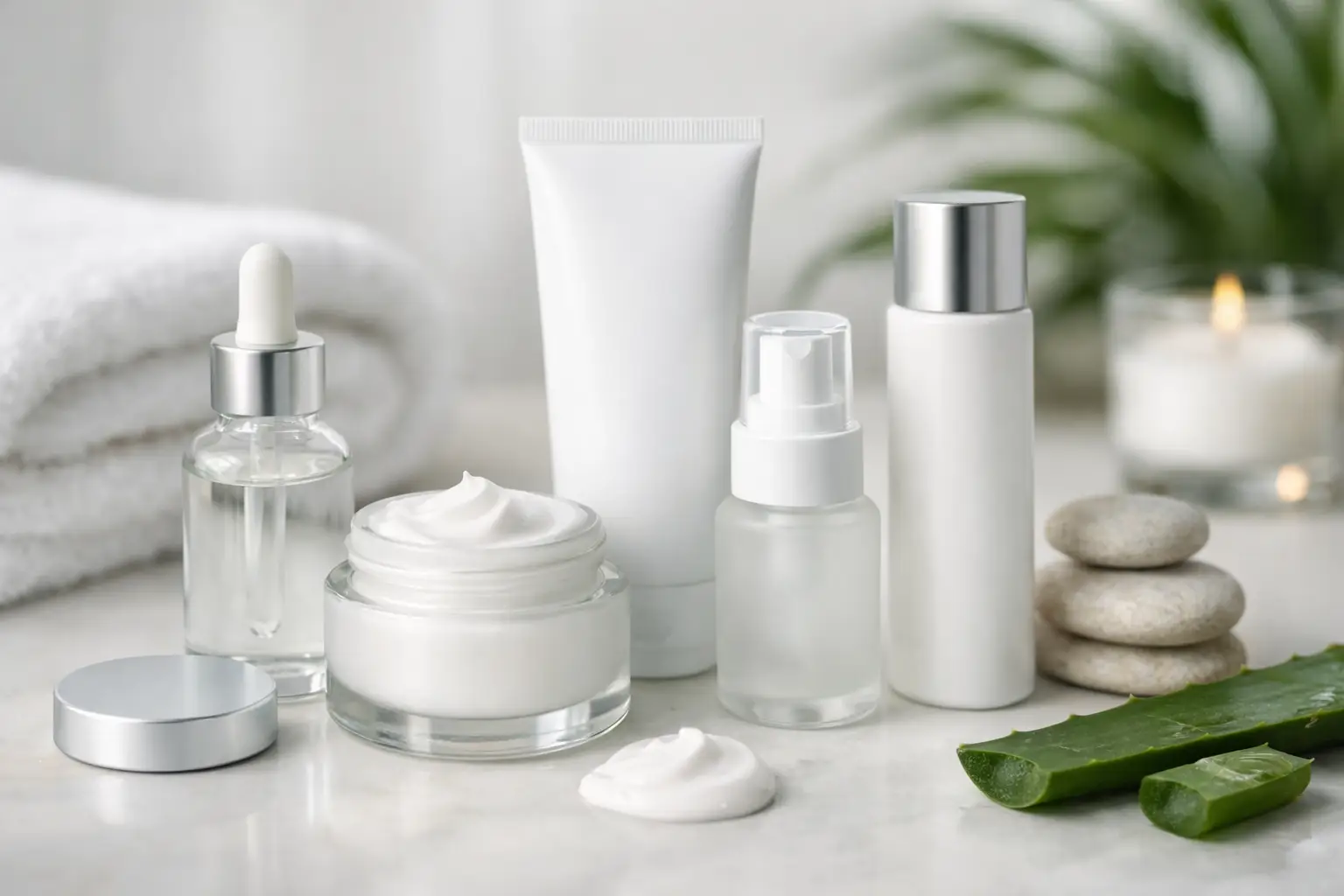
When skin suddenly stings after cleansing, flakes beneath makeup, or reacts to products it once tolerated, adding more products is rarely the answer. The best products for skin barrier support are usually the ones that reduce friction, replace what the skin is missing, and give it time to settle.
A compromised barrier is not a skin type. It is a state the skin can move into after over-cleansing, frequent exfoliation, acne treatments, dry air, hormonal shifts, friction, or a flare of an underlying condition such as eczema. The goal is not a dramatic overnight transformation. It is consistent comfort, less reactivity, and skin that can hold on to moisture more effectively.
What Makes a Product Good for the Skin Barrier?
The outermost layer of skin works as a selective boundary. It helps retain water while limiting exposure to irritants and environmental stressors. When that structure is under strain, water escapes more easily. Skin may feel tight yet look oily, become rough or red, or develop a persistent sensitivity that makes even simple products uncomfortable.
Good barrier-support products do three practical jobs. They cleanse without excessive stripping, bring water into the upper layers of skin, and slow the loss of that water with lipids and protective ingredients. A product does not need a long ingredient list to do this well. In fact, for reactive skin, fewer potential triggers can make a routine easier to maintain.
Look beyond broad claims such as “natural,” “clean,” or “repairing.” Natural ingredients can be useful, but they are not automatically suitable for irritated skin. Essential oils, fragrant plant extracts, and high levels of some botanical ingredients can be problematic for certain people. Compatibility and formulation purpose matter more than a label category.
Best Products for Skin Barrier Support
A low-stripping cleanser
Cleansing is where many barrier routines go wrong. A cleanser that leaves skin squeaky, tight, or noticeably dry has removed more than daily buildup. This can be especially relevant for oily and acne-prone skin, where the instinct is often to cleanse more aggressively.
Choose a gentle, low-foam or cream-based cleanser that removes sunscreen, sweat, and light makeup without leaving a film of discomfort. Mild surfactant systems, a skin-friendly pH, and a fragrance-free formula are sensible priorities. If you wear heavy makeup or water-resistant sunscreen, use a gentle first cleanse followed by a mild water-based cleanser rather than scrubbing with one harsh product.
For very dry or eczema-prone skin, morning cleansing may not always be necessary. A rinse with lukewarm water can be enough if there is no significant oil, sweat, or product to remove. This depends on individual comfort and climate, but it is a simple adjustment worth testing.
A moisturizer with humectants, lipids, and occlusives
A barrier moisturizer should not be judged by texture alone. Light gels can feel pleasant in humid conditions, while richer creams can provide more lasting comfort in air-conditioned rooms, during travel, or when skin is actively dry. The best choice is the one your skin can use consistently without congestion, burning, or reluctance to apply enough.
Look for three functional groups in a moisturizer. Humectants such as glycerin, hyaluronic acid, panthenol, and beta-glucan help bind water near the skin’s surface. Emollients such as squalane and fatty alcohols smooth rough texture and improve flexibility. Occlusives such as petrolatum, dimethicone, and certain waxes reduce water loss by creating a breathable protective layer.
Ceramides, cholesterol, and fatty acids are also useful because they reflect lipids naturally present in the skin barrier. They are not mandatory in every effective moisturizer, but a balanced lipid-based cream can be a strong option for persistent dryness, flaking, or sensitivity.
Texture is a trade-off, not a moral choice. Oily skin may prefer a lotion or gel-cream for daytime and a more protective cream at night. Dry or menopausal skin may need a cream twice daily. Acne-prone skin can still benefit from richer barrier support, provided the formula is comfortable and does not consistently worsen breakouts.
A simple protective ointment or balm
For localized roughness, a plain ointment or balm can be more useful than another serum. Apply it to the lips, around the nostrils, eyelids if tolerated, hands, dry patches, or areas irritated by frequent mask use. A petrolatum-based ointment remains one of the most reliable options for reducing water loss, particularly overnight.
This is not necessarily a full-face product for everyone. In hot weather or on skin prone to clogged pores, a heavy ointment can feel excessive. Use it selectively, as the final step over moisturizer, and pay attention to how your skin responds over several weeks rather than one night.
Daily sunscreen that your skin will actually tolerate
Sun exposure can aggravate visible redness, dryness, and post-inflammatory marks. A broad-spectrum sunscreen is part of barrier care because it reduces a recurring source of stress, especially when the skin is already reactive or when you are using active treatments.
The right sunscreen is personal. Some people find mineral filters more comfortable on sensitive skin; others prefer modern chemical-filter formulas because they feel lighter and are easier to apply at the amount needed. Fragrance-free options with a moisturizing base are often a practical starting point. The best sunscreen is not the most elaborate formula. It is the one you can apply generously and reapply without irritation.
One treatment product, only when needed
Not every disrupted barrier needs an active serum. During a flare, simplifying the routine is often more productive than adding niacinamide, acids, retinoids, vitamin C, or multiple soothing extracts at once.
When skin has stabilized, a low-strength niacinamide product may help some people with barrier function, uneven tone, and oil balance. However, higher concentrations can sting or cause redness for certain users. Retinoids and exfoliating acids can also be valuable for acne and texture, but they need to be introduced slowly and paired with a dependable moisturizer.
If a treatment causes sustained burning, peeling, or worsening redness, reduce frequency or pause it. More discomfort does not mean the product is working better.
Build a Barrier Routine Without Product Buildup
A minimal routine can be enough: gentle cleanser, moisturizer, and sunscreen in the morning; cleanser and moisturizer at night. Add a protective ointment only where needed. This gives the skin a stable baseline and makes it easier to identify what is helping or causing problems.
If your barrier is visibly compromised, pause scrubs, strong peeling acids, cleansing brushes, fragranced products, and frequent product switching. Keep showers warm rather than hot, pat skin dry instead of rubbing it, and apply moisturizer while the skin is still slightly damp. These small habits often matter as much as the product itself.
Introduce new products one at a time. Use a small amount for several days before changing anything else. Patch testing is sensible for reactive skin, though it cannot guarantee that a product will suit every area of the face or body.
When a Simple Routine Is Not Enough
Persistent itching, cracking, weeping skin, painful rashes, swelling, or recurring eczema flares deserve medical advice. Skincare can support the skin’s comfort and resilience, but it cannot replace assessment or prescribed treatment when an inflammatory skin condition is active.
Barrier care is less about chasing a perfect ingredient list and more about creating a routine your skin can live with. Choose products with a clear purpose, use them consistently, and let calm, comfortable skin be the measure of progress.
Leave a Reply