
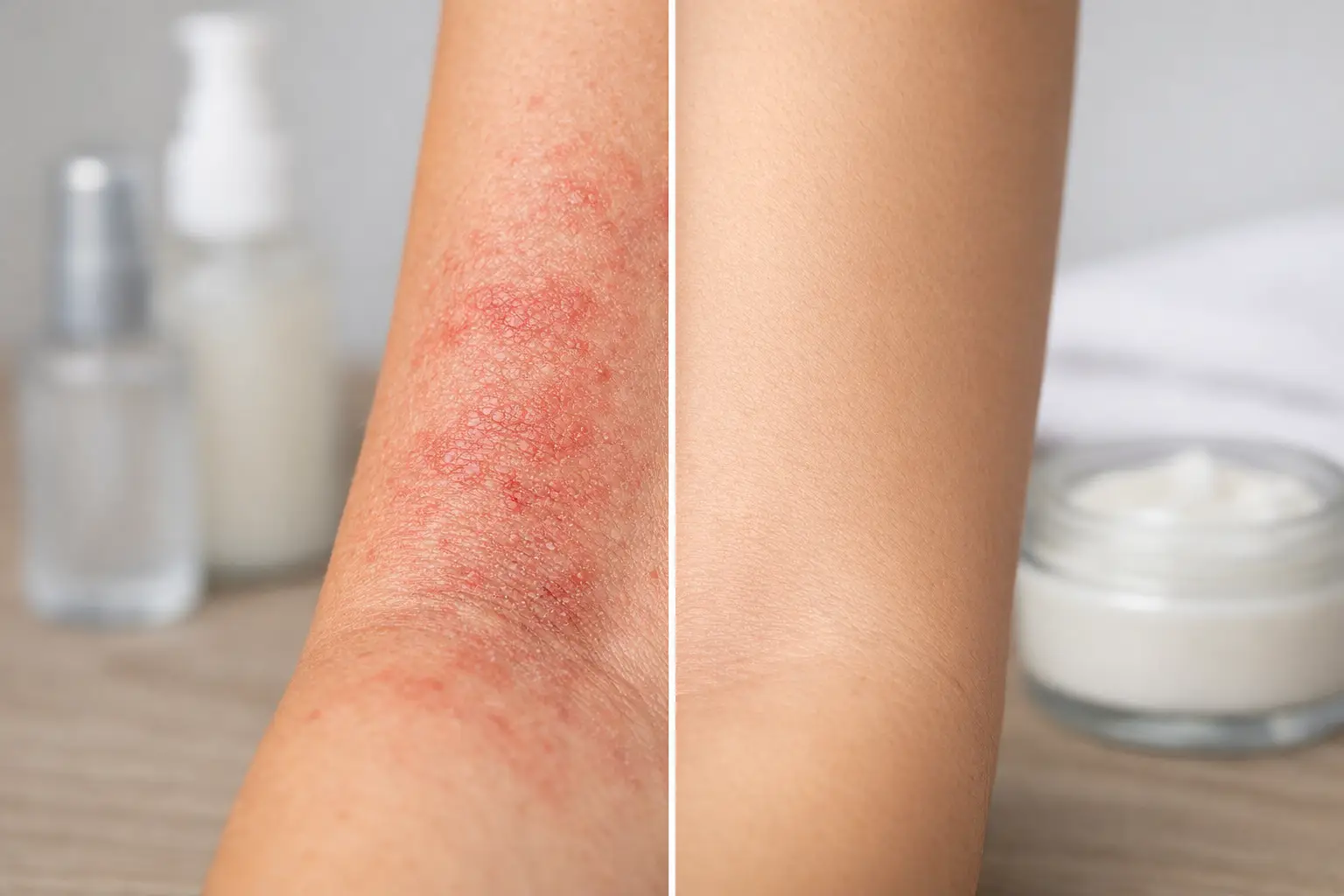
The most useful eczema routine before and after comparison is not a dramatic photo. It is a quieter change: less itching at night, fewer flare-ups after bathing, reduced stinging when moisturizer is applied, and skin that feels more predictable. Eczema rarely responds well to a crowded routine. It responds better to consistency, barrier support, and fewer opportunities for irritation.
For adults managing recurring dryness, sensitivity, or eczema-prone skin, the goal is not perfection. It is to reduce the cycle of dryness, inflammation, scratching, and further barrier damage. A routine should support that goal without asking your skin to tolerate a new active ingredient every week.
Eczema Routine Before and After: What to Measure
Before changing products, establish a practical baseline. Notice where eczema appears, how often you scratch, whether your skin wakes you at night, and what makes it sting. Pay attention to the less obvious patterns too: hot showers, fragranced laundry products, dry air-conditioning, sweat trapped under clothing, or a face cleanser that leaves your skin tight.
The skin barrier is the outer layer that helps retain water and keeps potential irritants out. With eczema, that barrier is often less effective. Skin can lose moisture more quickly and react more intensely to things that would not bother other people. This is why a product can feel fine on one area and sting on an active patch.
A before-and-after record can be simple. Take photos in the same light once a week, and make brief notes about itch, sleep, redness, cracking, and product use. Photos alone can be misleading. Lighting, weather, and a temporary calm period can make skin look different without showing the full picture.
Before: Reduce the Noise in Your Routine
When eczema is active, the instinct is often to add more. Another serum, a scrub for flakes, an oil for dryness, or a stronger cleanser for texture. That can create more variables and more irritation. Start by removing what is unnecessary.
Use a mild cleanser only where it is needed, such as the underarms, groin, hands, feet, and areas with visible dirt or sunscreen. For the rest of the body, lukewarm water may be enough on many days. Long, hot showers can feel soothing in the moment but may worsen dryness afterward.
Apply a plain, fragrance-free moisturizer promptly after bathing, while skin is still slightly damp. The timing matters because moisturizer helps hold onto the water already present on the skin. For very dry areas, a richer cream or ointment-style product is often more useful than a light lotion. The right texture depends on the area, the climate, and what you will realistically use every day.
Keep the rest of the routine quiet. Avoid exfoliating acids, scrubs, essential oil-heavy products, and strongly fragranced body care on eczema-prone areas. Natural ingredients are not automatically gentle, and synthetic ingredients are not automatically irritating. Compatibility and formulation purpose matter more than a broad marketing label.
A Minimal Morning Routine
In the morning, rinse only if needed, pat rather than rub, and moisturize. If exposed skin will be in the sun, use a sunscreen your skin tolerates. Some mineral and chemical filters can sting compromised skin, so an individual trial is more useful than assuming one category is universally better.
If you use prescribed eczema medication, follow the instructions from your clinician. Moisturizer supports the barrier, but it does not replace treatment for significant inflammation.
A Minimal Evening Routine
At night, cleanse gently if you need to remove sunscreen, sweat, or daily buildup. Moisturize immediately afterward and reapply to areas that feel dry or tight. Keep nails short if nighttime scratching is a pattern. Soft, breathable sleepwear can also reduce friction and heat buildup.
This is not an elaborate routine. That is the point. Fewer, better steps make it easier to identify what is helping and what is not.
After: What Calmer Skin Can Look Like
An effective routine does not always make eczema disappear quickly. Early improvement may be less visible than people expect. Skin may itch less before redness fades. It may sting less after showering before rough texture improves. You may notice that you need fewer emergency applications of moisturizer during the day.
Over several weeks, a steadier barrier can look like fewer cracks, less scaling, less tightness, and longer gaps between flare-ups. The skin may still have uneven color after inflammation settles. Post-inflammatory discoloration can take longer to fade than dryness or irritation, particularly in deeper skin tones. Treating skin aggressively to speed up that color change can restart the irritation cycle.
There is no universal timeline. A mild dry patch may settle within days once an irritant is removed. Long-standing eczema can take weeks of steady care and may still flare with illness, stress, weather changes, allergens, or hormonal shifts. A routine is a form of long-term support, not a guarantee against every trigger.
Adjust for Climate, Sweat, and Daily Life
Eczema routines need to work beyond the bathroom. In hot and humid conditions, sweat and friction can aggravate folds of skin, the neck, and areas under tight clothing. Showering after heavy sweating and changing out of damp clothes can help, but avoid over-cleansing with harsh soap.
In heavily air-conditioned spaces, skin can feel dry even when the outdoor climate is humid. Reapply moisturizer to hands, elbows, or other exposed areas as needed. In colder or drier seasons, especially when travel or indoor heating changes your environment, a richer moisturizer may become necessary.
Laundry is another common source of unnecessary exposure. Choose a detergent that is suitable for sensitive skin, use the recommended amount, and avoid adding fragrance boosters or heavily scented fabric softeners. Clothing should feel comfortable against the skin. Wool, rough seams, and tight synthetic fabrics can be problematic for some people, though individual triggers vary.
Choose Products by Role, Not by Hype
A disciplined eczema routine usually has clear roles: a gentle cleanser, a dependable moisturizer, sun protection where needed, and clinician-directed treatment when inflammation requires it. There may be room for more products, but each should earn its place.
Patch testing is sensible when trying something new. Apply a small amount to an area of intact skin for several days and watch for burning, itching, or a delayed rash. This does not guarantee a product will suit every area of the body, but it can prevent a full-face or full-body reaction.
Be cautious with products that promise rapid repair, detoxification, or intense resurfacing. Eczema-prone skin does not need to be challenged into behaving better. It usually benefits from less friction, fewer irritants, and formulation choices made for regular use.
Calmora Natural approaches personal care with this same principle: minimal, without compromise. A product should have a defined function, not a long list of reasons to buy it.
When a Simple Routine Is Not Enough
Seek medical advice when eczema is widespread, painful, oozing, crusted, suddenly worsening, or interfering with sleep and daily life. These can be signs of infection or inflammation that needs clinical treatment. New eczema-like rashes also deserve assessment, particularly if they begin in adulthood or do not respond to basic barrier care.
A dermatologist can help distinguish eczema from contact dermatitis, fungal infections, psoriasis, or other conditions that can look similar. If flare-ups keep returning in the same area, patch testing for contact allergies may also be useful. The best routine cannot compensate for an ongoing allergen exposure or an untreated diagnosis.
A good after photo may be satisfying, but the more meaningful result is easier living in your skin. Build a routine quiet enough to repeat, observe what changes over time, and give your barrier the consistency it has been missing.
Leave a Reply