
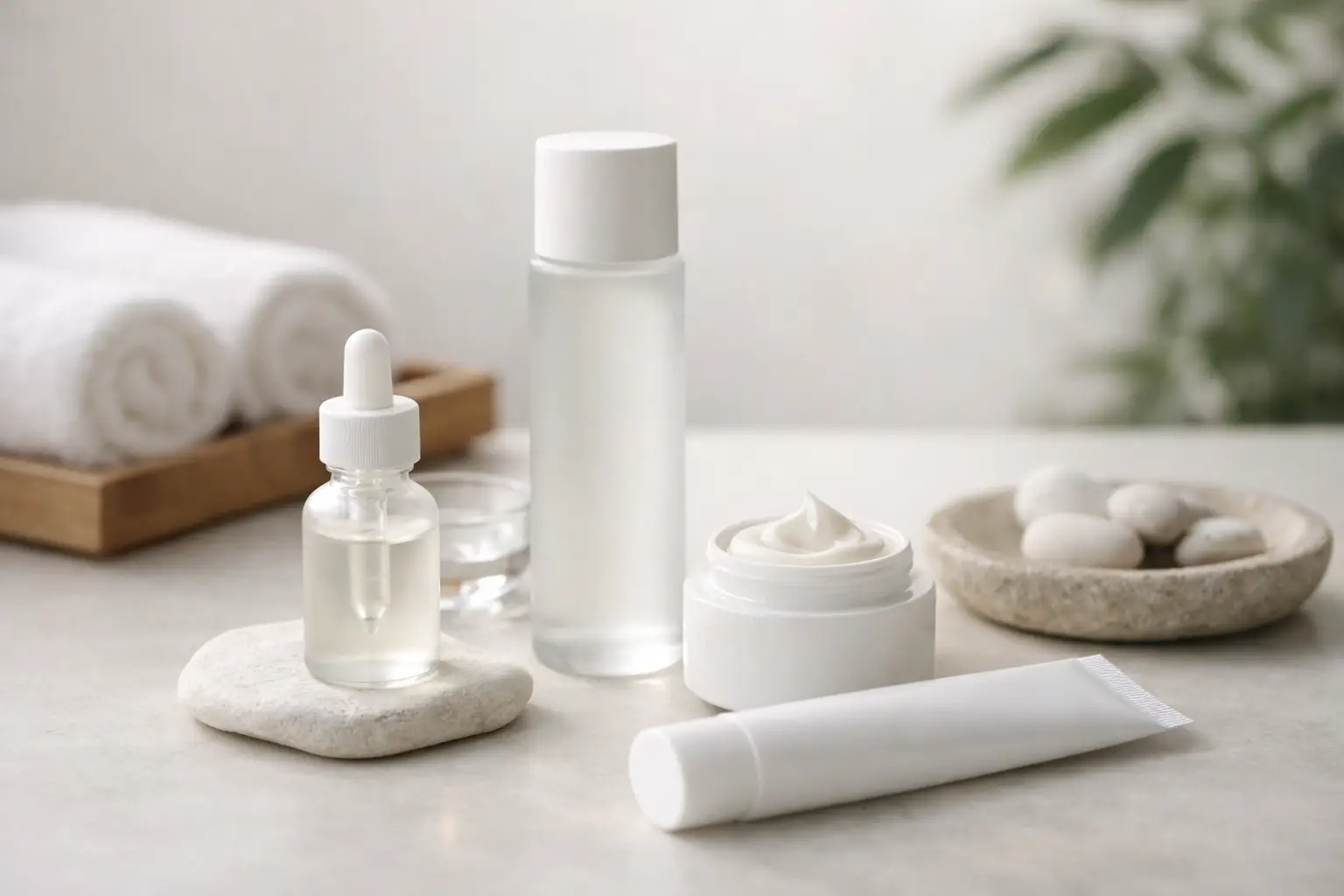
If your bathroom shelf keeps getting fuller while your skin stays unpredictable, the problem may not be a lack of effort. It may be too much effort pointed in too many directions. Learning how to build minimalist skincare starts with a simple shift: stop asking how many products you should use, and start asking what your skin actually needs.
A minimalist routine is not a stripped-down aesthetic exercise. It is a disciplined way to reduce irritation, avoid overlap, and give useful formulas room to do their job. For sensitive, dry, acne-prone, oily, or menopausal skin, that restraint often matters more than adding another serum.
What minimalist skincare actually means
Minimalist skincare is not about using the fewest products possible at any cost. It is about using fewer, better products with a clear purpose. Every step should earn its place. If a product does not help cleanse, protect, support the barrier, or address a specific concern in a measured way, it may not belong in the routine.
This matters because modern skincare often confuses activity with progress. A shelf full of acids, retinoids, masks, mists, and treatment layers can look sophisticated while creating chronic instability. Skin that is stinging, flaky, congested, or suddenly reactive is often dealing with accumulation, not neglect.
Minimalism also does not mean anti-science or anti-results. A shorter routine can still be effective, targeted, and well-formulated. In many cases, it is more effective because there is less interference between products and less stress on the skin barrier.
How to build minimalist skincare from the ground up
The most reliable way to build a minimalist routine is to begin with function, not product categories. You do not need a toner because toner exists. You need to decide what your skin requires in the morning and at night.
For most people, the base routine has three core jobs. Cleanse without stripping. Moisturize without suffocating. Protect during the day.
That usually means a gentle cleanser, a moisturizer suited to your skin condition, and a daily sunscreen. This is not a downgrade from a 10-step routine. It is the foundation that makes everything else more rational.
Step 1: Choose a cleanser that respects your barrier
A cleanser should remove what needs to be removed and leave the rest alone. If your skin feels tight, squeaky, hot, or itchy after washing, the cleanser may be too aggressive. That is especially common for eczema-prone, dry, or sensitive skin.
If you wear heavy sunscreen, makeup, or live in a humid environment where oil and sweat build up quickly, you may prefer a more thorough evening cleanse. But even then, thorough does not need to mean harsh. A low-foam or non-stripping formula is often enough.
For oily or acne-prone skin, the mistake is often trying to wash oil away too aggressively. That can backfire by weakening the barrier and increasing reactivity. A balanced cleanser is usually more helpful than a strong one.
Step 2: Use a moisturizer based on skin condition, not trend
A moisturizer is not only for dry skin. It is a support step. It helps reduce water loss, maintain comfort, and improve tolerance to treatment products.
If your skin is dry, tight, or easily irritated, look for barrier-supportive ingredients and a texture with enough substance to hold moisture in. If your skin is oily or congestion-prone, a lighter texture may feel better, but it still needs to support hydration. Oily skin can be dehydrated, and dehydrated skin can become more reactive.
For menopausal skin, dryness and increased sensitivity often arrive together. In that case, a bland, steady moisturizer may be more useful than a highly active anti-aging product that asks too much from already changing skin.
Step 3: Commit to sunscreen in the daytime
If there is one non-negotiable step in a daytime routine, it is sunscreen. This is especially true if you are dealing with pigmentation, visible skin changes, or using actives such as retinoids or exfoliating acids.
Minimalist skincare does not ignore prevention. It simply gives prevention the priority it deserves. A well-tolerated sunscreen used consistently will do more for long-term skin stability than a cabinet full of ambitious treatments used irregularly.
Add only one treatment at a time
Once the base routine feels stable, you can decide whether a treatment step is necessary. Not everyone needs one. But if you have a persistent concern such as acne, uneven texture, dullness, or early visible aging, a single targeted product may be worth adding.
This is where minimalist skincare becomes especially useful. Instead of layering multiple actives and hoping one helps, choose the concern that matters most and address it first.
If breakouts are the issue, one acne-supportive treatment may be enough. If your main concern is texture or fine lines, a retinoid might make more sense. If your skin is highly reactive, treatment may need to wait until barrier comfort improves.
The key is sequencing. Add one treatment. Use it consistently. Watch your skin for several weeks before changing anything else. That approach is slower than trend culture, but much more reliable.
How to know what to remove
Building a minimalist routine is often less about shopping and more about editing. Start by looking for duplication. If you are using two exfoliants, three hydrators, and multiple treatment serums with similar claims, there is a good chance your routine can be reduced without losing value.
Products are also worth questioning if they create confusion. If you cannot tell what a product is doing, why it is there, or whether your skin changes when you stop using it, it may be a nonessential layer.
Fragrance-heavy formulas, frequent exfoliating masks, and trend-driven products are common candidates for removal, especially if your skin is already sending mixed signals. This does not mean those categories are always wrong. It means they should not be automatic.
Minimalist skincare by skin type
The principles stay consistent, but the details depend on your skin.
For sensitive or eczema-prone skin, minimalism should focus on stability first. Gentle cleansing, barrier support, and fewer actives usually matter more than chasing fast visible change. The goal is comfort and predictability.
For acne-prone skin, a minimalist routine should not become an avoidance routine. You still need enough treatment to manage breakouts, but not so much that the skin stays inflamed. A calm, consistent base plus one active often works better than rotating through harsh solutions.
For oily skin, minimalism is about balance. Over-cleansing and over-exfoliating can make skin feel temporarily cleaner while increasing longer-term imbalance. Lightweight hydration and measured treatment usually outperform aggressive stripping.
For dry or menopausal skin, texture and comfort matter. Skin may need richer support, but not necessarily more steps. A simple routine with a gentle cleanser, a substantial moisturizer, and sunscreen can be more effective than a complicated anti-aging stack that weakens tolerance.
Common mistakes when learning how to build minimalist skincare
One mistake is cutting too much too quickly. If you remove everything at once, it becomes hard to tell what was helping and what was irritating. Edit with purpose.
Another mistake is assuming more expensive means more necessary. Minimalist skincare is not about luxury restraint. It is about function. A product should justify itself through performance, not packaging or scarcity.
The third mistake is expecting instant clarity. Skin often needs a few weeks of consistency before it becomes easier to read. If you have been switching products often, the first result of a minimalist routine may simply be less confusion. That is still progress.
A practical way to reset your routine
If your skin feels overloaded, the cleanest reset is to go back to basics for two to four weeks. Use a gentle cleanser, moisturizer, and sunscreen during the day. At night, cleanse and moisturize. If you already use a treatment that you know your skin tolerates well, keep it. If not, pause the extras.
This kind of reset can be especially useful in climates with heat and humidity, where over-layering easily leads to discomfort, congestion, or inconsistent product use. It is also useful during periods of barrier disruption, seasonal change, or hormonal fluctuation.
Once your skin feels more stable, you can decide whether it truly needs anything else. That is the discipline behind fewer, better products. Not doing less for the sake of less, but doing enough with intention.
At Calmora Natural, that is the standard worth keeping. A skincare routine should reduce friction, not add to it. When each product has a clear role and your skin is no longer negotiating with excess, consistency becomes easier and results become easier to trust.
The best routine is rarely the most elaborate one. It is the one you can follow calmly, understand clearly, and maintain long enough for your skin to respond.
Leave a Reply