
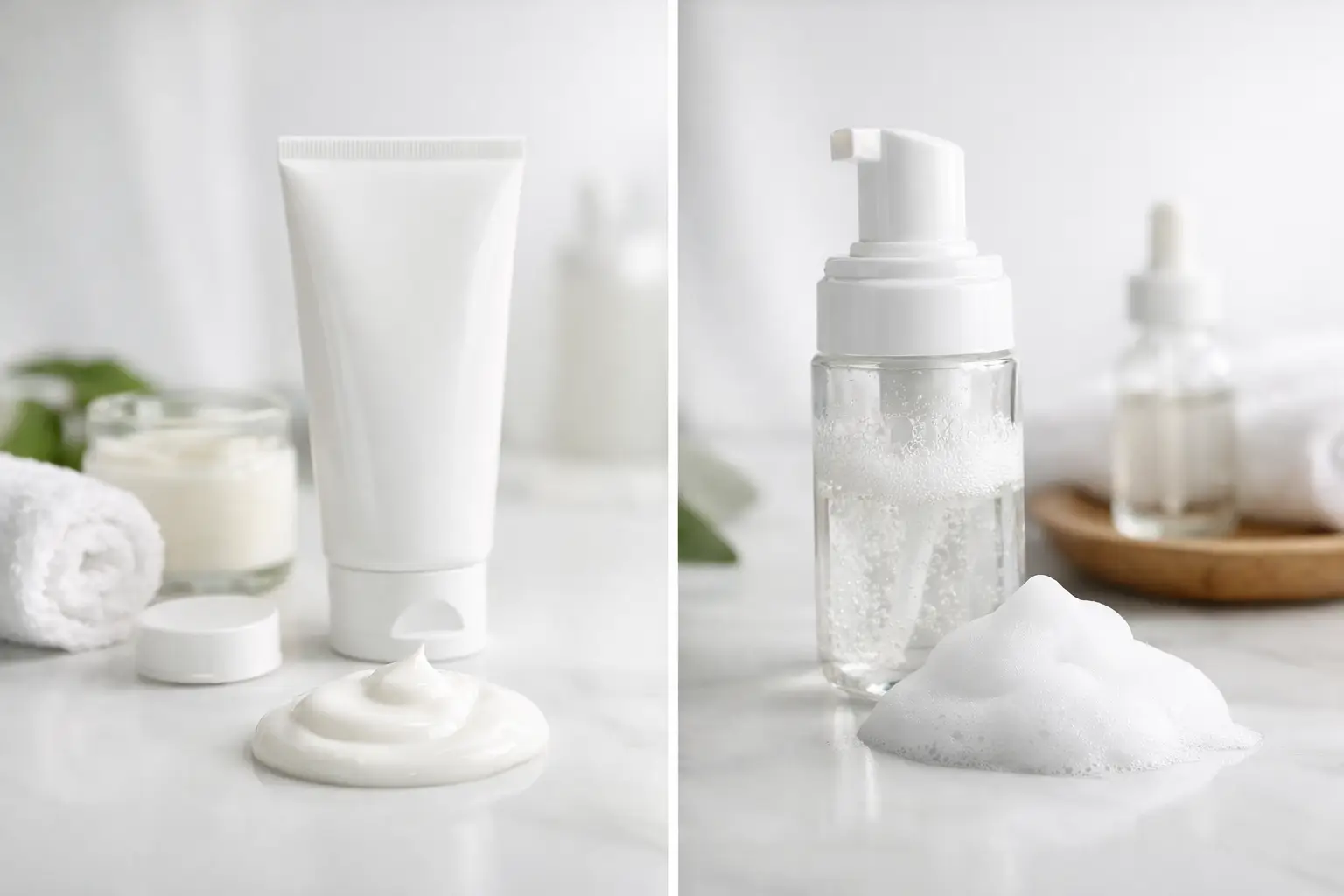
A cleanser can leave skin feeling “very clean” and still be the wrong choice. That tight, polished feeling after rinsing is often not a sign of better cleansing. It can be a sign that the skin’s surface lipids have been removed more aggressively than your skin tolerates. In the cream cleanser vs foaming cleanser decision, the useful question is not which texture is superior. It is which cleansing system removes what you need removed, with the least disruption to your skin.
For people managing dryness, sensitivity, recurring breakouts, oiliness, or visible changes around menopause, that distinction matters. Cleansing is the first repeated step in a routine. A mismatch twice a day can make every product applied afterward work harder.
Cream Cleanser vs Foaming Cleanser: The Core Difference
A cream cleanser is typically designed to feel soft, cushioned, and low-foam or non-foaming. It may contain humectants, emollients, or skin-conditioning ingredients that reduce the stripped feeling some people experience after washing. It still relies on cleansing agents to lift oil, sunscreen, makeup, sweat, and daily debris, but its formula and texture usually prioritize comfort during and after rinsing.
A foaming cleanser produces visible lather, either when worked between wet hands or when dispensed from a pump. Foam can spread quickly and rinse with a light, fresh finish. This can be especially appealing when skin feels oily, humid weather has increased sweat, or sunscreen and sebum have built up through the day.
Texture alone does not determine how gentle a cleanser is. A cream cleanser can be too rich for some acne-prone routines or contain ingredients that do not suit an individual. A foaming cleanser can be well-formulated and comfortable for sensitive skin. What matters is the full formula, the cleansing agents used, how often you wash, water temperature, and your skin’s current condition.
Visible foam is also not a measure of cleaning power. It is simply a sensory characteristic. More lather does not automatically mean more effective cleansing, just as no lather does not mean residue remains on the skin.
When a Cream Cleanser Makes More Sense
Cream cleansers are often a practical starting point for dry, reactive, eczema-prone, or compromised skin. These skin types can have difficulty retaining water and maintaining a stable barrier. Strong or frequent cleansing may increase dryness, stinging, flaking, and the appearance of fine lines.
A cream format can help make cleansing feel less punitive. It is particularly useful in the morning, when most people only need to remove overnight sweat, skincare residue, and light surface oil. It can also suit a routine built around barrier support, where the goal is to clean without repeatedly resetting the skin.
For menopausal skin, a cream cleanser may be more comfortable as hormonal changes contribute to dryness, sensitivity, and a thinner-feeling barrier. This is not a rule. Some people experience oiliness and breakouts during hormonal shifts. But when skin feels persistently tight after washing, a gentler cream format is worth considering before adding more layers of moisturizer.
Cream cleansers can also be a good choice when prescription acne treatments, retinoids, exfoliating acids, or benzoyl peroxide are already part of the routine. These treatments may be useful, but they can increase dryness and sensitivity. A harsh cleanser adds another source of irritation without necessarily improving results.
There is one trade-off. A very mild cream cleanser may not fully remove heavy, water-resistant sunscreen, long-wear makeup, or substantial oil buildup on its own. In that case, use it as a second cleanse after a suitable first cleansing step, or choose a cream cleanser specifically tested to remove the products you wear. Avoid assuming that a soft finish means fully clean skin.
When a Foaming Cleanser Makes More Sense
Foaming cleansers can be a sensible option for oily, acne-prone, or combination skin, especially when excess sebum is a consistent concern. They can leave skin feeling clearer and less coated, which may make sunscreen and daytime skincare sit more comfortably.
In hot, humid conditions common in parts of Malaysia and Singapore, sweat, oil, and daily sunscreen use can make a light-rinsing cleanser feel more practical. A well-balanced foaming cleanser may help remove that buildup without requiring multiple cleansing passes. The same can be true during Japan’s humid summer months, although skin needs often shift with the season.
The key is the after-feel. If a foaming cleanser leaves your face tight, itchy, squeaky, or unusually red, it may be removing too much for your current skin state. Skin that becomes oily again within hours is not always asking for stronger cleansing. Sometimes it is responding to dryness or irritation by producing more oil.
Foaming cleansers also work well for people who prefer a clear rinse and do not enjoy the more emollient feel of cream formulas. Preference matters. A product that feels unpleasant is less likely to be used consistently, and a simple routine only works when it is realistic to maintain.
Choose by Skin Condition, Not Just Skin Type
Labels such as dry, oily, and combination are useful, but they are incomplete. Skin condition changes with climate, sleep, stress, medication, hormonal shifts, travel, and treatment routines. A person with oily skin can have a damaged barrier. Someone with dry skin can experience congestion from heavy sunscreen or a humid commute.
Start with what happens after cleansing. If skin feels comfortable for several minutes and accepts moisturizer without stinging, your cleanser may be a reasonable fit. If it feels tight immediately, becomes flaky around the nose and mouth, or burns when simple products are applied, reduce cleansing intensity.
If skin remains visibly oily, feels coated by the end of the day, or develops congestion despite a balanced routine, a foaming cleanser may be useful at night. This does not mean you need to foam-cleanse twice daily. Many people do well with a lighter morning cleanse and a more thorough evening cleanse.
For acne-prone skin, avoid treating foam as the solution by itself. Acne is influenced by several factors, including inflammation, clogged pores, hormones, and product compatibility. A cleanser has limited contact time. Its role is to clean effectively without making the skin more irritated, dehydrated, or reactive.
Look Beyond the Front Label
A considered cleanser formula should have a clear job. Cleansing agents should remove daily buildup without leaving persistent discomfort. Supporting ingredients can help improve slip and reduce dryness, but they do not turn a cleanser into a treatment product. It is rinsed off quickly.
Fragrance is another practical consideration. Fragrance is not automatically a problem for every person, but it can be an unnecessary variable for skin that is eczema-prone, sensitized, or difficult to troubleshoot. When recurring irritation is the concern, a simpler formula makes it easier to identify what your skin can tolerate.
Be cautious with claims that frame all foam as harsh or all cream cleansers as universally gentle. Formulation is more precise than format. Natural ingredients also deserve the same measured view. They are useful when selected for compatibility and function, not because “natural” alone guarantees a better outcome.
A Simple Way to Test Your Choice
Give a new cleanser enough time to evaluate, but not so much time that you ignore obvious discomfort. Use one cleanser consistently for about one to two weeks while keeping the rest of your routine stable. Notice how skin feels immediately after washing, later in the day, and after applying your usual moisturizer or treatment.
If you are uncertain between formats, there is no need to choose one forever. A cream cleanser in the morning and a gentle foaming cleanser at night can be a disciplined approach for some skin types. Seasonal adjustments can also be sensible: creamier cleansing during drier or more reactive periods, and a foaming option when oil and sweat increase.
The best cleanser is rarely the one that promises the most dramatic transformation. It is the one that does its quiet, necessary job well enough that your skin can settle into the rest of your routine.
Leave a Reply