
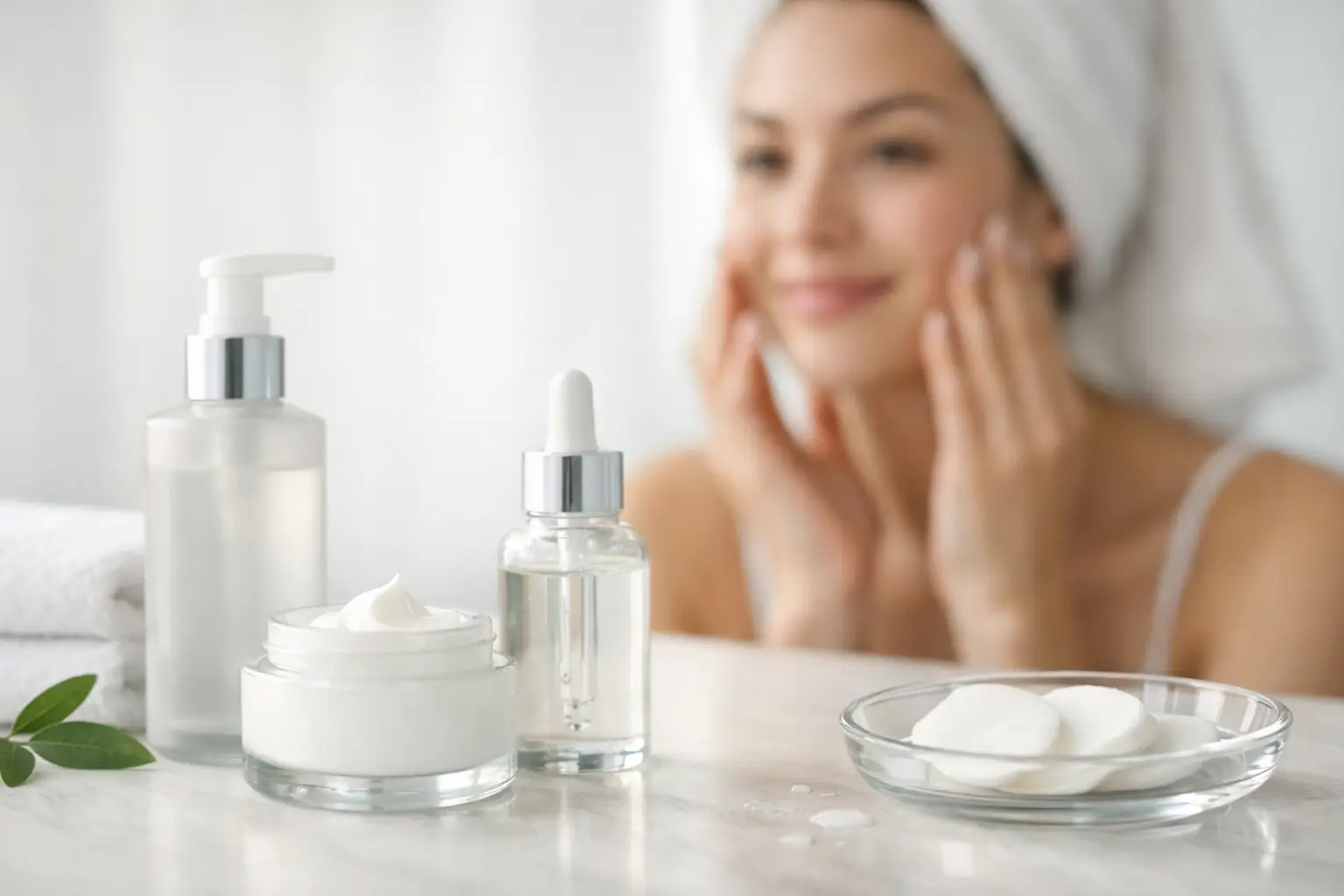
A breakout that begins after adding a new serum, mask, exfoliant, or “acne-fighting” treatment can make skincare feel needlessly complicated. Can simple skincare reduce breakouts? Often, it can reduce the irritation, congestion, and product confusion that may be contributing to them. But simple is not the same as doing nothing, and it is not a guaranteed cure for acne.
A focused routine gives skin fewer variables to react to. That matters when your skin is oily but dehydrated, acne-prone but sensitive, or already stressed by frequent product changes. The goal is not a perfectly bare shelf. It is a small system with a clear purpose: cleanse without stripping, moisturize to support the barrier, and use treatment only when there is a reason for it.
Can Simple Skincare Reduce Breakouts?
Breakouts do not have one cause. Oil production, clogged pores, acne-causing bacteria, inflammation, hormones, friction, stress, genetics, and certain hair or makeup products can all play a role. A simpler routine cannot control every one of these factors.
It can, however, remove common sources of unnecessary stress. Over-cleansing can leave skin tight and reactive. Layering several strong actives can cause irritation that looks and feels like worsening acne. Heavy products that do not suit your skin may contribute to clogged pores. Switching products every week makes it difficult to see what is helping and what is not.
For mild, occasional breakouts, routine simplification is often a sensible first step. For persistent, painful, cystic, or scarring acne, it is supportive care rather than a replacement for medical treatment. Acne with a strong hormonal pattern may require a different approach altogether.
Why More Products Can Work Against Acne-Prone Skin
Acne-prone skin is often treated as though it needs to be dried out. In practice, aggressive cleansing and repeated exfoliation can create another problem: a weakened skin barrier. When the barrier is compromised, skin may sting, flake, become red, or produce more visible oil. That does not mean oil is the cause of every breakout. It means irritation can make an already difficult situation harder to manage.
The issue is not that active ingredients are inherently bad. Well-chosen ingredients can be useful. The problem is accumulation. A cleanser with exfoliating acids, a toner with acids, a scrub, a retinoid, and a spot treatment may each sound reasonable alone. Used together, especially without a gradual introduction, they can be too much.
Minimal skincare creates room to observe your skin. If redness settles after you remove several extras, that is useful information. If breakouts persist despite a gentle, consistent routine, you have a clearer baseline from which to add one targeted treatment or speak with a dermatologist.
Start With a Short, Purposeful Routine
A basic routine does not need to be elaborate. For many adults with breakouts, it begins with a gentle cleanser, a moisturizer, and daily sunscreen. At night, one treatment may be added if it matches the concern and your skin can tolerate it.
Cleanse for comfort, not squeaky-clean skin
Cleanse once or twice daily depending on your skin, climate, activity level, and makeup or sunscreen use. Skin that feels tight, rough, or uncomfortable immediately after cleansing may be getting more cleansing than it needs.
Choose a cleanser that removes daily buildup without leaving a stripped feeling. If you wear water-resistant sunscreen or makeup, take enough time to remove it thoroughly rather than scrubbing harder. Friction can aggravate inflamed skin.
Moisturize even if your skin is oily
Skipping moisturizer is a common response to shine and breakouts. Yet oily skin can still be dehydrated or barrier-impaired. A lightweight, compatible moisturizer can improve comfort and help make acne treatments easier to tolerate.
Texture matters. Some people prefer a gel-cream; others need a more cushioning lotion, particularly when using drying treatments or spending time in air-conditioned spaces. There is no universal “best” texture. The right one is the one your skin tolerates and you will use consistently.
Use sunscreen as daily support
Sun exposure can deepen the appearance of post-breakout marks and can make skin more sensitive when you use certain acne treatments. A broad-spectrum sunscreen that feels comfortable enough to wear every day is part of practical breakout care, not an optional cosmetic step.
If a sunscreen seems to trigger congestion, avoid assuming that all sunscreen is the problem. Formula texture, film-formers, layering habits, and how thoroughly it is removed may all matter. Change one variable at a time.
Add One Targeted Step, Not Five
Once your basic routine feels stable, a single proven acne-focused treatment may be worth considering. The best choice depends on the type of breakout and your tolerance.
Salicylic acid can be useful for clogged pores, blackheads, and small bumps because it works within the pore lining. Benzoyl peroxide may help with inflamed pimples, but it can be drying and may bleach fabrics. Retinoids can support clearer pores and smoother skin over time, though they require a slow introduction and can cause irritation early on. Azelaic acid is another option that some people find helpful for acne, redness, and lingering marks.
These ingredients are not interchangeable, and more is not better. Start with one treatment at a modest frequency, such as a few nights a week when appropriate. Give your skin time to adjust. If dryness or stinging increases, reduce frequency and return attention to cleansing and moisturizing.
Pregnancy, breastfeeding, eczema, rosacea, allergies, and prescription medications can change what is appropriate. When in doubt, seek advice from a qualified clinician rather than building a routine from scattered recommendations.
How to Simplify Without Losing Progress
A skincare reset should be deliberate, not punitive. You do not need to throw away every product or stop all treatment overnight. Instead, pause the products with unclear purpose, duplicated actives, harsh scrubs, or a history of stinging. Keep the basics consistent for several weeks.
This approach also helps identify patterns. Note when breakouts appear, where they occur, and whether they are itchy, painful, deep, or uniform in size. Breakouts concentrated along the jawline may behave differently from small bumps across the forehead. Acne near the hairline can sometimes be influenced by hair products. Repeated irritation around the mouth may not be typical acne at all.
Consistency matters more than chasing immediate change. Many acne treatments need several weeks before their value is clear. Changing everything after a few days can restart the cycle of irritation and uncertainty.
Small Habits That Support a Simpler Routine
Skincare is only one part of the picture, but a few practical habits can reduce avoidable aggravation. Cleanse after heavy sweating when possible. Keep phone screens, pillowcases, makeup brushes, and anything that repeatedly touches your face reasonably clean. Avoid picking, which increases inflammation and the risk of marks.
Be cautious with the idea that every breakout has a single lifestyle cause. Diet, sleep, stress, and menstrual cycles can affect some people, but strict elimination rules are rarely the most useful first move. Observe your own pattern before making broad restrictions. A calm, repeatable routine is usually more sustainable than a long list of prohibitions.
When Simple Care Is Not Enough
Seek professional care if acne is painful, widespread, leaving scars, affecting your confidence or daily life, or not improving after a consistent period of basic care and an appropriate treatment. A dermatologist can help distinguish acne from conditions that resemble it and can discuss prescription options when needed.
This is not a failure of minimalism. Fewer, better products means choosing the level of care that fits the condition. Sometimes that is a gentle cleanser and moisturizer. Sometimes it includes a prescription, hormonal evaluation, or a treatment plan that needs professional guidance.
The most useful routine is not the one with the fewest steps on paper. It is the one with clear purpose, tolerable formulas, and enough consistency to let your skin show you what it needs.
Leave a Reply