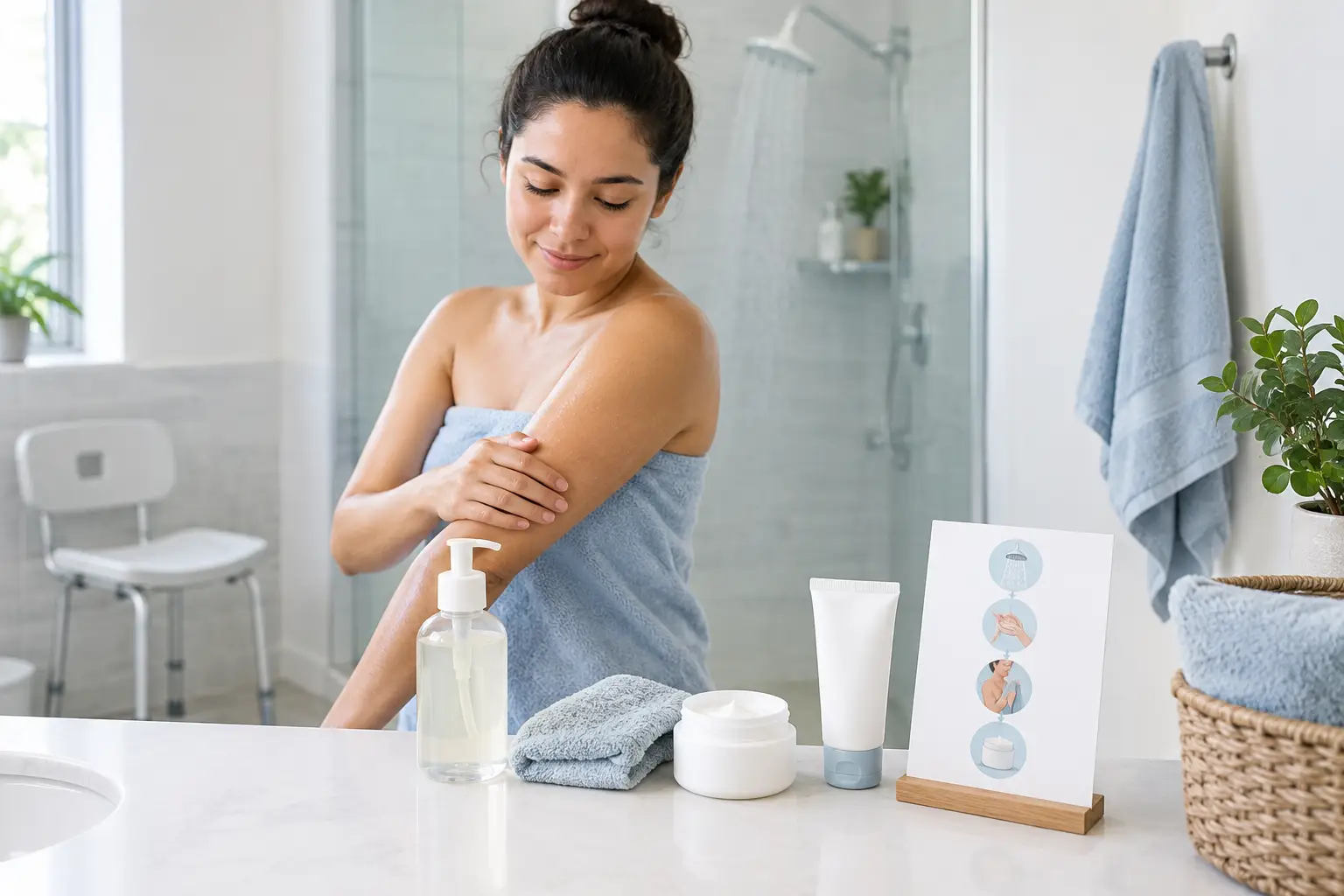
A shower can leave eczema-prone skin feeling clean, or leave it tight, itchy, and more reactive than before. The difference is rarely one miracle product. It is usually the combined effect of water temperature, time, cleansing method, towel friction, and what happens in the first minutes afterward. This eczema friendly shower routine example is designed to reduce unnecessary stress on the skin barrier without turning a basic daily task into a complicated ritual.
The purpose of an eczema-friendly shower routine
Eczema is associated with a weakened skin barrier. When that barrier is compromised, skin loses water more easily and may react more strongly to heat, sweat, fragrance, harsh surfactants, and rubbing. Showering can remove sweat and environmental buildup, but it can also remove protective skin lipids if the water is too hot or cleansing is too aggressive.
The goal is not to avoid cleansing. It is to cleanse only where cleansing is needed, then replace moisture before the skin has time to dry out. Fewer steps, chosen carefully, are often more useful than a crowded shelf of products.
A routine also needs to fit real life. If you shower after exercise in humid weather, you may need a brief rinse more often. If your skin is flaring, you may need to shorten the process and simplify further. The principle remains the same: use less heat, less friction, and less product residue.
An eczema friendly shower routine example
Before you turn on the water
Set out a clean, soft towel and your moisturizer before showering. This small preparation matters because moisturizer works best when applied to slightly damp skin, ideally within a few minutes of getting out.
Choose a simple cleanser that is fragrance-free and made for sensitive skin. A natural ingredient is not automatically a better choice for eczema-prone skin. Essential oils, botanical extracts, and heavily scented plant ingredients can still be irritating or sensitizing. Compatibility and formulation matter more than a natural label.
If you use a washcloth, exfoliating glove, scrub, or body brush, leave it out of this routine. Eczema-prone skin usually does not benefit from mechanical exfoliation, especially during a flare.
Keep water lukewarm and the shower brief
Use lukewarm water, not hot water. Hot showers can feel soothing for a moment, particularly when skin is itchy, but they can increase dryness and redness afterward. A comfortable test is simple: the water should not make your skin turn pink or leave the bathroom thick with steam.
Aim for about five to 10 minutes. There is no universal perfect number, but a shorter shower is generally a sensible starting point for dry, reactive skin. On days when you only need to freshen up, a quick rinse or a focused wash of the underarms, groin, feet, and visibly soiled areas may be enough.
Clean strategically, not completely
Apply cleanser with your hands rather than a rough sponge. Focus on areas that produce more sweat or odor: underarms, groin, feet, and skin folds. If you have worn sunscreen, worked out, or been exposed to dust and pollution, cleanse the relevant areas gently.
For the arms, legs, abdomen, and back, it depends on your day and your skin. These areas do not always need a full cleanser application. Letting lukewarm water run over them may be sufficient on many days. If you do use cleanser on the body, use a small amount and rinse thoroughly.
Be especially careful around active eczema patches. Do not scrub scales loose or try to make the skin feel perfectly smooth. Inflamed skin needs less manipulation, not more. If cleanser stings consistently, discontinue it rather than trying to push through irritation.
Rinse without lingering
Rinse until the skin no longer feels slippery. Leftover cleansing product can contribute to discomfort, but prolonged rinsing under hot water can create a different problem. Once the cleanser is gone, turn off the water.
If you shave, consider whether it is worth shaving during an active flare. Razors create friction and can cause small cuts that make already reactive skin more uncomfortable. When you do shave, use a clean razor, avoid shaving dry skin, and skip fragranced shaving products. Shaving less often may be the more skin-supportive choice for some people.
Pat dry, then moisturize immediately
Step out and pat the skin dry with a soft towel. Do not rub. Leave a light film of water on the skin rather than drying until it feels completely matte.
Apply a fragrance-free moisturizer while the skin is still slightly damp. Creams and ointments are often more supportive for very dry eczema-prone skin than thin lotions, though the best texture is one you can use consistently. Ointments can feel protective but may be too heavy in hot weather or on areas prone to folliculitis. A cream may be the more practical daily option.
Use enough product to cover the skin in a comfortable, even layer. The aim is not to make skin greasy. It is to reduce water loss and restore a more flexible surface. On commonly affected areas such as hands, shins, elbows, knees, or the neck, a second light layer may be helpful if the first absorbs quickly.
Adjust the routine when skin is flaring
During a flare, reduce variables. Keep the shower shorter, use lukewarm water, and avoid introducing a new body wash, scrub, bath additive, or scented oil. Skin that is already inflamed is not the right place to test a trend-driven product.
If you use a prescription treatment or have been advised to use a medicated product, follow the directions given by your clinician or pharmacist. Application order can vary based on the medicine, the area being treated, and the product texture. General skincare guidance should not replace a treatment plan for persistent eczema.
Sweat can also complicate eczema. After exercise, a brief lukewarm rinse and prompt moisturizing may be more comfortable than staying in sweaty clothing. The key is not to respond to every workout with a long, hot, heavily cleansed shower.
Small habits that can undermine a good routine
A careful shower routine can be undone by what happens around it. Scented laundry products may leave residue on towels and sleepwear. Rough towels can add friction. Very hot baths, fragranced body mists, and repeated handwashing with strong soap can all contribute to a cycle of dryness.
Pay attention to timing as well. If your skin becomes itchy every evening after showering, the trigger may be water temperature, a cleanser used over the entire body, delayed moisturizing, or a towel washed with fragrance-heavy detergent. Change one factor at a time for a week or two. That makes it easier to identify what is actually helping.
Do not assume that more washing means better hygiene. Clean skin does not need to feel squeaky, tight, or stripped. Those sensations often signal that the routine is asking too much from the barrier.
When to seek medical advice
See a healthcare professional if eczema is widespread, painful, oozing, crusting, rapidly worsening, affecting sleep, or not improving with a simplified routine and appropriate treatment. Infection can require medical care, and recurrent flares may need a more specific plan.
A shower is a daily exposure, which makes it one of the most practical places to reduce irritation. Keep the water moderate, the cleansing targeted, the towel gentle, and the moisturizing prompt. Skin support is often built through these quiet, repeatable choices.
Leave a Reply