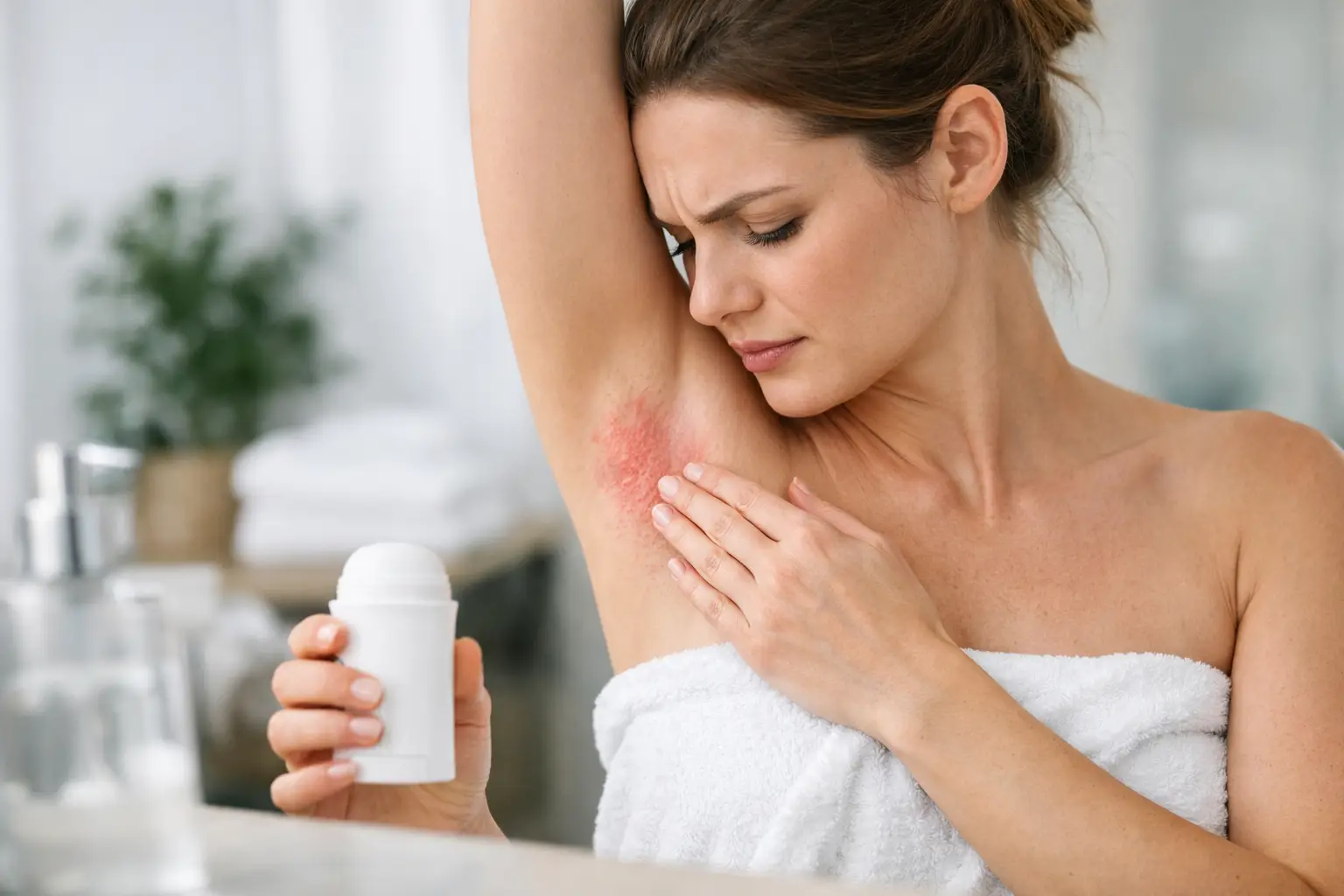
An underarm rash has a way of getting your attention fast. The skin feels hot, itchy, stinging, or oddly tight, and a product you use every day suddenly becomes hard to tolerate. If you are asking why does deodorant irritate skin, the short answer is that underarm skin is thin, warm, occluded, and exposed to friction – which makes it more reactive than many people expect.
That does not mean deodorant is inherently bad, or that irritation always comes from one ingredient. Most cases come down to a mix of factors: the formula, your skin barrier, how recently you shaved, how often you apply it, and whether the product is a deodorant, an antiperspirant, or both. The distinction matters.
Why does deodorant irritate skin in the first place?
Underarm skin sits in a high-stress environment. It deals with sweat, heat, trapped moisture, fabric rubbing, and frequent cleansing. For people with eczema, dryness, or generally reactive skin, that area may already be operating with less margin for error.
When a deodorant irritates skin, the reaction usually falls into one of two categories. The first is irritant contact dermatitis. This happens when an ingredient or combination of ingredients disrupts the skin barrier directly. The second is allergic contact dermatitis, where the immune system reacts to a specific substance after repeated exposure. Both can look similar at first, but the pattern can differ.
Irritant reactions often show up as burning, stinging, or rawness soon after application. Allergic reactions may build over time, with itching, redness, scaling, or a rash that persists even after you stop using the product. If a deodorant worked for months and then suddenly started causing problems, allergy becomes more plausible.
The most common reasons deodorant causes irritation
Fragrance is one of the biggest triggers. Even when it smells clean or subtle, fragrance can contain multiple compounds, and some are common sensitizers. Essential oils can create the same issue. Natural does not automatically mean low-risk, especially in compromised skin.
Antiperspirant actives are another frequent cause. Aluminum salts reduce sweating by forming temporary plugs in sweat ducts. They are effective, but for some people they can also sting, especially after shaving or when the skin barrier is already dry or inflamed. This is one reason some people tolerate a deodorant but not an antiperspirant.
Preservatives, acids, and high levels of baking soda can also be problematic. Baking soda is common in natural deodorants because it helps neutralize odor, but it has a high pH. In some underarms, that shift is enough to trigger redness, itching, or a rough rash. Acids such as AHAs can help with odor control by changing the environment bacteria prefer, but they can be too active for sensitive skin if used too often or at too high a concentration.
The base of the formula matters too. Alcohol can create a quick-drying, fresh feel, but it may sting on freshly shaved or already irritated skin. Certain waxes, powders, or plant extracts may also contribute, depending on the person. There is no universal “bad” ingredient. There is only compatibility, concentration, and context.
Deodorant vs. antiperspirant: a useful distinction
People often use the word deodorant to mean any underarm product, but deodorants and antiperspirants do different jobs. Deodorants reduce or mask odor. Antiperspirants reduce sweat. Many products do both.
If your main symptom is stinging right after application, and it seems worse with sweat-blocking products, the antiperspirant active may be part of the issue. If the problem is a delayed itchy rash, fragrance, essential oils, or preservatives may be more likely. This is not a perfect rule, but it can help narrow things down.
That distinction also matters when shopping. Someone who says, “I can’t use deodorant,” may actually be reacting only to a specific antiperspirant format, or only to fragranced sticks, or only to baking soda-based natural options. Broad labels are often less useful than ingredient logic.
Why shaving makes everything worse
Freshly shaved underarms are more vulnerable. Shaving creates tiny disruptions in the skin surface, even when it looks smooth. Add fragrance, alcohol, aluminum salts, or baking soda to that freshly exposed skin and the result can be burning within minutes.
If irritation appears mostly on shaving days, timing may be the issue more than the product itself. Waiting until the skin settles before applying deodorant can make a noticeable difference. So can switching razors more often, using a gentler shaving medium, and avoiding aggressive exfoliation in the same area.
Your skin barrier may be the real issue
Sometimes deodorant is only the last thing your skin touched, not the true root cause. Overwashing, harsh body washes, hot showers, scrubbing, and existing eczema can all weaken the barrier first. Then a product that might have been tolerable before starts to feel impossible.
This is especially common in people managing recurring dryness, sensitivity, or inflammatory skin conditions. In those cases, the better question is not only why does deodorant irritate skin, but why is the skin so easy to irritate right now?
A compromised barrier loses water more easily and becomes more permeable to potential irritants. That means underarm care should not be treated as separate from overall skin health. Fewer variables usually help.
What deodorant irritation actually looks like
Not every underarm problem is caused by deodorant. Irritation can look like redness, flaking, itchiness, tenderness, a shiny raw patch, or darker discoloration after the inflammation settles. But yeast overgrowth, fungal rashes, friction rash, folliculitis, and inverse psoriasis can also affect the underarms.
A product reaction is more likely if symptoms appear where the product is applied and improve when you stop using it. If the rash spreads beyond the application area, becomes very painful, starts oozing, or does not improve after a week or two, it is worth getting evaluated. Persistent underarm rashes are not a category to guess at indefinitely.
How to figure out what is bothering your skin
Start simple. Stop the suspected product and let the skin calm down. If the area is inflamed, adding more active products usually makes interpretation harder, not easier.
Then look at patterns. Was the product heavily fragranced? Was it a baking soda-based natural deodorant? Was it an antiperspirant used right after shaving? Did the reaction begin after you switched formats from cream to spray, or from unscented to scented? Small details matter.
When you are ready to try again, patch testing helps. Test a small amount on a less sensitive area first, then on a limited spot near the underarm before full use. That is slower than most people want, but it is more efficient than cycling through five products and ending up more inflamed each time.
What to look for in a gentler option
For reactive underarms, a simpler formula is often the better starting point. Fragrance-free or very low-fragrance products reduce one major variable. If you have reacted to natural deodorants before, baking soda may be the issue rather than the entire category. If you react to classic antiperspirants, trying a deodorant without aluminum may clarify things.
Texture matters as well. A formula that glides without heavy rubbing may be better tolerated than a dry stick that drags across the skin. And if your skin is already irritated, applying less product is often smarter than layering more in the hope of controlling odor.
Calmora Natural’s formulation philosophy is useful here: fewer, better choices tend to create less confusion for sensitive skin. Not because minimalism is a trend, but because every extra variable is another possible trigger.
How to calm an irritated underarm
First, stop the suspected product. Use a gentle cleanser or even just lukewarm water if cleansing stings. Avoid shaving until the skin recovers. Wear breathable fabrics and reduce friction where possible.
If the area is dry and irritated, a bland, fragrance-free barrier-supporting moisturizer can help. If it is intensely itchy or inflamed, a clinician may recommend a short course of appropriate treatment depending on the cause. The key is not to keep challenging already injured skin with more actives.
When irritation keeps coming back
Repeated reactions often mean one of three things: you have not identified the trigger, your barrier is not fully recovering between trials, or the rash is not actually from deodorant. In people with eczema or known fragrance allergy, recurrence is more likely unless the ingredient profile changes meaningfully.
At that point, precision matters more than experimentation. Track the exact products and ingredients involved. If needed, formal patch testing through a dermatologist can identify specific allergens and save a lot of trial and error.
Underarm skin does not need a complicated routine. It needs compatibility. If a deodorant irritates your skin, that is not a sign to push through it. It is useful feedback. The better response is to reduce variables, protect the barrier, and choose products with a clear purpose and fewer opportunities to go wrong.
Leave a Reply