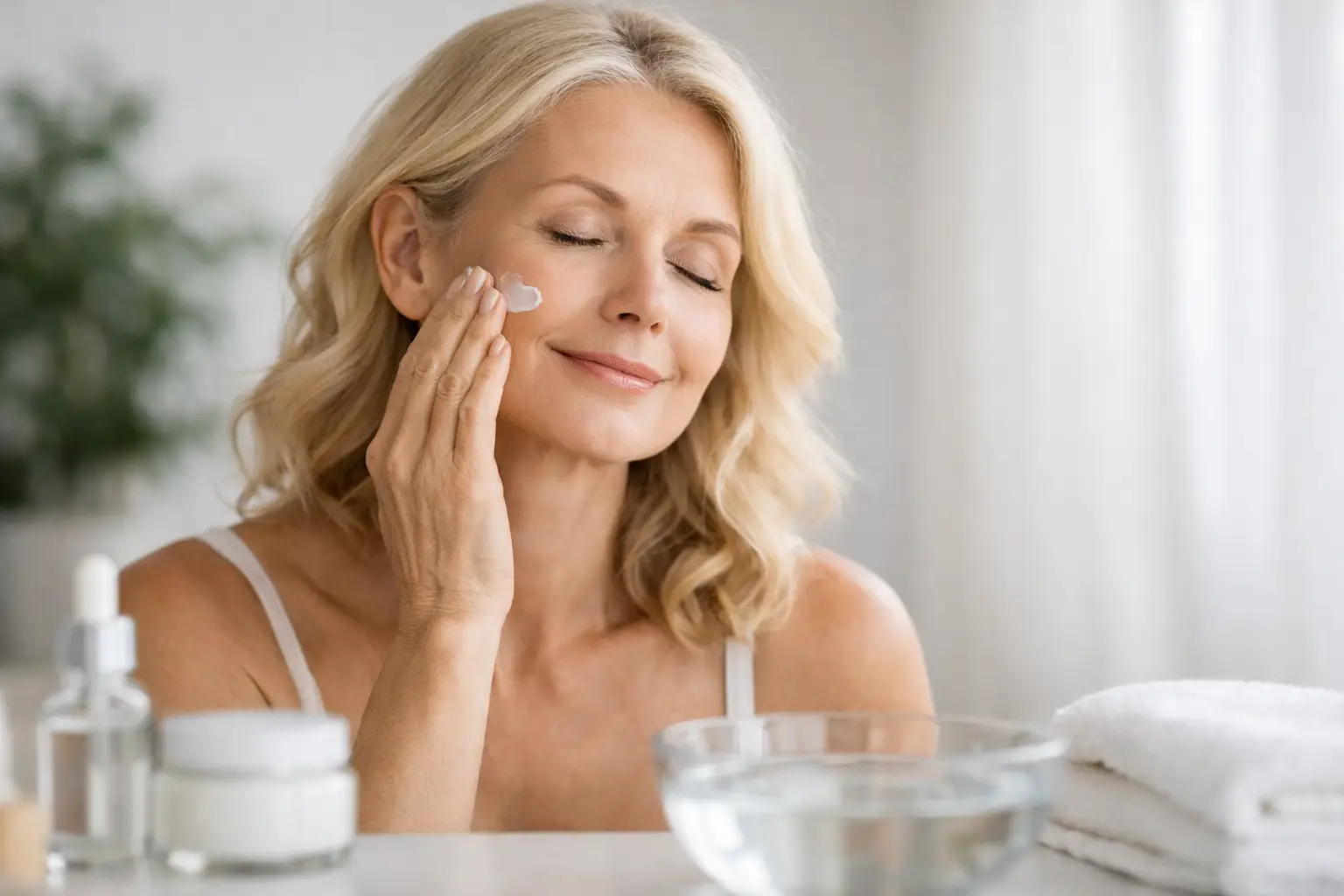
Menopausal dryness often shows up in ways that are easy to dismiss at first – tighter skin, more irritation after cleansing, discomfort during intimacy, or a feeling that products you used for years no longer work. If you are trying to understand how to treat menopausal dryness, the most useful starting point is this: dryness during menopause is not a single problem. It can affect facial skin, body skin, and vaginal tissue, and each area needs a slightly different approach.
Hormonal shifts, especially declining estrogen, can reduce natural oil production, weaken the skin barrier, and change the moisture balance of intimate tissue. That is why the answer is rarely more products. It is usually better product choice, gentler habits, and consistency.
How to treat menopausal dryness without overcomplicating it
The simplest way to approach menopausal dryness is to separate it into three categories: daily skin dryness, intimate dryness, and lifestyle triggers that quietly make both worse. Once you do that, treatment becomes more precise.
For skin on the face and body, the goal is barrier support. Menopausal skin tends to become thinner, less resilient, and more reactive. A product that once felt refreshing can suddenly sting. Strong exfoliants, heavily fragranced cleansers, and frequent washing often make the dryness cycle worse.
For vaginal dryness, the goal is comfort and tissue support. This area is different from regular skin. It needs products designed specifically for intimate use, and sometimes it needs medical treatment rather than cosmetic care.
That distinction matters because using a single catch-all solution usually leads to frustration. Minimal is useful. Generic is not.
Start with the barrier, not the trend
When estrogen levels decline, the skin holds less water and produces fewer lipids. That leaves the barrier less able to protect itself. In practical terms, that means moisture escapes faster and irritants get in more easily.
A disciplined routine usually works better than an ambitious one. Use a mild, low-stripping cleanser once or twice daily, depending on how dry your skin feels. If your face feels tight after washing, the cleanser may be too aggressive or you may be washing too often.
Follow with a moisturizer built around barrier-supportive ingredients such as glycerin, ceramides, squalane, colloidal oatmeal, or petrolatum, depending on your texture preference and sensitivity level. Humectants help pull in water, while emollients and occlusives reduce moisture loss. Menopausal dryness usually improves most when both are present.
This is also the stage where restraint helps. If your skin is newly dry, reactive, or flaky, it may be worth pausing retinoids, strong acids, scrubs, and foaming cleansers for a few weeks. That does not mean those ingredients are always wrong. It means timing matters. A compromised barrier usually responds better to repair first and actives later.
What a simple routine can look like
In the morning, cleanse lightly if needed, then apply moisturizer and sunscreen. At night, cleanse gently and use a richer moisturizer on slightly damp skin. For very dry areas, an ointment or balm on top can reduce overnight water loss.
For body dryness, the same principle applies. Short, lukewarm showers are usually better than long, hot ones. Moisturizer works best when applied within a few minutes after bathing, before too much water evaporates from the skin.
If your dryness comes with itching, burning, cracking, or rash-like patches, it may not be simple dryness alone. Menopause can overlap with eczema, contact dermatitis, or sensitivity to fragrance and preservatives. In those cases, fewer products and fragrance-free formulas are usually the safer choice.
How to treat menopausal vaginal dryness safely
Vaginal dryness deserves direct attention because it is common, under-discussed, and very treatable. Symptoms can include burning, itching, irritation, pain with intimacy, light bleeding after intercourse, or increased urinary discomfort.
The first-line nonprescription option is usually a vaginal moisturizer used regularly, not just during intimacy. These are designed to help maintain moisture in vaginal tissue over time. A personal lubricant can also help during sex, but lubricants and moisturizers are not the same thing. Lubricants reduce friction in the moment. Moisturizers are for ongoing support.
Choose products labeled for vaginal use and avoid formulas with strong fragrance, warming agents, or unnecessary botanicals if you are prone to irritation. Menopausal tissue is often more sensitive than expected.
If dryness is persistent or painful, talk with a clinician about prescription options such as local vaginal estrogen or other hormone-related treatments. For many people, these are among the most effective solutions because they address the hormonal cause directly at the tissue level. Not everyone is a candidate, and treatment choice depends on medical history, symptom severity, and personal preference. Still, it is worth asking. You do not need to wait until symptoms become severe.
When to seek medical care sooner
See a clinician promptly if you have bleeding not clearly related to friction, recurrent urinary tract symptoms, unusual discharge, strong odor, sores, or significant pain. Menopausal dryness is common, but not every genital symptom should be assumed to be hormonal.
Daily habits that can quietly make dryness worse
Some of the biggest triggers are not obvious because they feel normal. Hot showers, over-cleansing, scented body washes, fabric softeners, rough toilet paper, harsh laundry detergents, and tight synthetic underwear can all increase irritation.
Indoor air conditioning can also contribute to overall skin dryness, especially in climates where you move between heat outdoors and very dry indoor environments. That pattern is familiar for many people in cities across Singapore, Malaysia, and Japan. If your skin feels worse by late afternoon or after sleeping in a heavily cooled room, the environment may be part of the picture.
Hydration matters, but it has limits. Drinking water is good for general health, but it will not fully correct menopausal dryness on its own. The barrier still needs topical support. The same goes for supplements. Some people feel better with omega-3s or other dietary adjustments, but evidence is mixed, and supplements should not replace targeted treatment.
The role of cleansing, fragrance, and product overload
Menopausal dryness often gets worse when people respond by adding too many products at once. A hydrating toner, essence, facial oil, sleeping mask, and exfoliating serum may sound supportive, but layered complexity can increase the chance of irritation.
A better filter is function. Ask what each product is there to do. If it does not clearly help cleanse gently, replenish moisture, reduce irritation, or protect the skin, it may not be necessary.
Fragrance is another common issue. Fragrance is not automatically harmful, but when skin is dry and hormonally vulnerable, tolerance often drops. If your routine suddenly stings, switching to fragrance-free essentials can remove one variable quickly.
This is where a minimalist approach has real value. Fewer, better products reduce decision fatigue and make it easier to identify what is helping and what is not.
What improvement usually looks like
Dryness rarely resolves overnight. With skin care, the first signs of progress are usually less tightness, less stinging after washing, and a smoother feel within one to three weeks. Deeper improvement in roughness or flaking can take longer.
Vaginal dryness may also take time, especially if tissue irritation has been ongoing. Regular use of a vaginal moisturizer may help within days to weeks, while prescription treatments can take longer to reach full benefit.
If a product burns consistently, leaves you redder, or seems to worsen the problem after a reasonable trial, stop using it. More persistence is not always better. Menopausal skin often responds best to calm correction, not force.
A practical standard for choosing products
If you are trying to decide what belongs in your routine, look for products with a clear purpose, a short ingredient story, and no exaggerated claims. Menopausal dryness is not usually solved by novelty. It improves with compatibility, regular use, and enough patience to let the barrier recover.
That is one reason brands built around fewer, better products can make sense here. When formulation is disciplined, the routine tends to be easier to follow and easier for sensitive skin to tolerate.
The useful question is not whether a product is trendy, natural, or expensive. It is whether it supports the barrier, respects sensitivity, and fits a routine you can actually maintain.
Menopause changes the rules, but it does not remove your options. When you treat the specific type of dryness you have, keep the routine lean, and get medical support when symptoms move beyond surface discomfort, relief is usually much more achievable than it first seems.
Leave a Reply