
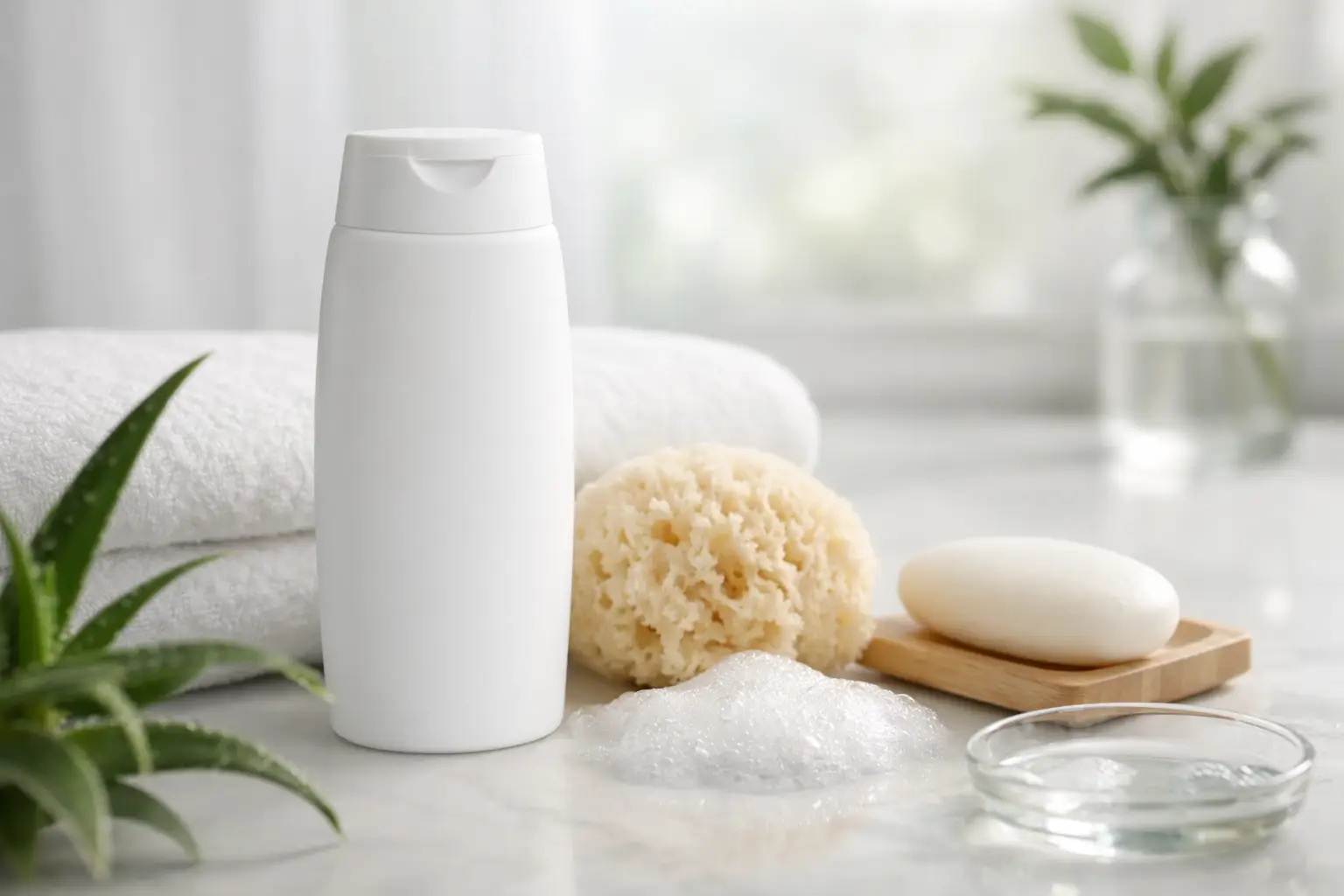
A shower should leave skin comfortable, not tight, itchy, or unexpectedly reactive. For people managing dryness, eczema-prone skin, sensitivity, or recurring irritation, a fragrance free body wash is often a sensible place to reduce unnecessary exposure in a routine that happens every day.
That does not mean fragrance is inherently harmful or that every scented product will cause a problem. Many people use fragranced body products without issue. But fragrance is a common source of contact irritation and allergy, and it adds little to the core function of cleansing. When skin is already compromised, simplifying the formula can be a practical form of support.
Why Fragrance Matters in Body Wash
Fragrance can be listed as fragrance, parfum, aroma, essential oil, or as individual aromatic compounds. It may be synthetic, naturally derived, or a blend of both. Its source does not reliably predict how skin will respond.
Natural essential oils are often presented as gentler alternatives, but they are still fragrant materials. Citrus, lavender, peppermint, eucalyptus, and floral oils can be pleasant sensory additions while also being unsuitable for some sensitive skin types. A formula should be judged by its purpose, concentration, and overall compatibility, not by whether an ingredient sounds natural.
Rinse-off products have less contact time with skin than lotions or deodorants, so the risk may be lower for some people. Still, body wash is used repeatedly and often on warm, wet skin, which can be more vulnerable to irritation. This matters when the skin barrier is dry, inflamed, over-exfoliated, or affected by eczema.
Choosing a fragrance free body wash removes one variable. It does not guarantee that a product will work for every person, but it can make a routine easier to assess and maintain.
Fragrance-Free Is Not Always the Same as Unscented
The wording on the front of a bottle can be incomplete. “Unscented” may mean that fragrance has been used to mask the natural odor of the formula, leaving no obvious scent for the user. In some cases, that can still involve fragrance ingredients.
“Fragrance-free” generally indicates that fragrance and masking fragrance have not been intentionally added. However, it is still worth reading the full ingredient list, especially if you have known sensitivities. Look for terms such as fragrance, parfum, essential oil, limonene, linalool, citral, geraniol, and eugenol. These ingredients are not automatically inappropriate, but their presence means the formula is not truly fragrance-free in the strictest practical sense.
A neutral product can still have a faint raw-material smell. That is not a flaw. It is often simply the natural scent of the cleansing base, oils, or botanical ingredients. A product does not need to smell like nothing to be thoughtfully formulated.
What a Gentle Body Wash Should Do
A body wash has a straightforward job: remove sweat, sunscreen, excess oil, environmental residue, and odor-causing buildup without leaving skin stripped. The best option is not necessarily the one that creates the most foam, feels the most “squeaky clean,” or has the longest ingredient list.
Cleansing relies on surfactants, the ingredients that help oil and water mix so debris can rinse away. Some surfactant systems can feel more drying than others, particularly when used frequently or alongside hot water. A well-considered formula balances cleansing performance with skin comfort.
For dry or sensitive skin, look beyond the fragrance claim. Consider whether the formula is designed for daily use, whether it avoids harsh-feeling cleansers, and whether it includes supportive ingredients such as glycerin or other humectants. These can help reduce the tight, dry feeling that follows a shower, though a body wash should not be expected to replace a leave-on moisturizer.
The texture also matters. A lightweight gel may suit oily or humid-climate skin well, while a creamier cleanser can feel more comfortable for very dry skin. Neither format is universally better. The right choice depends on your skin, your shower habits, and what you apply afterward.
When Fragrance-Free Cleansing Makes Sense
Fragrance free body wash is especially worth considering when skin is reactive, consistently dry, or difficult to settle. It can also be helpful during periods when the skin barrier is under more pressure, such as after shaving, during eczema flares, while using acne treatments, or during menopausal changes that bring increased dryness and sensitivity.
It is a useful choice for people who are trying to identify a trigger. If you are changing several products at once, it becomes difficult to tell what is helping and what is causing discomfort. A simple cleansing formula creates a more stable baseline.
For households, one fragrance-free wash can also reduce product clutter. It may be suitable for different family members with different preferences, provided everyone tolerates the formula. This is not about creating a perfectly sterile routine. It is about reserving complexity for products that have a clear purpose.
How to Choose Without Overcomplicating It
Start with your main concern. If your skin feels tight after showering, prioritize a mild cleansing system and follow with moisturizer while skin is still slightly damp. If you are prone to body acne or feel oily, choose a body wash that cleans thoroughly without compensating with aggressive scrubbing or multiple exfoliating products. If eczema is active, keep the routine particularly restrained and follow guidance from a qualified healthcare professional when needed.
Then read the label with a practical standard. A long ingredient list is not automatically bad, and a short one is not automatically better. What matters is whether the formula has a coherent role. Fragrance-free is one useful criterion, but it should sit alongside sensible cleansing, clear labeling, and a product you can use consistently.
Be cautious with broad claims such as “chemical-free,” “toxin-free,” or “non-toxic.” They are not meaningful formulation standards. Everything in a body wash is made of chemicals, including water and plant extracts. More useful questions are: What is this ingredient doing? Is it necessary? Does the product suit my known sensitivities?
If you have a history of allergic contact dermatitis or a suspected fragrance allergy, patch testing can be helpful. Apply a small amount of the rinse-off product to a limited area as directed by a dermatologist or allergist, and pay attention to delayed reactions. Persistent itching, rash, swelling, or burning deserves professional assessment rather than repeated experimentation.
The Rest of the Shower Routine Matters Too
Even a carefully chosen body wash can feel drying when the shower itself is too harsh. Very hot water, long showers, rough washcloths, frequent scrubs, and vigorous towel drying can all weaken the skin’s comfort level. This is particularly relevant for dry skin in air-conditioned environments, where moisture loss can continue after you step out of the bathroom.
Keep water comfortably warm rather than hot. Use cleanser where it is needed most, such as underarms, groin, feet, and areas with visible sweat or sunscreen. For many people, washing every inch of the body with cleanser every day is unnecessary, especially when skin is dry or irritated.
After showering, pat skin dry rather than rubbing it. Apply a plain, compatible moisturizer soon afterward if dryness is a concern. This simple pairing often matters more than adding another active product to the shelf.
A More Intentional Standard for Daily Cleansing
A fragrance-free label is not a promise of perfect skin. Sensitivity can also be influenced by preservatives, surfactants, active ingredients, climate, stress, medication, and existing skin conditions. But removing unnecessary fragrance is a reasonable, low-drama adjustment for people who want fewer potential irritants in a daily essential.
Calmora Natural approaches cleansing with that same discipline: fewer, better products chosen for clear function rather than sensory excess. A body wash does not need to perform like a perfume to feel considered. It needs to cleanse effectively, respect the skin’s limits, and fit reliably into real life.
The right body wash is often the one you stop thinking about. Skin feels clean, comfortable, and ready for the rest of your routine. That quiet consistency is a worthwhile standard.
Leave a Reply