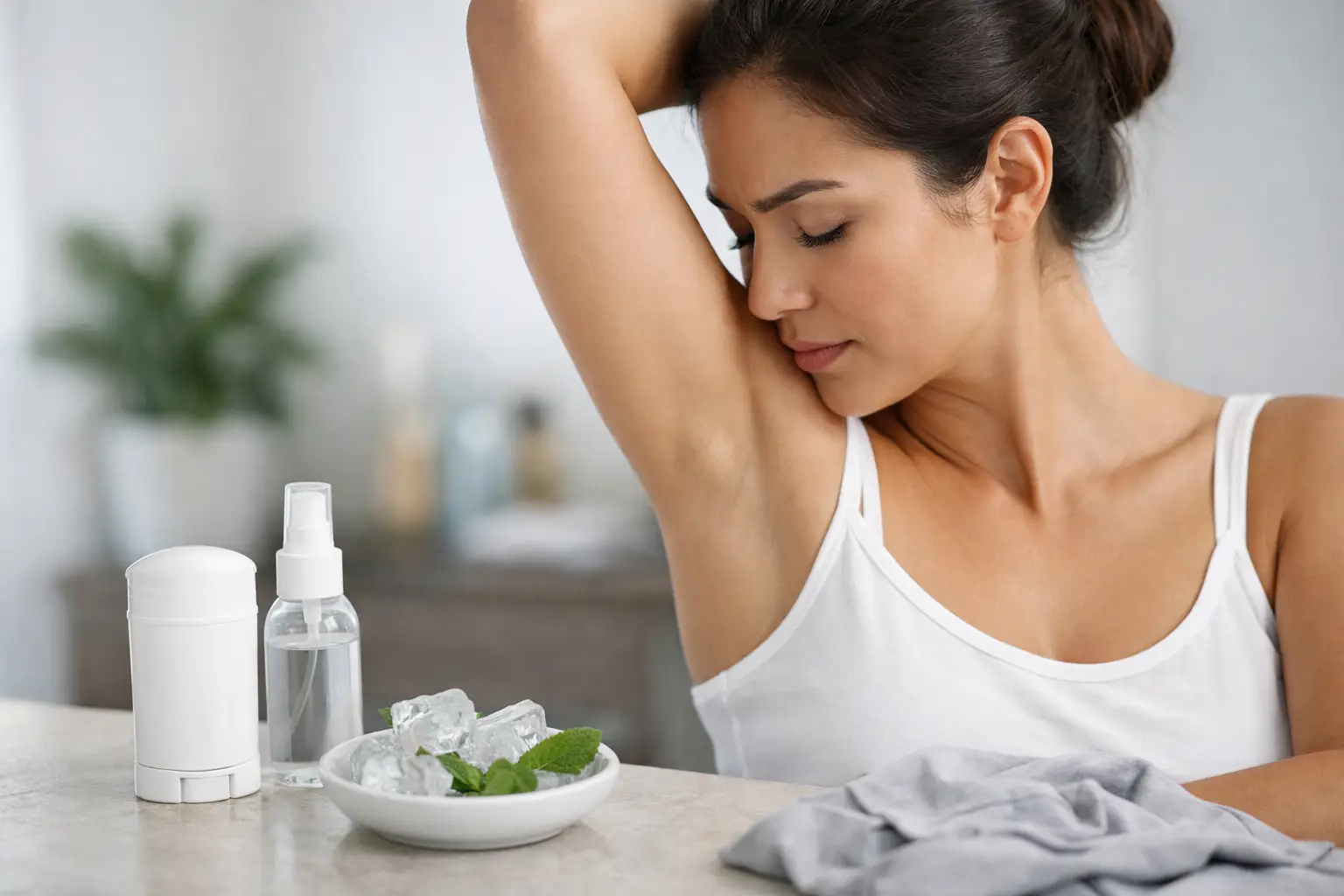
Underarm odor is rarely a sign that someone is unclean. It is usually the result of sweat meeting naturally occurring skin bacteria, then lingering in a warm, enclosed area of the body. A useful guide to underarm odor control starts there: address the conditions that allow odor to develop, rather than trying to cover it with heavier fragrance.
For many people, the answer is a simple, consistent routine. For others, especially those with sensitive skin, excessive sweating, recurring odor, or irritation from deodorants, it takes more careful adjustment. The goal is not to eliminate sweat completely. Sweat has a normal function. The goal is to manage odor comfortably and without creating another skin concern.
What causes underarm odor?
Fresh sweat is largely odorless. The familiar smell develops when bacteria on the skin break down compounds in sweat, particularly in areas with apocrine glands such as the underarms. Heat, humidity, stress, exercise, hormonal changes, and close-fitting synthetic clothing can all make the environment more favorable for odor.
This is why odor control is not always solved by showering more often. Cleansing matters, but so do the product left on the skin afterward, the condition of the skin barrier, and what comes into contact with the area throughout the day.
Some people notice a temporary change in odor during puberty, pregnancy, menopause, periods of high stress, or after dietary changes. Certain medications and health conditions can also affect sweating or body odor. A sudden, persistent, or unusually strong change deserves medical advice, particularly when paired with pain, rash, fever, night sweats, or unexplained weight change.
Deodorant and antiperspirant do different jobs
Choosing the right category prevents a great deal of trial and error.
A deodorant is designed to reduce odor. It may do this by limiting odor-causing bacteria, absorbing moisture, adjusting skin pH, or using fragrance. It does not necessarily reduce the amount of sweat produced.
An antiperspirant is designed to reduce wetness as well as odor. Its active ingredients, commonly aluminum salts, temporarily form plugs near sweat ducts. Less sweat reaches the skin surface, which can mean less moisture available for bacteria.
Neither option is automatically better. If your main concern is odor after a normal workday or light activity, a deodorant may be enough. If dampness is the problem, or odor returns quickly because of heavy sweating, an antiperspirant may be the more practical choice.
Natural is not a guarantee of gentleness, and conventional is not a guarantee of irritation. Baking soda, essential oils, fragrance, alcohol, and some acids can be difficult for reactive skin. Equally, some people find aluminum-based antiperspirants uncomfortable or drying. The better choice is the one your skin tolerates and your routine supports.
Apply antiperspirant at night when possible
Antiperspirant tends to work best on completely dry skin before bed, when sweat production is often lower. This gives the active ingredient time to settle into the sweat ducts. A light reapplication in the morning may be useful, but nighttime application is often the more effective step.
Do not apply it immediately after shaving if your underarms sting easily. Freshly shaved skin has small, invisible disruptions that can make even a familiar product burn. Shave at a different time of day, or wait until the skin feels calm and intact.
A guide to underarm odor control that protects the skin barrier
Over-cleansing and aggressive scrubbing can make underarms feel temporarily cleaner while leaving the skin irritated. Irritated skin is harder to manage, especially when a deodorant is applied every day.
Wash the underarm area with a gentle cleanser and lukewarm water. Focus on removing sweat, product buildup, and bacteria without using rough cloths or heavily fragranced washes. Dry the area thoroughly by patting, not rubbing. Deodorant and antiperspirant are generally more comfortable and effective on clean, dry skin.
If you use an exfoliating acid, antibacterial wash, or charcoal-based product, treat it as a targeted tool rather than a daily requirement. These products can be useful for some people, but frequent use may lead to dryness, stinging, darker-looking irritated skin, or a cycle of sensitivity. Start slowly, use one active approach at a time, and stop if your skin becomes sore or persistently itchy.
For eczema-prone or highly reactive skin, restraint is usually the better strategy. Choose a fragrance-free product with a short, clear ingredient list, and patch test before committing to daily use. A product does not need to tingle to be working.
Build a routine around your actual pattern
Underarm odor control works best when the routine matches the cause. Consider when odor becomes noticeable. Is it after commuting, workouts, stressful meetings, or only after clothes have been worn for several hours? That pattern points to a more useful solution than switching products every week.
For odor that develops gradually through a typical day, cleanse gently, dry fully, and use a deodorant consistently. For dampness and odor together, use an antiperspirant at night and allow it to dry before dressing. For exercise, it may help to change out of damp clothing soon afterward and wash the underarms rather than layering more product over sweat.
If odor appears soon after showering, review the basics. Towels, shirts, bras, and workout clothing can retain oils, bacteria, and deodorant residue even when they look clean. A fresh product applied to fabric that holds old odor will have limited effect.
Clothing and laundry can make a real difference
Breathable clothing does not eliminate sweating, but it can reduce the warm, damp conditions that help odor persist. Cotton, linen, merino wool, and technical fabrics designed to move moisture away from the body may feel more comfortable than tight, non-breathable synthetics. It depends on the climate and activity. A lightweight performance fabric can be more useful for a humid workout than a heavy natural fiber that stays wet.
Pay attention to garments worn close to the underarms. Wash them promptly after sweating, avoid leaving damp workout clothes in a closed bag, and use enough detergent for the load size and soil level. If a shirt smells clean when dry but develops odor as soon as it warms against the body, residual buildup may be the issue. Follow the garment care label and consider a periodic deeper wash suited to the fabric.
When lifestyle factors matter
Stress sweat can smell stronger because it contains different compounds from the sweat produced mainly for cooling. That does not mean stress is the sole cause of body odor, but it can explain why a dependable routine seems less effective on demanding days.
Food can affect body odor for some people, particularly after large amounts of garlic, onion, alcohol, or strongly spiced foods. There is no need for restrictive rules unless you have identified a reliable personal pattern. Hydration, regular meals, sleep, and stress management support general health, but they should not be presented as a substitute for a functional hygiene routine.
Hormonal changes also deserve a practical approach. During menopause, for example, hot flashes and increased sweating can make a previously adequate deodorant feel insufficient. Adjusting the product type, timing, clothing layers, and change-of-clothes plan is often more useful than assuming your body has become difficult to manage.
Avoid the common cycle of product overload
When odor is frustrating, it is tempting to combine a strong wash, acid toner, deodorant, fragrance mist, and antiperspirant. More layers can mean more irritation, conflicting fragrances, and no clear way to tell what is helping.
A disciplined routine is easier to assess. Start with one gentle cleanser and one odor-control product. Give the product enough time to show whether it works, unless it causes irritation. Make one change at a time. This is the same principle behind fewer, better products: each step should have a clear purpose.
If a deodorant causes redness, burning, peeling, swelling, or dark marks after irritation, stop using it. Let the skin recover with gentle cleansing and minimal friction. If symptoms continue, seek advice from a dermatologist or other qualified clinician.
When to seek medical support
Excessive sweating that interferes with daily life may be hyperhidrosis, and it is treatable. A clinician can help distinguish it from ordinary sweating and discuss options beyond standard over-the-counter products.
Medical advice is also appropriate for a new lump, drainage, significant pain, recurrent boils, a spreading rash, or a sudden change in body odor that does not improve with regular hygiene and clean clothing. Underarm care should be simple, but persistent symptoms should not be dismissed.
The most dependable routine is usually quiet and repeatable: clean, dry skin; one suitable product; clothing that is properly laundered; and adjustments based on real patterns rather than marketing promises. Comfort is a better measure of success than a perfectly scent-free underarm.
Leave a Reply