
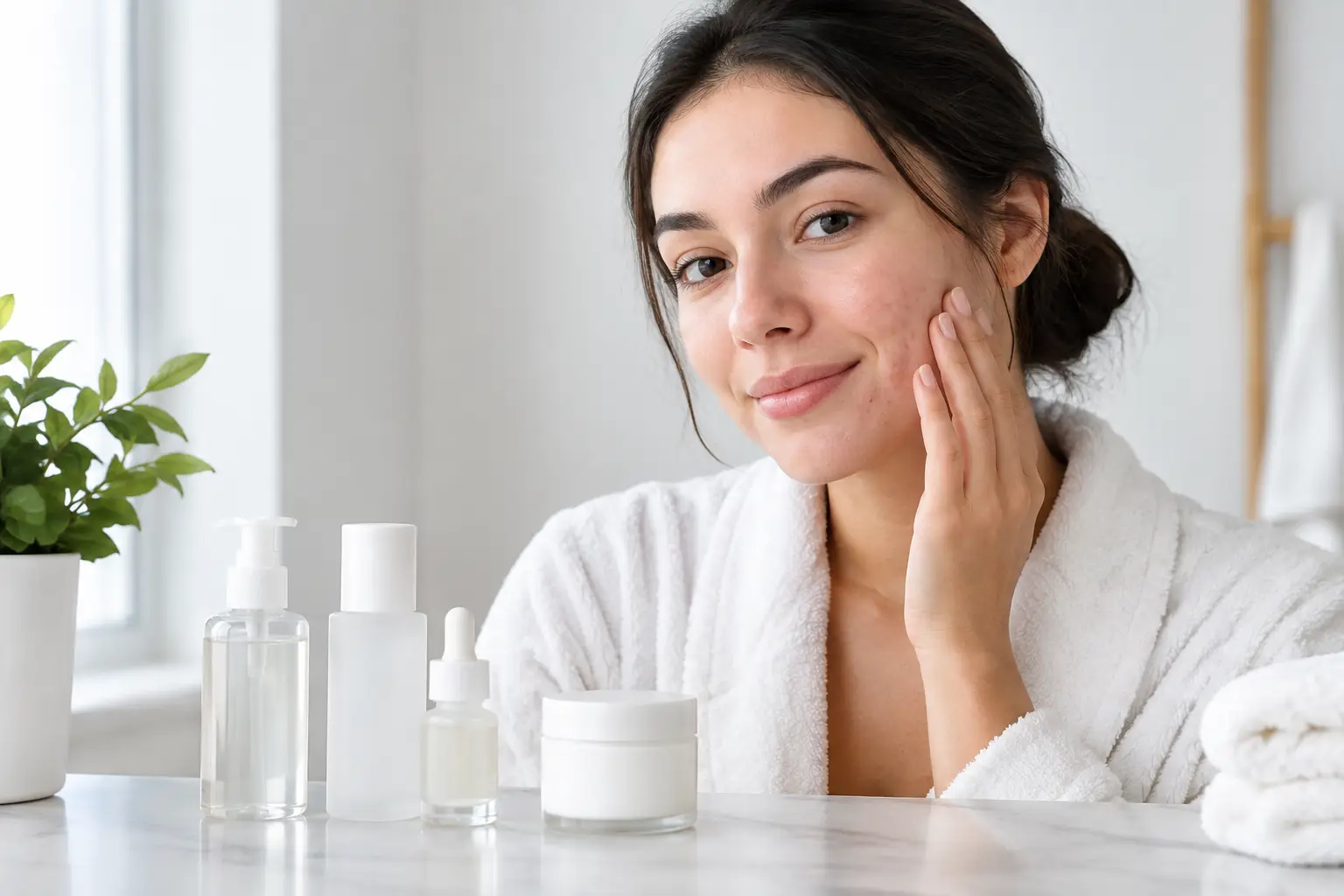
A crowded bathroom shelf can make acne feel harder to manage. When skin is breaking out, it is tempting to add another acid, spot treatment, mask, or cleansing step. Yet irritation, inconsistency, and incompatible layers can keep the cycle going. This minimalist routine acne prone example is built around a quieter approach: cleanse without stripping, treat with purpose, moisturize for barrier support, and protect skin daily.
The goal is not to use the fewest products possible at any cost. It is to use only the products that have a clear job. Acne-prone skin can be oily, dry, sensitive, dehydrated, or all four at different times. A routine should respond to that reality rather than force the skin into an overly aggressive program.
The principle behind a minimalist acne-prone routine
Acne care often fails through excess rather than neglect. Multiple exfoliants, frequent scrubbing, harsh cleansing, and constantly changing products can create a disrupted barrier. Skin may feel tight and look shiny at the same time. Breakouts can persist, while redness and stinging make it difficult to tell what is actually helping.
A disciplined routine gives each step a specific function. A gentle cleanser removes sunscreen, oil, and daily buildup. One treatment addresses the acne concern. A moisturizer helps maintain comfort and barrier function. Sunscreen reduces unnecessary exposure and supports a more even-looking complexion while blemishes recover.
This approach requires patience. A product that supports acne-prone skin should be used consistently long enough to assess it, unless it causes clear irritation, swelling, rash, or worsening discomfort. Changing several variables at once produces noise, not insight.
Minimalist routine acne-prone example
This example is appropriate for an adult with recurring mild breakouts, clogged pores, and occasional inflammatory blemishes. It is not a substitute for medical care for painful, widespread, scarring, or sudden-onset acne.
Morning: protect without overworking the skin
Begin with a gentle cleanse if you wake with noticeable oil, sweat, or residue. If your skin feels comfortable and is easily irritated, a rinse with lukewarm water may be enough. The right cleanser should leave skin feeling clean but not squeaky, tight, or hot.
Next, apply a light, non-irritating moisturizer. This step still matters if your skin is oily. Oil is not a reliable measure of hydration, and skipping moisturizer can leave compromised skin feeling more reactive. Choose a texture that suits your climate and skin comfort, whether that is a fluid lotion, gel-cream, or simple cream.
Finish with broad-spectrum sunscreen. For acne-prone skin, the best sunscreen is usually the one you can apply at a sufficient amount every day without avoiding it because of heaviness, stinging, or residue. Consistent use matters more than chasing a perfect finish.
Morning does not need an active treatment for most people. If your chosen acne treatment causes dryness or sensitivity, keeping it in the evening makes the routine easier to sustain.
Evening: cleanse, treat, and support recovery
Cleanse once, thoroughly and gently, to remove sunscreen, makeup, and daily buildup. If you wear heavy or water-resistant makeup, a first removal step may be useful. Follow it with a mild cleanser rather than repeating a strong foaming wash.
Apply one acne-focused treatment to clean, dry skin. The right choice depends on the main concern. Salicylic acid may suit persistent clogged pores and congestion. Benzoyl peroxide can be useful for inflamed breakouts. Adapalene, where appropriate and tolerated, is commonly used for acne and comedones. Azelaic acid may be a considered option for those managing blemishes alongside visible redness or uneven-looking tone.
These ingredients are not interchangeable, and more is not automatically better. Start with one. Use it two or three evenings per week if you are new to actives or prone to sensitivity, then increase only as skin tolerates it. Follow with moisturizer. If treatment leaves your skin persistently dry, burning, or peeling, reduce frequency before adding more products.
How to choose the one treatment that fits
The minimalist part of this routine is the decision-making. Do not begin with a cleanser containing an active, a leave-on exfoliant, a retinoid, a spot gel, and an acne mask. That combination can be difficult for even resilient skin.
If small bumps and blackheads are your main concern, a leave-on salicylic acid product may be the most logical first treatment. If red, tender pimples are more common, benzoyl peroxide may be worth considering. If breakouts are recurring and texture is uneven, a retinoid approach may be appropriate, but it should be introduced gradually. Pregnancy, breastfeeding, medication use, eczema, rosacea, and a history of sensitivity can change what is suitable. When in doubt, ask a dermatologist or qualified health professional.
Spot treatment has a limited role. It can help address an individual blemish, but it should not replace a consistent routine for recurring acne. Similarly, a clay mask may make skin feel temporarily less oily, but it does not need to become a weekly obligation if it leaves the skin tight or uncomfortable.
What to leave out, at least for now
A simple routine becomes effective partly through restraint. Set aside physical scrubs, frequent peel pads, fragranced facial oils, and products that sting simply because they are marketed as powerful. Sensory intensity is not proof of performance.
Be cautious with rich products that your own skin repeatedly finds congesting, but avoid assuming every oil or cream is the problem. Acne is influenced by hormones, genetics, stress, occlusion, cosmetics, and more. A formula that works well for one person may not work for another. The useful question is not whether an ingredient has a perfect reputation. It is whether the full product is compatible with your skin over consistent use.
Avoid picking, too. This is practical rather than moral advice. Picking can extend redness, increase the chance of marks, and turn a short-lived blemish into a longer recovery period.
Adjust the routine when your skin changes
Minimal does not mean rigid. In dry indoor air, cold weather, after travel, or during periods of sensitivity, acne treatments may need to be used less often. You may need a more cushioning moisturizer, while keeping the rest of the routine the same. This is an adjustment, not a failure.
In hot, humid conditions, a lighter moisturizer may feel more comfortable. Sweat, helmets, masks, hair products, and frequent face touching can also affect where breakouts appear. If acne clusters around the hairline, jaw, or cheeks, review what regularly contacts those areas before buying another treatment.
Hormonal acne may not respond fully to topical skincare alone. Deep, painful lesions around the chin and jawline, scarring, or acne that affects your confidence deserve professional assessment. A minimalist skincare routine can support the skin, but no honest routine should promise to solve every form of acne.
Give the routine a fair test
Take a simple baseline before beginning. Notice where you break out, whether lesions are mostly clogged pores or inflamed pimples, and how your skin feels after cleansing. Then introduce only one new acne treatment at a time. Allow several weeks of consistent use to observe the direction of change, because acne does not resolve overnight.
Track comfort as carefully as breakouts. Less stinging, less tightness, and a routine you can repeat without hesitation are meaningful outcomes. Clearer skin is often supported by fewer disruptions, not more intervention.
Calmora Natural’s principle is useful here: fewer, better products. Keep the products that serve a clear purpose. Remove the ones that create confusion. Acne-prone skin rarely needs a complicated ritual. It needs a routine calm enough to continue, and considered enough to adapt when the skin asks for more support.
Leave a Reply