
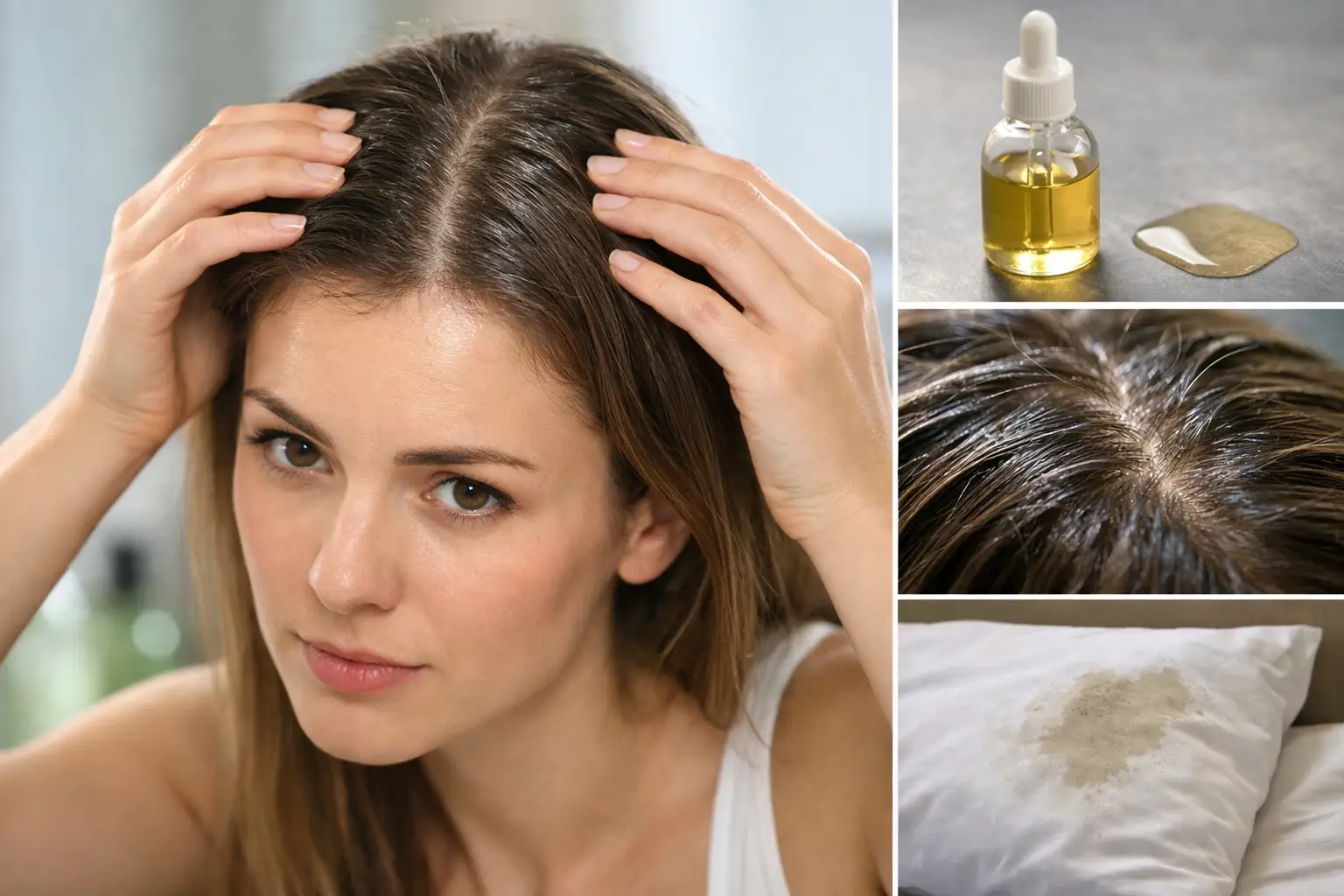
By midday, your roots look flat, your hair feels heavy, and washing it again starts to feel like the only option. If you keep asking, why is my scalp oily, the answer is usually not poor hygiene. An oily scalp is often the result of how your skin is functioning, how often you wash, what you apply, and how your scalp responds to heat, stress, and irritation.
Why is my scalp oily in the first place?
Your scalp contains sebaceous glands that produce sebum, a waxy oil that helps protect the skin barrier and maintain flexibility. That oil is not inherently a problem. The issue starts when production outpaces what your scalp and hair can comfortably handle.
For some people, this is largely genetic. If your skin tends to be oily on the face, chest, or back, your scalp may follow the same pattern. Hormones also matter. Shifts in androgen activity can increase sebum production, which is why scalp oiliness can flare during puberty, periods of stress, or other hormonal changes.
Climate plays a role too. In hot, humid conditions, scalp oil can feel more obvious because sweat mixes with sebum and causes the roots to separate faster. That does not always mean your scalp is producing dramatically more oil. Sometimes it simply becomes more visible, and your hair loses volume sooner.
The most common reasons an oily scalp gets worse
An oily scalp is rarely caused by one single factor. More often, it is a combination of skin biology and routine habits.
You are washing too aggressively
This sounds counterintuitive, but stripping the scalp with harsh cleansers can create a cycle of discomfort. A very strong shampoo may remove oil quickly, but it can also disrupt the scalp barrier and leave the skin irritated. Some people then respond with rebound oiliness, more itching, or tighter wash schedules that keep the cycle going.
This does not mean oily scalps should avoid cleansing. It means the cleanser needs to remove buildup without pushing the scalp into stress.
You are not washing often enough for your scalp type
The opposite can also be true. If your scalp naturally produces more sebum, stretching wash days too far may allow oil, sweat, dead skin, and product residue to accumulate. That buildup can make hair look greasier and may contribute to itching, flakes, or a stale scalp feel.
There is no ideal washing frequency that suits everyone. Daily washing is reasonable for some oily scalps, especially in humid environments or after exercise. For others, every other day is enough. The useful question is not how long you can avoid washing. It is how your scalp behaves between washes.
Your products are too heavy
Conditioners, leave-ins, oils, waxes, and silicone-rich styling products can collect at the root, especially if they are not rinsed well or are being layered too often. This can mimic excess sebum even when your scalp itself is not overproducing dramatically.
Heavy oils are a common culprit. They may make the scalp feel coated, trap sweat, and flatten the hair. If you already have an oily scalp, adding more oil directly to the roots is often unnecessary.
You have buildup, not just oil
Hard water minerals, dry shampoo, sweat, styling residue, and even incomplete rinsing can all sit on the scalp. The result can feel greasy, itchy, or congested. This is one reason some people wash frequently but still feel like their scalp is never truly clean.
When buildup is part of the picture, adjusting shampoo alone may not solve the problem. The formula type, rinse quality, and amount of product used on the scalp all matter.
You may be dealing with dandruff or seborrheic dermatitis
An oily scalp and flakes often occur together. This surprises people who associate flaking with dryness. In reality, dandruff and seborrheic dermatitis are commonly linked to excess oil and an inflammatory response involving scalp yeast.
If your scalp is oily, itchy, and shedding yellowish or white flakes, simple oil control may not be enough. In that case, the goal is to reduce both oil and irritation without overcorrecting.
Why is my scalp oily even after I wash it?
If your hair feels greasy shortly after shampooing, look at technique before assuming your scalp is unusually difficult.
You may not be washing long enough. Shampoo needs time and contact with the scalp, not just the hair lengths. You may also be using too much conditioner too close to the roots, or not rinsing thoroughly enough.
Water temperature can also make a difference. Very hot water may feel cleansing, but it can increase irritation and leave the scalp feeling reactive. A lukewarm rinse is usually a better baseline.
There is also the question of formula fit. A shampoo designed for very dry or damaged hair may leave too much residue for someone with an oily scalp. On the other hand, a harsh clarifying shampoo used too often can create discomfort that complicates the problem. This is where a disciplined routine matters more than chasing the strongest product.
How to manage an oily scalp without overcomplicating it
The most effective approach is usually a simple one. Start with consistent cleansing using a shampoo that matches your scalp type. If your scalp is oily by the next day, washing daily or every other day may be more supportive than trying to train your hair to go longer.
Keep conditioner on the mid-lengths and ends unless your scalp is genuinely dry. If you use leave-in products, use less than you think you need and keep them away from the roots.
If buildup is a pattern, add occasional deeper cleansing rather than switching your entire routine to harsh products. If flakes and itching are present, consider whether the issue is no longer cosmetic oiliness alone. That is a different problem and may need a targeted anti-dandruff approach.
Scalp touching matters more than people think. Frequent scratching, brushing, or running your hands through the roots can move oil around and make the scalp feel dirtier faster. Pillowcases, hats, and helmets can contribute too, especially in warm weather.
What not to do when your scalp is oily
It is easy to overreact when your hair gets greasy fast. The usual mistakes are understandable but often counterproductive.
Applying pure oils to the scalp because it feels unbalanced is rarely the first answer for an oily scalp. Using highly fragranced scrubs can also backfire, especially if your skin is sensitive. Physical exfoliation may feel satisfying in the moment, but repeated friction can increase irritation.
Dry shampoo has its place, but it should be a spacing tool, not the foundation of your scalp care. Overuse can create residue and dullness, especially if it replaces washing too often.
Most importantly, avoid building a routine around internet extremes. Scalp health usually improves with measured consistency, not with aggressive detox cycles or long product stacks.
When oiliness points to something else
Sometimes an oily scalp is just an oily scalp. Sometimes it is a signal.
If you also notice intense itching, redness, sore patches, unusual shedding, thick scale, or acne-like bumps along the scalp line, it may be worth getting the scalp assessed professionally. Persistent scalp oiliness can overlap with seborrheic dermatitis, psoriasis, folliculitis, or irritation from hair dye and fragranced products.
Hormonal shifts can also change scalp behavior. If your scalp suddenly becomes much oilier than usual alongside acne, changes in your cycle, or increased hair shedding, the issue may be broader than shampoo choice.
A simpler way to think about scalp oil
Oil is not the enemy. It is part of how the scalp protects itself. The real goal is balance – enough cleansing to remove excess sebum and buildup, but not so much that the scalp stays irritated and reactive.
That is why a minimal, purpose-led routine tends to work better than a crowded one. Fewer products. Better fit. Less guessing. If your scalp is oily, listen to its patterns rather than forcing it into someone else’s routine. The answer is usually not more steps. It is more precision.
If your scalp still feels greasy no matter what you try, treat that as useful information, not a failure. Skin has its own logic. Once you work with it instead of against it, oily roots usually become much easier to manage.
Leave a Reply