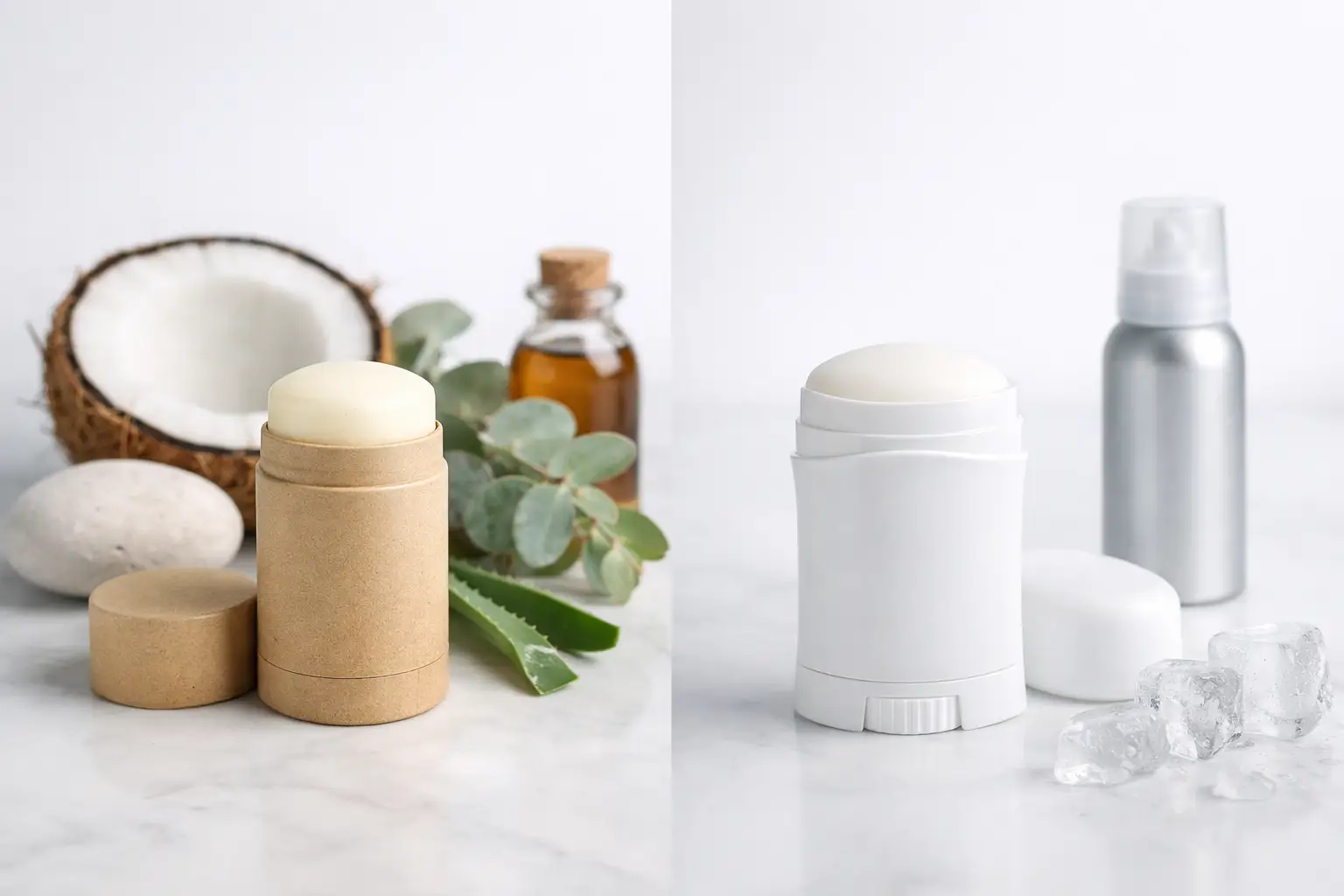
Sweat at 9 a.m. is one problem. Odor by lunch is another. The choice between natural deodorant vs antiperspirant usually comes down to which of those issues matters more to your body, your routine, and your skin.
They are not the same product, even when packaging makes them look interchangeable. Deodorant is designed to manage odor. Antiperspirant is designed to reduce sweat. Some people need one clearly more than the other. Others need to balance sweat control with skin tolerance, especially if underarm irritation, shaving sensitivity, eczema, or fragrance reactivity are already part of the picture.
Natural deodorant vs antiperspirant: the real difference
The most useful place to start is function.
Natural deodorant helps reduce or mask odor caused when sweat interacts with skin bacteria. It does not stop your body from sweating. Most natural deodorants rely on ingredients such as magnesium hydroxide, zinc ricinoleate, starches, clays, or baking soda to help absorb moisture, reduce odor, or shift the underarm environment so odor is less noticeable.
Antiperspirant uses aluminum salts to temporarily reduce the amount of sweat released from sweat glands. Less sweat often means less odor too, but odor control is a secondary effect of sweat reduction. Many antiperspirants also include fragrance, emollients, and skin-conditioning ingredients.
That distinction matters because people often expect natural deodorant to perform like antiperspirant. It will not. If your main concern is visible wetness on shirts, high-stress sweating, or humid-weather discomfort, deodorant alone may feel insufficient no matter how well formulated it is.
How each option works on skin
Underarms are a high-friction, high-moisture area. That makes formulation more important than marketing language.
Natural deodorants tend to work by either absorbing moisture, neutralizing odor, or limiting odor-causing bacterial activity. Some formulas do this gently. Others achieve stronger odor control but increase the chance of irritation. Baking soda is the clearest example. It can be effective for some people, but on sensitive underarms it may disrupt the skin barrier and trigger redness, burning, or a rash.
Antiperspirants work differently. Aluminum salts dissolve in sweat and form temporary plugs near the sweat duct opening, reducing how much sweat reaches the surface. This is why antiperspirants are often more reliable for people with heavier sweating. It is also why they may feel more functional in hot, humid conditions, including climates like Malaysia and Singapore where sweat control can be less of a preference and more of a daily requirement.
Neither category is automatically gentler. A natural formula can irritate. A conventional antiperspirant can be well tolerated. The better question is whether the formula matches your skin and your actual need.
When natural deodorant makes sense
Natural deodorant is often a better fit when your primary issue is odor, not heavy sweating. It can also make sense if you prefer a simpler hygiene routine and want to avoid ingredients that do not serve your personal use case.
For people with light to moderate sweating, a well-formulated natural deodorant may be enough for daily wear, office settings, or lower-intensity activity. It can also suit those who dislike the dry, occlusive feel some antiperspirants leave behind.
There is another reason some people prefer it: flexibility. Because natural deodorants do not try to stop sweating, they may feel more comfortable for users who want odor support without changing how their body regulates heat and moisture.
But there are trade-offs. Performance can be less consistent across long days, exercise, stress sweating, and tropical weather. Reapplication may be necessary. And if a formula depends heavily on essential oils or baking soda, sensitive skin may not tolerate it well.
When antiperspirant is the better choice
If sweat itself is the problem, antiperspirant is usually the more logical option.
This applies to people with clearly visible underarm wetness, recurring sweat marks, discomfort during commutes, or a work environment that requires long-lasting dryness. It also applies to anyone whose odor becomes stronger mainly because of high sweat volume.
Antiperspirants can be especially useful during travel, formal events, public-facing work, and high-heat seasons. In those situations, dependable sweat reduction may matter more than ingredient philosophy.
Some people avoid antiperspirants because they assume they are automatically harsh. That is too broad. Tolerance depends on the formula as a whole, including alcohol content, fragrance level, and how often the product is applied after shaving. For some users, a fragrance-free or lower-irritation antiperspirant may actually be easier on skin than a natural deodorant built around reactive ingredients.
Sensitive skin changes the decision
For sensitive or eczema-prone skin, the underarm is rarely forgiving. Shaving, friction, sweat, and fragrance exposure can quickly compound irritation.
In this context, natural deodorant vs antiperspirant is less about category loyalty and more about trigger management. The wrong natural deodorant can sting immediately. The wrong antiperspirant can do the same. Common troublemakers include baking soda, heavy fragrance, essential oils, alcohol, and repeated application on freshly shaved skin.
A better approach is to prioritize low-irritation formulation principles. Look for shorter ingredient lists, restrained fragrance or none at all, and actives selected for compatibility rather than trend appeal. If you are reactive, patch testing matters more than front-label claims.
This is also where a minimalist brand philosophy becomes useful. Fewer, better products is not just aesthetic discipline. It reduces the chance of layering multiple irritants across your routine.
Do you need to “detox” when switching?
Probably not.
The idea of an underarm detox is often overstated. If you switch from antiperspirant to natural deodorant, you may notice more sweating because you are no longer using a sweat-reducing product. You may also notice more odor for a short period while adjusting to a new formula or while learning how often you need to reapply.
That is not necessarily detox. It is usually a change in product function.
What can help is a practical transition. Switch during a lower-pressure week, not before a wedding or business trip. Apply to clean, dry skin. Give the formula a little time, but not unlimited patience. If irritation starts, stop. If odor control is weak after a fair trial, the product may simply not match your needs.
How to choose without overcomplicating it
Start with the problem you actually want to solve.
If odor is your main issue and your skin tolerates deodorant actives well, natural deodorant may be enough. If wetness is the bigger concern, antiperspirant is the more efficient tool. If you have both sweat and odor plus sensitive skin, your best option may be a carefully chosen low-irritation antiperspirant or a natural deodorant formulated without common sensitizers.
Lifestyle matters too. Someone working from home in air conditioning may have a different threshold than someone commuting in heat, walking outdoors, or managing menopause-related sweating. Hormonal shifts, medication, stress, and climate can all change what works.
That is why there is no universal winner in natural deodorant vs antiperspirant. There is only product-fit.
What to look for on the label
The label should tell you what the product is trying to do.
If it says deodorant, expect odor management. If it says antiperspirant, expect sweat reduction. Beyond that, the ingredient list can reveal whether the formula is likely to be simple and purposeful or crowded and reactive.
For natural deodorants, magnesium-based systems are often better tolerated than baking soda, though not always. Arrowroot or starch can help with light moisture absorption but will not stop sweat. Zinc ricinoleate can support odor control without relying only on fragrance.
For antiperspirants, consider whether fragrance, alcohol, or heavy sensory additives are likely to bother your skin more than the aluminum active itself.
Choose based on performance needs first, then refine based on tolerance.
The best underarm product is not the one with the strongest claims. It is the one that solves the right problem, consistently, without creating a new one. That kind of restraint tends to work better over time.
Leave a Reply